
The European Commission continues immersed in its strategy to guarantee the supply of critical raw materials and reduce the EU's external dependence. As part of the Fundamental Raw Materials Act, Brussels has selected this Friday 46 new strategic projects from more than a hundred applications received. Two Spanish projects are among those chosen by the community executive, which seeks to strengthen European capabilities for extraction, processing, and recycling of essential mineral resources for the industry.
The European regulation sets three objectives for 2030: that the EU is capable of extracting at least 10% of its annual consumption of strategic raw materials, covering 40% through its own processing capabilities, and reaching 25% through recycling. In addition, it sets the goal that no third country provides more than 65% of the annual consumption of a strategic raw material in a relevant processing phase.
The new selection aims to contribute to these objectives and strengthen European value chains in sectors such as batteries, defense, aerospace industry, and permanent magnet manufacturing. Brussels expects that the projects will allow progress in the diversification of supplies and reduce the risks associated with dependence on external suppliers.
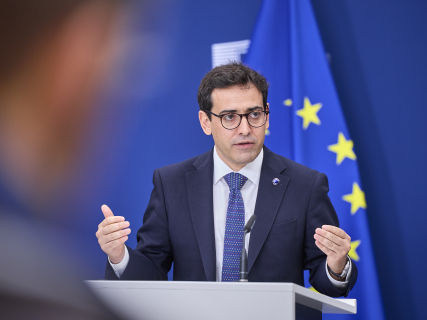
"This new wave demonstrates that we are building a genuine European value chain, from mining to recycling," said the Executive Vice President of the European Commission responsible for Prosperity and Industrial Strategy, Stéphane Séjourné, during the presentation of the initiative.
Two Spanish projects among the selected
One of the Spanish projects that has received community support is Cobre San Rafael, also known as the Touro project, an initiative to reopen and expand an old open-pit copper mine located between the municipalities of Touro and O Pino, in Galicia. The initiative includes actions and facilities also linked to other lands in the area, with references to Arzúa and Vila de Cruces.
Its inclusion in this second selection of strategic projects under the Law of Fundamental Raw Materials represents a recognition of its potential to contribute to the European supply of copper. However, the designation does not equate to an authorization to begin mining exploitation. The project remains subject to the corresponding administrative procedures, including the environmental assessment and the obtaining of the necessary permits from the competent authorities of Galicia.
The status of strategic project may facilitate administrative processing, promote coordination among the involved authorities, and improve access to financing instruments. It may also help connect the selected initiatives with potential industrial buyers. Nevertheless, the endorsement from Brussels does not imply automatic financing nor does it replace the required environmental permits.
Community sources frame these designations within the objective of increasing European capacity for extraction, processing, and recycling of strategic raw materials, in a context of growing concern for the security of industrial supply chains.
Water and waste at the center of the debate on Touro
The Galician project is surrounded by controversy due to its possible environmental effects, especially regarding water management, mining waste, the environmental liabilities inherited from historical activity, and the hydrological connection of the area with the Ulla River and the Arousa estuary.
The promoter claims that the updated version of the initiative incorporates reinforced measures to protect water resources. Among them, it proposes a closed circuit for the water used in the industrial process and states that it does not foresee extractions or returns of water to the Ulla waterways.
The company also defends the use of transfer mining techniques, with the aim of progressively restoring the affected areas as exploitation advances. Likewise, it claims that it will improve the management of waste deposits and address the environmental liabilities associated with the former mining activity.
These measures are part of the commitments and explanations offered by the promoter and must be contrasted in the corresponding authorization, evaluation, and control procedures. The European designation, therefore, does not resolve by itself the pending environmental issues nor anticipates the outcome of the decisions that must be made by the competent authorities.
Puertollano aims to strengthen the European tungsten chain
The second selected Spanish project is linked to the production and processing of tungsten, a strategic mineral for different industrial and technological applications. The initiative includes treatment and refining facilities in Puertollano, in Castilla-La Mancha, associated with the mineral extracted from the El Moto mine, located in the municipality of Abenójar.
The regional government expects the project to generate around 200 jobs, according to the estimates communicated about the initiative. The exploitation is promoted by Abenójar Tungsten, S. A., and combines the underground extraction of tungsten and gold with the subsequent treatment of the mineral.
The company announced the start of construction work in 2026 and places the first production in the first quarter of 2029. It is, therefore, a project in development, whose industrial forecasts depend on the execution of the different planned phases.
The 2026 feasibility study of the company contemplates a treatment capacity of up to 1.5 million tons of mineral per year, with a processing horizon of 18 years. Under stable operating conditions, projections point to an average production of approximately 4,227 annual tons of tungsten trioxide (WO₃) contained in concentrate, in addition to a gold concentrate.
These figures correspond to the company's estimates and not to an effective production at present. Its realization will depend on the development of the project and on meeting the technical and operational forecasts contemplated in the feasibility study.
The inclusion of this initiative in the European list reinforces its position within the community strategy to develop a more diversified supply chain of strategic raw materials. Tungsten has applications in cutting tools, industrial components, and certain technological and defense uses, making its availability a relevant issue for European industrial autonomy.
Brussels seeks to reduce external dependencies
The selection of the 46 projects is framed within the application of the Law on Fundamental Raw Materials, one of the instruments with which the EU aims to reduce its exposure to supply disruptions and excessive concentrations of production and processing in third countries.
The community strategy is not limited to promoting new mining operations. It also seeks to develop industrial transformation and recycling capabilities within the European market, with the aim of covering a greater proportion of demand through its own resources and processes.
Strategic projects can benefit from greater administrative coordination and mechanisms aimed at facilitating their development, although their selection does not eliminate regulatory obligations nor guarantee that all initiatives reach the production phase.
For Spain, the inclusion of the Touro and El Moto projects places two mining and industrial initiatives on the map of community priorities to ensure the supply of copper and tungsten. However, their effective contribution to European objectives will depend on obtaining the corresponding permits, executing the investments, and the ability to transform the announced forecasts into operational production.