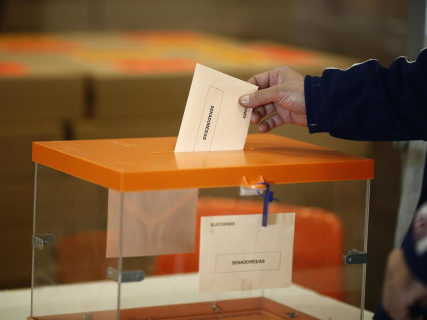
Calendar of the general elections of November 29: all the key dates

The early call activates the deadlines to submit candidacies, request mail-in voting, and hold an electoral campaign that will begin on November 13.

3 minutes

fotonoticia 20261004120002 1920

fotonoticia 20261004120002 1920

Add DEMÓCRATA to Google

Ask FREN

Published

Last updated

3 minutes

Most read

Spain will return to the polls next Sunday, November 29. The President of the Government, Pedro Sánchez, announced this Monday the advance of the general elections, a decision that activates an electoral calendar of almost two months in which the dissolution of the Cortes, the presentation of candidacies, the request for mail-in voting, and the electoral campaign will take place.

The first step will arrive this Tuesday, October 6, with the publication scheduled in the Official State Gazette (BOE) of the royal decree for the dissolution of the Cortes and electoral call. From that moment on, the countdown of 54 days established by the Organic Law of the General Electoral Regime (LOREG) will formally begin when the President of the Government exercises the power of early dissolution.

The publication of the decree will also mean the dissolution of the Congress and the Senate. The Permanent Deputations of both Chambers will assume from then on the functions that correspond to them constitutionally until the constitution of the new Cortes, so parliamentary activity will not completely disappear during the electoral period.

Candidacies, mail-in voting, and electoral campaign

The first deadlines will affect both parties and voters. From the call, mail-in voting can be requested, while the parties that wish to run jointly will have the following ten days to communicate the constitution of their electoral coalitions.

The presentation of the lists to the Congress and the Senate will take place between October 21 and 26, as it falls between the fifteenth and twentieth days after the call. Once registered, the electoral boards will have to review the candidacies and open the corresponding period to correct possible irregularities before their definitive proclamation at the beginning of November.

The electoral campaign will start on Friday, November 13 and will last for 15 days. Parties will be able to formally request votes until midnight on Friday the 27th, while Saturday, November 28 will be reserved for the reflection day prior to the elections.

For citizens who cannot or do not want to go in person to the polls, one of the main deadlines will be the one corresponding to voting by mail. Their request can be made from the electoral call until November 19. Once this modality has been requested and the corresponding annotation has been made in the census, the voter will no longer be able to vote in person at their table on election day.

Calendar of the general elections on November 29

The planned calendar, pending the final publication of the royal decree of call in the BOE, is as follows:

Date Electoral calendar
October 6 Expected publication of the electoral call in the BOE and dissolution of the Cortes
October 6 Deadline begins to request voting by mail
October 16 Last day to communicate the constitution of electoral coalitions
October 21 Deadline begins to submit candidacies for Congress and the Senate
October 26 Deadline ends to submit candidacies
October 28 Publication of the submitted candidacies
November 2 Proclamation of the candidacies
November 3 Publication of the proclaimed candidacies
November 13 Campaign begins
November 19 Last day to request voting by mail
November 23 Last day to publish and disseminate electoral polls
November 25 Ordinary deadline to deposit voting by mail
November 27 Campaign ends
November 28 Reflection day
November 29 General elections
December 2 General counting begins
December 24 Constitutional deadline for the new Congress to meet


The polling stations will open on Sunday, November 29 at 9:00 AM and will remain open until 8:00 PM. Citizens will elect that day the representatives of the Congress of Deputies and the Senate who will make up the new Cortes Generales.

What happens after the elections on November 29

The counting on election night will allow knowing the provisional distribution of seats, although the procedure will continue in the following days. On December 2, the general counting of the electoral boards will begin, in which the results of each constituency will be reviewed before moving on to their definitive proclamation.

The Constitution establishes that the new Congress must meet within 25 days following the elections, so the constitutive session must be held at the latest on December 24. The exact date will be set in the royal decree of electoral call.

Until then, the Permanent Deputations will maintain the powers attributed to them by the Constitution during the period in which the Courts remain dissolved. This circumstance will be particularly relevant in the coming weeks because the Government intends to reapprove this Tuesday the two royal decree-laws on housing rejected last week by Congress, which will have to go through the Permanent Deputation to remain in force beyond the constitutional deadline of 30 days.

More key points, information and questions with FREN

AI-GENERATED CONTENT

What parliamentary procedures remain pending after the dissolution of the Cortes before the constitution of the new Congress?

Between the dissolution of the Cortes and the constitution of the new Congress, a unique period opens: the Chambers cease to function normally, but parliamentary activity does not disappear entirely. What is maintained or can be developed is only what is strictly necessary to guarantee the continuity of democratic control and the validation of urgent Government decisions.

1. General situation of the Chambers and ongoing initiatives

With the dissolution decree, the ordinary activity of the Congress and the Senate ceases: there are no longer legislative plenaries or committees functioning normally, no new parliamentary initiatives are registered, nor are those in progress processed. The main consequences are:

  • Expiration of initiatives: the general rule is that all bills and proposals, non-legislative proposals, questions, interpellations, and other initiatives that have not been fully processed “die” at the end of the Legislature. If their content is to be resumed in the next one, a new initiative must be registered.
  • Practical exceptions: the only thing that can be “reactivated” in the new Legislature is the political or technical content (for example, a bill that the Government resubmits, or a proposal that a group registers again), but the same files do not continue.
  • Suspension of internal deadline counting: deadlines for amendments, issuance of reports, appearances, etc., cease to make sense from the dissolution because the bodies that manage them (Boards, committees, plenaries) are no longer operational.

2. Role of the Permanent Deputations

When the Chambers are dissolved, their Permanent Deputations are not dissolved. These assume a key role during the electoral period until the constitution of the new Congress and Senate:

  • Control of the acting Government: they can demand the presence of Government members to explain urgent or politically significant decisions, although the pace and scope of control is more limited than in the full ordinary period.
  • Calling extraordinary sessions: they have the power to convene the Plenary of the corresponding Chamber if strictly necessary, although in practice this possibility is rarely used during the campaign and until the new Parliament is constituted.
  • Authorization of exceptional states: if it is necessary to declare, extend, or control a state of alarm, exception, or siege during this period, the Government’s relationship is with the Permanent Deputations (and, if convened, with the Plenary meeting extraordinarily).
  • Information and closure of the Legislature: once the new Chambers are constituted, the old Permanent Deputations report to the new Plenary on the decisions made and matters addressed during this intermediate period.

3. Royal decrees-law in the period between dissolution and new constitution

The Government can continue approving royal decrees-law while the Cortes are dissolved, provided the constitutional requirements of extraordinary and urgent necessity are met. In this context, several situations occur:

  • Validation or repeal: the decree-law must be validated or repealed by the Congress within a maximum period of 30 days from its promulgation. If during that period the Cortes are dissolved and the new Congress has not yet been constituted, the validation may remain pending until the new Congress is operational. Meanwhile, the decree-law has full effect.
  • Intervention of the Permanent Deputation: the Permanent Deputation of the Congress can debate the decree-law and, in cases of political urgency, agree to convene an extraordinary plenary session for its validation, although this requires assessing the electoral context and practical feasibility.
  • Possible processing as a bill: the decision to process a decree-law as a bill (to amend it) can only be made by a fully functioning Congress, so this option is postponed until the new Parliament is constituted.

4. Appearances and political control

During this period there is no ordinary control (control sessions, questions to the Government, interpellations), but a restricted channel is maintained:

  • Urgent appearances before the Permanent Deputation: the appearance of Government members can be agreed upon to report on crises, disasters, relevant international decisions, or other matters of great importance.
  • Material limitation: the Government is usually in a caretaker situation, which limits the type of decisions it can make; control focuses on ensuring it respects those limits and guarantees transparency, rather than on intense legislative debate.

5. Role of the Senate during this period

The Senate also has its Permanent Deputation, which acts similarly to that of the Congress:

  • It can be called upon to pronounce or debate decisions that specifically affect the Senate (for example, in territorial or autonomous matters).
  • It participates in the political control of the Government when so decided, although the center of gravity of control remains the Congress.

In summary, after the dissolution of the Cortes there is no ordinary legislative processing nor continuation of files, but there is a minimum core of activity —through the Permanent Deputations and, if applicable, extraordinary plenaries— to control the acting Government and validate exceptional instruments such as royal decrees-law or states of alarm.

Could you detail exactly what happens with Government bills that are left unfinished when the Cortes are dissolved? What limits does the acting Government have during this period compared to a Government in full functions? How does the role of the Permanent Deputation of the Congress differ from that of the Senate in emergency situations?

What are the powers and functions of the Permanent Deputations during the electoral period according to the Spanish Constitution?

During the electoral period —that is, once the Chambers are dissolved and until the constitution of the new ones— the Permanent Deputations of the Congress of Deputies and the Senate have a key role in institutional continuity. Their basic regulation is in Article 78 of the Spanish Constitution and connects with other provisions such as Articles 86, 116, and 64, among others.

1. Constitutional nature and composition

The Constitution establishes that each Chamber shall have a Permanent Deputation, composed of a number of members that proportionally represent the different parliamentary groups. Although the specific composition is developed in the Chambers’ Rules, constitutionally it is an internal body of each Chamber that:

  • Remains operational when the Plenary is not convened.
  • Persists after the expiration of the Cortes’ mandate or their dissolution.
  • Acts on behalf of the Chamber that appointed it in the cases provided.

Thus, the Permanent Deputation is the instrument that prevents a legislative and control power vacuum in the intervals between legislatures, including electoral periods.

2. General powers according to Article 78 CE

Article 78 of the Constitution states that the Permanent Deputations have, on behalf of their respective Chambers, the following essential functions:

  • Safeguard the powers of the Chamber when it is not convened, its mandate has expired, or it is dissolved. This implies an institutional custodial function: protecting the prerogatives and constitutional position of the Chamber against possible actions that could affect it.
  • Assume certain powers during interruptions of the ordinary activity of the Chamber, including those related to royal decrees-law, states of crisis, and other cases requiring parliamentary intervention.

In practice, during the campaign and until the constitution of the new Cortes, they are the only parliamentary body capable of exercising functions that constitutionally require intervention of the Congress and/or Senate.

3. Control and validation of royal decrees-law (art. 86 CE)

Article 86 CE provides that royal decrees-law must be submitted to debate and a validation vote within 30 days of their promulgation. The obligation of parliamentary control does not disappear during the electoral period. Therefore, when the Chambers are dissolved:

  • The Permanent Deputation of the Congress assumes the competence to validate or repeal the royal decrees-law issued by the Government.
  • It can also agree that the decree-law be subsequently processed as a bill by the corresponding procedure, once the new Cortes are constituted.

This is probably the most visible competence of the Permanent Deputation during the electoral period, as it allows the Government to continue acting by decree-law in cases of extraordinary and urgent necessity, without ceasing to be subject to effective parliamentary control, albeit limited to this body.

4. States of alarm, exception, and siege (art. 116 CE)

Article 116 CE requires parliamentary intervention in the declaration and extension of states of alarm, exception, and siege. When the Chambers are dissolved or in the electoral period:

  • The Permanent Deputation exercises the functions that would correspond to the Congress and, if applicable, the Senate regarding these states of crisis, until the new Chambers are constituted.
  • This includes being informed, authorizing extensions when appropriate, and politically controlling the Government’s actions under these exceptional regimes.

This ensures that even in serious emergency situations, democratic control is not completely suspended due to the electoral period.

5. Calling extraordinary sessions and continuity of control

Although the normal capacity for parliamentary control (questions, interpellations, committees) is greatly reduced during the campaign, the Permanent Deputation can:

  • Be convened for extraordinary sessions when it must exercise the constitutional powers assigned to it (for example, validating an urgent decree-law).
  • Require the presence of Government members to inform or report on decisions made in these areas (decree-laws, states of crisis), maintaining a certain level of political control even without a Plenary.

Its action is therefore more reactive and limited than that of the Parliament in full exercise, but sufficient to ensure that the most sensitive decisions are not completely outside parliamentary supervision.

6. Accountability upon constitution of the new Chamber

Once the elections have been held and the new Chamber constituted, the Constitution provides that the Permanent Deputation:

  • Reports to the new Chamber all decisions and actions taken during the electoral period.
  • The new Chamber can politically review those decisions, maintain them, modify them, or, when appropriate, promote them through ordinary legislative processing (for example, transforming validated decree-laws into bills).

This closes the circle of democratic responsibility: the Permanent Deputation acts as a continuity and emergency body, but without detaching from the subsequent control of the fully constituted Parliament.

How are the members of the Permanent Deputations chosen and distributed among the different parliamentary groups? What limits does the Government have to approve royal decrees-law during the electoral period and how does the Permanent Deputation control them? Can you explain with recent examples how the Permanent Deputation has acted in a situation of states of alarm, exception, or siege?

What requirements must parties meet to form an electoral coalition in general elections in Spain?

For several parties to run together as an electoral coalition in general elections to the Congress and the Senate in Spain, they must meet a series of legal and organizational requirements that are situated at three levels: the internal decision of the parties, the formal communication to the electoral administration, and, after the elections, the possible constitution of a parliamentary group.

1. Internal decision of the parties

Before approaching the electoral administration, the involved parties need to adopt a political and legal internal agreement. This usually includes:

  • Approval by the competent bodies of each party (federal committee, national council, executive, etc., according to their statutes) authorizing integration into a specific coalition.
  • Definition of the territorial scope of the coalition (whether it runs nationwide or only in certain constituencies).
  • Criteria for list formation: distribution of positions on the lists for Congress and Senate, rotations, presence of independents, etc.
  • Rules on financing and electoral spending: who acts as the electoral administrator of the coalition, how subsidies and expenses are shared, and how debts are allocated.
  • Use of the brand, acronyms, and symbols: whether a new denomination, a combined one, or that of one of the parties is used, and how logos are displayed.

This agreement is not only political: it serves as the basis for the documentation submitted to the electoral administration and later conditions the distribution of resources and positions in parliamentary groups.

2. Communication to the electoral administration

The Organic Law of the General Electoral Regime requires that coalitions be formally communicated to the electoral administration within a short deadline from the call for elections. In practice:

  • The communication is addressed to the Central Electoral Board when the coalition has a nationwide or larger-than-province scope, and to the competent electoral boards when the scope is more restricted.
  • It must be signed by the legal representatives of all parties forming the coalition (or by persons empowered statutorily for this purpose).
  • It must clearly state:
    • The name of the coalition and, if applicable, the acronyms.
    • The list of parties that compose it.
    • The territorial scope where it runs.
  • Once accepted, the coalition is registered for electoral purposes: from that moment it will present its candidate lists for Congress and Senate under that name before the provincial boards.

If this communication is not made in time and form, the parties could only run with their own lists or, if applicable, as groupings of electors (a different figure, which requires collecting citizen signatures in each constituency).

3. Name, acronyms, and symbols

The name, acronyms, and symbols of the coalition must be:

  • Clearly identifiable and not misleadingly similar to other parties or coalitions.
  • Compatible with the Register of Political Parties: they cannot usurp already protected names nor violate third-party rights.
  • Consistent in all constituencies where they run, unless a different name has been expressly defined for specific areas (for example, including the brand of a territorial partner).

4. Subsequent effects: parliamentary group

After the general elections, deputies elected on the coalition lists can form a separate parliamentary group if they meet the requirements of the Congress Rules:

  • Generally, a minimum of 15 deputies is required.
  • Alternatively, having at least 5 deputies and having obtained a certain percentage of votes in the constituencies where they ran or nationwide suffices.
  • The request must be submitted within five days following the constitutive session of the Congress, and the Board of the Congress decides on its admission.
  • One can only belong to one group; those who do not form a group join the Mixed Group.

It is possible that within the same parliamentary group several coalition parties coexist, and that the group adopts an internal regulation to distribute spokespersons, times, resources, or set voting discipline. The Board may reject groups considered “artificial” if it perceives they are created only to circumvent the rules.

5. Differences with single-party lists and groupings of electors

  • Compared to single-party lists, the coalition requires a formal agreement and prior communication to the electoral administration, but allows combining brands and social bases, and later forming a single parliamentary group if requirements are met.
  • Compared to groupings of electors, the coalition is based on already existing parties and does not require collecting citizen signatures. Groupings, on the other hand, lack prior party structure and their constitution is more burdensome in terms of citizen support and organization.

In summary, forming an electoral coalition implies meeting strict formal requirements in terms of deadlines, documentation, and denomination, and also making political and organizational decisions that will condition both the campaign and the subsequent configuration of groups and internal balances in the General Courts.

Play

Test your knowledge with FREN!

How much do you know about this topic? Answer the following 3 questions.

On what day will the general elections be held according to the new announced schedule?

Question 1 of 3

Until what date can citizens request to vote by mail for the general elections?

Question 2 of 3

Which body assumes parliamentary functions during the period when the Cortes are dissolved?

Question 3 of 3