The PP embraces the phenomenon "Anotop At" to reinforce Feijóo's image on social media and to win Abascal's younger-voter vote

The Populars recover the slip-up of their leader turned into a viral phenomenon and transform it into a campaign seeking to compete with Vox in the digital arena in parallel to the interview with Jordi Wild that Abascal rejected

feijoo jordi wild 1200x900

feijoo jordi wild 1200x900

Add DEMÓCRATA to Google

Ask FREN

Published

Last updated

7 minutes

Most read

Elecciones 29N · Encuestas

La media de las encuestas

Media a 13 de noviembre de 2026 · 15 institutos

  • PP31,4 %
  • PSOE26,8 %
  • Vox19,1 %
  • Frente Amplio6,3 %
  • ERC2,4 %
01020304050ene 2024jul 2024ene 2025jul 2025ene 2026jul 2026

Media del último estudio de cada instituto en 30 días y su evolución semanal desde el 23J. Partidos con al menos un 2 %.

Todas las encuestas

Elecciones generales del 29 de noviembre · Demócrata

Alberto Núñez Feijóo has become a rapper, a Formula 1 pilot, a football player, a reggaeton star, and even in a more muscular and tattooed version of himself. All under a name that just a year ago caused laughter among the Socialist deputies in Congress: "Anotop At". What began as a joke for a slip of the tongue by the PP president has turned into one of the viral phenomena of the electoral campaign of November 29. And the conservatives, far from fighting it, have decided to embrace it.

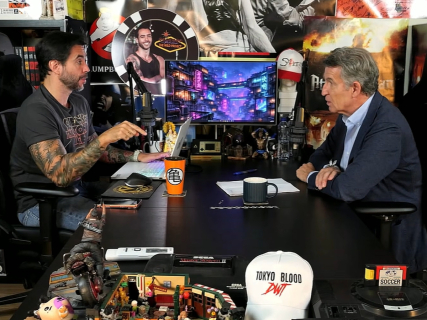
New Generations shares the edits; the PP has incorporated some into its official profiles, and Feijóo himself appears laughing at the creations made with artificial intelligence. The strategy also matches his interview in The Wild Project, Jordi Wild’s podcast, whom Santiago Abascal quit after a disagreement about the recording conditions. The PP has thus found an opportunity to take away from Vox ground in which Abascal’s party has cultivated an image of toughness and confrontation especially recognizable among young people.

The operation has a particular feature. It precisely makes use of the contrast between institutional Feijóo, who has made management experience one of his main credentials, and a digital character surrounded by expressions that achieve virality and attention among an electorate that Abascal’s people have managed to capitalize on in recent years.

"Anotop At", the slip of the tongue that the PP has turned into an advantage

The origin of the phenomenon goes back to November 26, 2025. During a session of scrutiny of the Government, Feijóo was criticizing Pedro Sánchez and predicting that one day a series would be filmed about his years in the Moncloa. He wanted to call it "Anatomy of a Con Artist," referring to the series Anatomy of an Instant, but he made a mistake when pronouncing the title.

"Anotop... At...", he said from the podium, prompting laughter from several Socialist lawmakers. The excerpt began to circulate on social media and ended up turned into a meme mocking the difficulties of the popular leader in completing the sentence.

Almost twelve months later, that mistake has acquired a different meaning. Users have recovered the expression to accompany images of Feijóo generated with artificial intelligence, in which he appears characterized as characters far removed from his usual image.

Among the edits circulating are a Feijóo footballer from FC Barcelona celebrating a goal, another dressed like a reggaeton star, and several versions that show him muscular, tattooed, or wearing attire typical of music videos.

The novelty is not only in the memes, but in the party’s reaction. Instead of ignoring the jokes or trying to refute them, Nuevas Generaciones has begun to share them and to participate in their dissemination. The PP has also published a video titled "First reactions", in which Feijóo appears inside a car, smiling while he looks at some of these creations.

The official TikTok account of the populares has arrived to replace its usual image with an edit of the candidate who imitates a well-known photograph of the former basketball player Kobe Bryant with the NBA trophy.

The PP wants Feijóo to have "aura"

The transformation is also evident in the language of the posts. Nuevas Generaciones has incorporated expressions such as "domados", "el jefe" or "vaya farmeo de aura", common in certain corners of the internet and far from conventional political vocabulary.

In the slang of social networks, "aura" is used to describe the charisma, confidence, or presence that a person conveys. The expression "farmear aura", from video game language, refers to accumulating that prestige through gestures, behaviors, or situations that users consider admirable, surprising, or simply entertaining.

The term can be used both seriously and ironically. A person can gain "aura" for a decisive response or lose it due to a ridiculous situation. In Feijóo’s case, his digital followers have begun to use it to turn speeches, photographs, and public appearances into small demonstrations of authority.

After the interview with Jordi Wild, Nuevas Generaciones published "Domados", accompanied by fire emojis and a leash. In another post, it introduced the candidate with a blunt message: "Llega EL JEFE".

This communication draws on visual codes and expressions linked to memes about masculinity, dominance, and personal security. In them, a body posture, a look, or a gesture can turn into a supposed demonstration of superiority over another person.

The contrast itself between the character and the politician fuels the humor. Feijóo does not have the physical appearance or the communication style that usually star in these types of content. Precisely because of that, seeing him turned into a rap star, covered in jewels, or presented as a dominant character makes it easier for the images to circulate among users who would usually not consume an electoral post.

Jordi Wild and the opening that Abascal has left for the PP

The interview with Jordi Wild has added a political component to this trend. The content creator had planned to talk with the main candidates in the general elections, but Santiago Abascal ended up canceling his participation in The Wild Project.

As DEMÓCRATA had already reported, Vox demanded having the complete recording and using the leader’s responses with autonomy, conditions that Jordi Wild did not accept by considering them to mean losing exclusive control over the content.

The disagreement occurred after the controversy over Abascal’s interview on La Revuelta. Vox denounced that RTVE and El Terrat had refused to publish 40 minutes that had been removed from the recording and announced that its president would not grant interviews again without guarantees about the availability and use of his statements.

While Abascal resigned from the podcast, Feijóo did attend the interview, which lasted for 90 minutes.

The President of the PP then took advantage of his participation to publish a message against the Government. "In the 90 minutes that I have done the interview with Jordi Wild, supposed corruption in the Ministry of Equality with the anti-abuse bracelets has come to light, possible illegalities in the financing of the PSOE, and the summons of the Government delegate in Ceuta for the invasion. They should commit crimes more slowly", he wrote on X.

The coincidence has allowed the Populars to exploit a contrast between the two candidates. Feijóo has agreed to take part in a long-running digital format, while Abascal, whose political communication usually relies on messages of confrontation and firmness, has been left out of the program due to a disagreement with his presenter.

New Generations has accompanied that episode with new publications that reinforce the image of authority of the popular leader. Humor and irony are used to present Feijóo as someone capable of handling himself in a space that, given the profile of his audience and its communication codes, is attractive to parties seeking the young vote.

The dispute over masculinity and leadership

The comparison with Abascal is relevant due to the public image Vox has cultivated around its president. Its communication has relied for years on photographs, videos, and messages that emphasize firmness, political confrontation, and certain attributes associated with male leadership.

The PP is now using some of those same codes, although with an important difference: the exaggerated masculinity of "Anotop At" is presented as a parody shared by the candidate’s own followers.

The images do not need to convince the public that Feijóo is really a muscular rapper or an intimidating figure. They work because the viewer recognizes the distance between the politician and the character created for the internet.

This formula also allows the candidate to engage in more aggressive or casual communication without substantially modifying his institutional discourse. Young profiles can post "tamed" or "the boss," while Feijóo keeps, in his public remarks, references to the economy, management, and electoral proposals.

In this way, the PP can compete for the attention of users accustomed to memes of male strength without requiring its leader to permanently adopt Abascal’s style of communication.

A strategy to reach Vox’s young electorate

The digital offensive coincides with a campaign in which the Populars seek to strengthen their presence among those under 35, a segment in which Vox has achieved better results than the PP in different polls.

This Friday, Feijóo has taken part together with Isabel Díaz Ayuso in an event of Nuevas Generaciones held at the Zenit space in Madrid, where he has presented tax and economic proposals aimed at facilitating jobs, savings, and access to housing for young people.

During the meeting, which lasted almost an hour and a half, a manga-style video has also been shown with the popular candidate as the protagonist. The choice of that format fits with the use of cultural and visual references that circulate regularly on social networks.

The party thus combines two lines of communication. On the one hand, it offers economic measures for young people; on the other, it uses humor, memes, and digital formats to ensure that the candidate appears in conversations that normally fall outside the traditional political debate.

The success of this strategy in electoral terms is still to be confirmed. But the PP has already achieved something that was not at the origin of the meme: turning a mistake by Feijóo into promotional material for its own campaign.

More key points, information and questions with FREN

AI-GENERATED CONTENT

What is the current status of the November 29 election campaign and what steps remain for government formation after the elections?

The official campaign for November 29, 2026, began today, November 13, and will end on Friday the 27th. After the elections, government formation will depend on the support gathered in Congress: the Chambers must be constituted, the King's consultations held, and the investiture vote passed, the vote that allows appointing the president.

Where the campaign stands

There are fifteen days left of rallies, interviews, and debates. The campaign opens after a pre-campaign marked by the Urda train accident and controversy over housing decrees. Housing, public services, the economy, immigration, and security are among the main issues in the electoral debate.

Pedro Sánchez started the PSOE events in Seville; Alberto Núñez Feijóo, those of the PP in Badalona; Ada Colau, those of the Broad Front in Madrid, where Irene Montero also kicked off with Podemos. Santiago Abascal closed the pre-campaign in Huesca and has planned a Vox event in Colón this Friday. (Demócrata, November 12)

A face-to-face between Sánchez and Feijóo and a debate with Abascal and Colau are also being prepared, although dates and formats were still pending finalization. (Scheduled debates)

Polls do not offer a single snapshot. The 40dB study published today assigns 190 seats to PP and Vox; the SW Demoscopia release of November 12 gives them 173 and places PSOE first, with 134. These are different estimates, not results or government agreements. (40dB.; SW Demoscopia)

Dates remaining before voting

  • November 19: deadline to request postal voting.
  • November 25: ordinary deadline to deposit it at the Post Office, according to Interior Ministry information.
  • November 27: last day of the campaign; the 28th will be reflection day and Sunday the 29th the elections will be held. (Campaign calendar)

From the polls to government formation

  1. Counting and proclamation. The night of the election count will give provisional results. Then the official count will be carried out, seats assigned, and elected officials proclaimed. The consulted calendar places the start of the general count on December 2. (Post-electoral calendar)
  2. Constitution of Congress. In the session set by the call, the Board will be elected, including the Presidency, and deputies will swear or promise to uphold the Constitution. This act does not equate to choosing the Government.
  3. Consultations and proposal. The King will consult political representatives and propose a candidacy. The Presidency of Congress will call the investiture debate, where the candidate will present their program and request parliamentary confidence.
  4. Two voting opportunities. The first requires an absolute majority: 176 votes in a Chamber of 350 deputies. If it fails, there will be another 48 hours later, in which more favorable than opposing votes will suffice. Abstentions can facilitate that result.
  5. Appointment or new attempts. If confidence is obtained, the King will appoint the president, who will form their Executive. If it fails, other candidacies may be processed.

The key timing is that the two months to avoid repeat elections start with the first investiture vote, not November 29. If no candidacy succeeds within that period, the Cortes will be dissolved and new elections called. Meanwhile, the Government will continue in a caretaker capacity. (Congress Regulations)

What are Alberto Núñez Feijóo's competencies and political trajectory, and which party does he belong to?

Alberto Núñez Feijóo belongs to the People's Party (PP), which he has chaired since April 2, 2022. His trajectory combines responsibilities in the state administration, health management, and the Government of Galicia, whose presidency he held between 2009 and 2022. He currently performs political leadership and opposition functions and is a candidate for the Presidency of the Government in the November 29, 2026 elections.

Competencies and responsibilities

To understand his competencies, it is useful to distinguish between leading a party and holding a government office. As president of the PP, he heads its political leadership, represents the party, and leads its national strategy. This responsibility should not be confused with directing the State Administration: being party president and electoral candidate does not equate to being president of the Government. His position appears on the official PP website.

His current activity includes organizing teams and electoral preparation. For example, in October 2026, he appointed Miguel Tellado as campaign director for 29N and participated in shaping the PP candidacy for Madrid. These are party leadership decisions, not executive competencies over public services. This is noted by Demócrata regarding the campaign.

In the parliamentary sphere, he has been a senator by designation of the Parliament of Galicia and later a deputy for Madrid. He is also a member of the Permanent Deputation of Congress since November 2023. His management experience focuses on health, public services, infrastructure, housing, and leadership of an autonomous government; these backgrounds describe the responsibilities he has held, not an evaluation of his personal abilities.

Political and institutional trajectory

  • 1985-1991: administrative beginnings. He joined as a civil servant of the Xunta in 1985. In 1991, he was appointed technical secretary general of the Ministry of Agriculture, Livestock, and Forests. Later, he assumed responsibilities in the Ministry of Health and the Galician Health Service.
  • 1996-2003: state administration. During José María Aznar's government, he was secretary general of Health Assistance at the Ministry of Health and Consumption and president of the National Health Institute between 1996 and 2000. Then he presided over the State Society of Posts and Telegraphs between 2001 and 2003.
  • 2003-2005: return to Galicia. He joined Manuel Fraga's government as minister of Territorial Policy, Public Works, and Housing. In September 2004, he became first vice president of the Xunta.
  • 2005-2009: parliament and regional leadership. He obtained a seat in the Galician Parliament in 2005. In January 2006, he succeeded Fraga as head of the PP of Galicia, then out of the regional government.
  • 2009-2022: presidency of the Xunta. He governed Galicia for thirteen years, after obtaining four consecutive absolute majorities in the 2009, 2012, 2016, and 2020 elections. This is his longest period leading an Executive.

The sequence of these positions is recorded in biographical profiles published by RTVE and Euronews.

The leap to national politics

In April 2022, he assumed the national presidency of the PP after Pablo Casado's departure and left the Xunta. In the July 2023 general elections, the PP obtained 137 deputies, but Feijóo did not gather the necessary support to form a government. In July 2025, he was re-elected party president with 99.24% support, according to Demócrata's assessment. His candidacy for 29N extends this period of national leadership.

What were the results of the last general elections regarding youth votes for PP and Vox?

In the last general elections held, those of July 23, 2023, the PP obtained more support than Vox among young people, according to declared vote figures from the CIS post-electoral study collected in the consulted sources. The advantage was approximately five points both among voters aged 18 to 24 and those aged 25 to 34. It is important to specify that these percentages come from a survey, not an official count separated by ages.

Data for PP and Vox

If we distinguish the two groups that allow comparing the parties without mixing ages, the figures are as follows:

  • From 18 to 24 years: PP recorded approximately 16.5% declared vote, compared to 11.8% for Vox. The difference was about 4.7 percentage points in favor of PP. Simply put: out of every hundred respondents of that age, around sixteen or seventeen declared having voted for PP and about twelve for Vox. (Youth vote analysis).
  • From 25 to 34 years: PP reached approximately 18.8%, while Vox stood at 14.2%. The gap was about 4.6 percentage points, also favorable to PP. In this second group, both parties showed percentages higher than those observed among under 25s. (Youth vote analysis).

The comparison allows answering your question: PP was ahead of Vox in the two young age groups considered. That does not mean PP was necessarily the most voted party among all young people; it means it obtained more support than Vox in this comparison between the two. (Data on 23-J).

How to interpret these percentages

It is advisable to keep three distinctions. The first is between declared vote and electoral result: a survey asks people what they voted for, so its figures should be read as an approximation of behavior by age. They do not equate to directly counting young people's ballots.

The second is what is meant by "youth vote". Here the groups 18–24 and 25–34 years are offered separately. It would not be correct to convert them, by a simple average, into a single percentage for all under 35: to do so, the weight of each group and the same calculation base would have to be known.

The third is that these data express support within an age group, not what proportion of each party's voters were young. These are different questions: one measures what young people chose; the other, how each party's electorate is composed.

Do not confuse 23-J with subsequent polls

Later news placing Vox ahead of PP among young people refer to voting intention, that is, what respondents say they would vote for, not the July 2023 result. For example, the CIS pre-election poll published in November 2026 shows, among 18 to 24-year-olds, 22.1% for Vox and 12.2% for PP; among 25 to 34, 21.4% and 11.6%, respectively. These percentages include all respondents in each group, including undecided and non-voters. (Demócrata, CIS pre-election).

Therefore, for the last general elections held, the answer is PP's advantage over Vox of around five points among young people, with the caution that this is declared vote.

Play

Test your knowledge with FREN!

How much do you know about this topic? Answer the following 3 questions.

How has the PP used the 'Anotop At' phenomenon in its digital campaign?

Question 1 of 3

Why did Santiago Abascal not participate in Jordi Wild's podcast 'The Wild Project'?

Question 2 of 3

What does 'farmear aura' mean in the internet slang used by Nuevas Generaciones?

Question 3 of 3