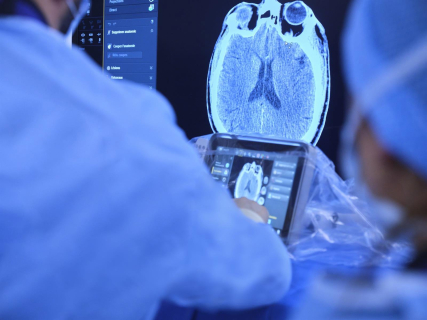

The international clinical trial WE-TRUST, promoted by Philips, has already surpassed 320 patients recruited in its study on new strategies to accelerate the care of acute ischemic stroke, starting from the premise that recognizing symptoms and rapidly accessing emergency services is the first step.
Coinciding with the celebration of World Stroke Day, next October 29, the company underscores the potential of these new care pathways to promote a better recovery for those affected.
In this context, they recall that in stroke care every minute is decisive. "After suffering a stroke, speed to treatment is fundamental to offer patients the best chances of recovery," explains Professor Raul Nogueira, principal investigator of the WE-TRUST study.
"This trial gives us the opportunity to evaluate, through a broad international network, whether a more agile care pathway can safely reduce care times in patients who meet the selection criteria," he adds.
In certain patients with ischemic stroke caused by obstruction of a large cerebral vessel, mechanical thrombectomy makes it possible to remove the clot blocking blood flow. However, the usual care pathway generally first involves a computed tomography (CT) scan or magnetic resonance imaging (MRI) and, subsequently, transfer to the interventional suite to apply the treatment.
In order to analyze whether it is possible to simplify this route, the WE-TRUST trial studies a care model called Direct-to-Angio-Suite (DTAS), which is based on the direct transfer of the patient to the interventional suite. This approach makes it possible to unify in the same setting the imaging assessment and the possible endovascular treatment, with the goal of shortening care times without putting patient safety at risk.
"Reaching 320 patients is important not only because of the figure, but because patients from different countries and continents are being incorporated. This shows that it is not a circuit limited to a few pioneering hospitals, but that it can be implemented in stroke centers of medium and high volume in different parts of the world", says Doctor Marc Ribó, international principal co-investigator of WE-TRUST, interventional neurologist at Hospital Universitario Vall d'Hebron and researcher at the Vall d'Hebron Instituto de Investigación (VHIR), in Barcelona.
Imaging diagnosis and treatment in a single setting
The DTAS circuit is not designed for all patients with suspected stroke, but for those with a high probability of presenting a large-vessel occlusion, in whom clinical teams must make decisions in a very short time relying on solid diagnostic information.
To this end, the model uses advanced cone-beam computed tomography technology, which makes it possible to obtain brain images directly in the interventional suite and thus support clinical decision-making.
"With the help of advanced brain imaging techniques in the interventional suite, the goal is to avoid an additional conventional CT or magnetic resonance test in certain patients and save very valuable time", explains Professor Nogueira.
Image quality is a key requirement for this circuit to work, and it requires appropriate acquisition protocols and care teams experienced in handling this technology.
"Having high-quality images in the interventional suite is the essential starting point", emphasizes Doctor Ribó. "The team needs to have enough confidence to rule out an intracranial hemorrhage, quickly evaluate the patient, and make the appropriate decision. If the image quality is insufficient, this circuit should not be used", he adds.
The ultimate purpose is not only to obtain images more quickly, but to have sufficiently reliable information to support clinical decisions and allow the most appropriate treatment to be selected for each patient.