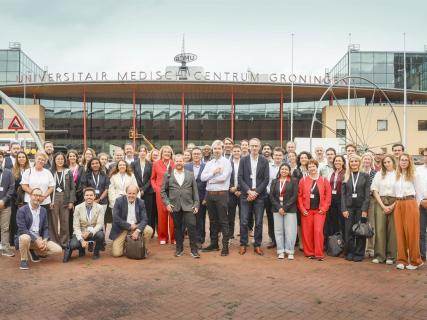

Royal Philips has announced the official launch of EXIT-CVD, a five-year research project co-funded by the Innovative Health Initiative (IHI) of the European Union and various industrial partners, aimed at decisively advancing the detection, monitoring, and treatment of cardiovascular diseases in Europe.
This initiative, jointly led by the University Medical Center Groningen (UMCG) and Philips, will focus on three key moments in the course of cardiovascular diseases: preventing their onset (early exit), attempting to reverse their progression (intermediate exit), and containing their progression in advanced stages (late exit). The selection of patients for the first of the 22 planned clinical trials will begin this month.
In the European Union, cardiovascular diseases affect more than 60 million citizens and severely impact their health, well-being, and quality of life. Without early identification, timely diagnosis, and appropriate therapies, these conditions can progress silently for years.
"Our vision is a future where heart diseases are no longer an irreversible path --says Professor Pim van der Harst, coordinator of the EXIT-CVD project and head of Cardiology at the University Medical Center Groningen (Netherlands)--. By understanding both the biological and social factors driving cardiovascular diseases, and by applying integrated innovations in diagnosis, monitoring, and care, we can empower patients and healthcare professionals to exit the disease continuum before it is too late."
For his part, Robin Nijveldt, head of Cardiology at the University Medical Center Utrecht, points out that "for over 30 years, we have considered cardiovascular diseases as a continuous process, ranging from risk factors such as hypertension, through atherosclerosis and a first cardiac episode, to reaching, in the case of many patients, heart failure."
"However, most of us try to improve care within our own specialty and rarely have a complete view of the patient experience --he adds--. EXIT-CVD is an ambitious initiative to build that holistic vision together, contributing to transforming cardiac care for millions of patients across Europe."
The clinical trials of the program will analyze specific solutions for each of the described phases, ranging from digital monitoring systems for early detection to individualized risk assessment tools and advanced therapies for people with cardiovascular disease in more severe stages.
EXIT-CVD will integrate diagnostic methods, digital technologies, and cutting-edge treatments in order to define evidence-based strategies that can be adopted in different European healthcare systems.
The project will incorporate implementation science and the principles of "equity by design" to promote the development of scalable, sustainable, and accessible solutions, also for populations that have historically had limited access to healthcare.
A digital data platform, designed according to FAIR principles and aligned with the European Health Data Space (EHDS), will facilitate the integration and evaluation of the project's innovations, as well as their application on a larger scale in real healthcare settings.
"The EXIT-CVD project focuses on three critical stages of the progression of cardiovascular diseases where technology can have the greatest impact: preventing the disease before it develops, reversing its progression, and improving care for people with advanced disease," summarizes Bert van Meurs, commercial director of Diagnostics and Treatment of the Image-Guided Therapy Unit of Royal Philips.
"Together with our consortium partners, we will explore innovations ranging from contactless monitoring of vital signs for early detection of patient deterioration to advanced spectral CT imaging techniques that reveal tissue characteristics beyond anatomy --he assured--. These technologies have the potential to provide doctors with deeper insights and facilitate earlier and better-informed cardiac care," emphasizes van Meurs.
A pan-European consortium of 42 entities
The public-private partnership EXIT-CVD brings together 42 organizations from 17 European countries. Among the clinical and academic partners are the Hospital de la Santa Creu i Sant Pau (Spain), the Polytechnic University of Milan (Italy), the University of Pavia (Italy), the Monzino Cardiology Center (Italy), EOC (Switzerland), the Catholic University of Leuven (Belgium), NIKard (Poland), UMC Utrecht (Netherlands), UMC Groningen (Netherlands), the Eindhoven University of Technology (Netherlands), the University Hospital of Cologne (Germany), King's College London (United Kingdom), the London School of Economics and Political Science (United Kingdom), and Varsinais-Suomen Hyvinvointialue (Finland).
In the industrial sector, Philips, Circle CVI, GE Healthcare, Siemens Healthineers, HeartBeam, Medtronic, Huawei, XVIVO Perfusion, AstraZeneca, Cardiomed, Megi Health, Viatris, Cordys, Novartis, Corbotics, ZOLL, Sanofi, Repairon, Johnson & Johnson MedTech Heart Recovery, Onsentia, and CogStack participate.
The consortium is completed by the health consulting firms Bridg Ou and IQVIA Solutions; the patient organization Stichting VrouwenHart; and the European Society of Cardiology (ESC).