Who wins and who loses in each autonomous community in the elections of November 29: Vox advances and the PSOE retreats

The territorial estimate places the PP at the forefront in a good part of the map, but reflects advances of Vox and changes in the distribution of seats in Catalonia, Murcia, and Andalusia.

3 minutes

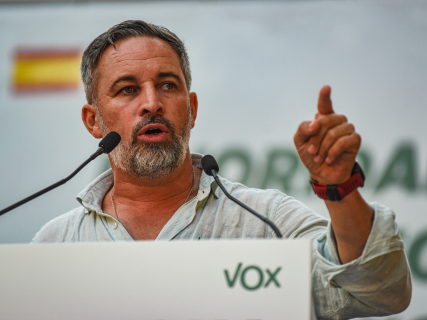
EuropaPress 7784336 lider vox santiago abascal interviene acto vox plaza marina sants 18

EuropaPress 7784336 lider vox santiago abascal interviene acto vox plaza marina sants 18

Add DEMÓCRATA to Google

Ask FREN

Published

Last updated

3 minutes

Most read

The PP would be the party with the most seats in a good part of the territory, but Vox would expand its parliamentary presence and would surpass the popular party in Catalonia and the PSOE in Murcia. This is the scenario outlined by the Sigma Dos survey for EL MUNDO regarding the general elections on November 29, which projects 135 deputies for the PP, 103 for the PSOE, and 68 for Vox.

The territorial distribution also reflects a socialist setback in several communities and a reduction in the representation of Sumar, which would be left with nine seats across the country. The estimate is based on 2,017 interviews conducted between October 1 and 8, 2026.

The distribution of seats by autonomous communities

Andalusia would be one of the territories where the distance between PP and Vox would be reduced: the popular party would obtain 25 deputies and Santiago Abascal's formation, 16, compared to the 17 of the PSOE. In Castilla y León, the PP would maintain the first position with 16 seats, although Vox would reach seven and the socialists would be left with eight.

In Catalonia, the PSC would be the leading force with 16 deputies, followed by ERC, with nine. Vox would obtain seven seats, one more than the PP, which would be left with six. In Murcia, Abascal's formation would also surpass the PSOE, with three representatives compared to two.

Autonomous community Estimated seat distribution
Andalusia PP: 25 · PSOE: 17 · Vox: 16 · Adelante Andalucía: 2
Aragon PP: 7 · PSOE: 3 · Vox: 2 · Sumar: 1
Asturias PP: 3 · PSOE: 3 · Vox: 1
Balearic Islands PP: 3 · PSOE: 2 · Vox: 2 · Sumar: 1
Canary Islands PP: 6 · PSOE: 6 · Vox: 2 · Coalición Canaria: 1
Cantabria PP: 2 · PSOE: 2 · Vox: 1
Castilla-La Mancha PP: 8 · PSOE: 7 · Vox: 6
Castilla y León PP: 16 · PSOE: 8 · Vox: 7
Catalonia PSOE: 16 · ERC: 9 · Vox: 7 · Junts: 7 · PP: 6 · Sumar: 2 · Podemos: 1
Extremadura PP: 4 · PSOE: 3 · Vox: 2
Galicia PP: 15 · PSOE: 6 · BNG: 2
Community of Madrid PP: 16 · PSOE: 9 · Vox: 9 · Sumar: 3 · Podemos: 1
Region of Murcia PP: 5 · Vox: 3 · PSOE: 2
Navarre PSOE: 2 · PP: 1 · EH Bildu: 1
Basque Country PSOE: 6 · PNV: 5 · EH Bildu: 5

The table includes the parties and the figures that appear in the available territorial breakdown of the survey. It does not include a complete distribution of all autonomous communities, so the absences should not be interpreted as an estimate of zero seats.

Vox grows in Castilla y León and Castilla-La Mancha

Castilla y León is among the territories where the poll anticipates a loss of representation for the PP: it would go from 18 seats in 2023 to 16. The PSOE would drop from 12 to eight, while Vox would rise to seven deputies. In Castilla-La Mancha, the popular party would lose two representatives, down to eight, and the socialists would go from ten to seven. Vox would reach six.

In Aragón, the projection attributes seven seats to the PP, three to the PSOE, and two to Vox, with one representative for Sumar. In Extremadura, the popular party would obtain four deputies, the socialists three, and Vox two. In Galicia, the PP would remain the main force with 15 seats, while the PSOE would obtain six and the BNG, two.

The PSOE loses ground in Catalonia and Andalusia

Andalusia would continue to be one of the main scenarios of competition among the three major state forces. The PP would reach 25 deputies and the PSOE, 17, while Vox would arrive at 16, seven more than the nine it achieved in 2023. Adelante Andalucía would achieve two seats.

In Catalonia, the PSC would maintain the first position with 16 deputies, three less than in 2023. ERC would obtain nine and Junts would maintain seven, while Vox would enter ahead of the PP in the distribution, with seven seats against six. Sumar would be left with two representatives and Podemos would obtain one.

The survey also places Vox with three deputies in Murcia, above the two of the PSOE, and without representation in Galicia, Navarra, and the Basque Country. In this last territory, the PSOE would obtain six seats, compared to five from the PNV and five from EH Bildu.

Sumar would be left with nine seats across Spain

The projection reduces Sumar's presence to nine deputies, 23 less than the number it achieved four years ago. The formation would maintain representation in Madrid, Catalonia, Valencia Community, Balearic Islands, and Aragón, but would disappear from six communities. Podemos, which appears separately in the estimate, would obtain two seats: one in Madrid and another in Catalonia.

In the Valencia Community, the PP would obtain 12 deputies, one less than in the general elections of 2023, according to the territorial analysis published alongside the survey. The available document does not allow for the completion of the seat distribution of the other parties in that community nor does it provide in the reproduced breakdown the data for all the autonomous communities.

Consult the original Sigma Dos survey in EL MUNDO.

More key points, information and questions with FREN

AI-GENERATED CONTENT

What are the parliamentary procedures required after a general election for the constitution of the Congress and the investiture of the President of the Government?

After a general election in Spain, the Constitution and the Regulations of the Congress and the Senate establish a fairly fixed sequence of acts until, if applicable, the investiture of the President of the Government. It can be summarized in three main blocks: proclamation of elected members, constitution of the Chambers (with the election of their Board), and investiture procedure.

1. From elections to proclamation of elected members

Once the elections have been held, the general scrutiny is carried out and the Central Electoral Board proclaims the elected deputies and senators. Each one is issued their credential, an indispensable requirement to fully acquire the status of deputy or senator in the constitutive session.

Meanwhile, the outgoing Government continues in office and the previous Cortes are dissolved; only the Permanent Deputation remains active, which, according to the Constitution, can assume very limited powers during this period regarding decree-laws and states of alarm, exception, and siege, until the new Chambers convene.

2. Constitution of the Congress (and the Senate)

The Constitution establishes that the Congress and the Senate must constitute themselves within 25 days following the elections. The call for this constitutive session is signed by the King, usually at the proposal of the Government.

In the Congress, the constitutive session opens with the so-called Board of Elders (the oldest deputy as president and the two youngest as secretaries), which verifies credentials and compiles the list of attendees. Then, the deputies take an oath or promise to uphold the Constitution, a necessary condition to fully acquire parliamentary status.

The decisive step is the election of the Board of the Congress, the internal governing body of the Chamber. The following are elected:

  • First, the President of the Congress, by secret ballot voting.
  • The first vote requires an absolute majority of the total deputies.
  • If no one achieves it, a second round is held between the two most voted, and the one with the most votes (simple majority) is elected.
  • Then vice presidents and secretaries are elected, also by secret ballot.

The Senate follows a very similar scheme: constitutive session, Board of Elders, oath or promise by senators, and election of the President of the Senate and the rest of the Board according to its Regulations.

Once the Boards are elected, the parliamentary groups are constituted. After the constitutive session, parties and coalitions have a short period (usually about five working days) to request their constitution. The Board verifies if they meet the numerical requirements and, if so, recognizes them; those who do not meet these minimums join the Mixed Group.

3. Communication to the King and designation of candidate

Once the Chamber is constituted, the President of the Congress formally communicates to the King the formation of the new Congress and the list of parliamentary groups. From that moment, the mechanism of Article 99 of the Constitution is activated.

The King opens a round of consultations with the representatives designated by each parliamentary group present in the Congress. These consultations aim to identify which political leader has the best chance of obtaining the necessary support. After the consultations, the King proposes a candidate for the presidency of the Government to the Congress, through its president.

4. Debate and investiture votes

The President of the Congress then convenes the Investiture Plenary and sets the date for the debate. The basic scheme is:

  • Initial intervention by the candidate, presenting their Government program, without a strict time limit.
  • Turns for parliamentary groups, with replies and counter-replies regulated by the Regulations.

After the debate, the first investiture vote is held. To be elected in this first vote, the candidate needs an absolute majority of the votes in the Congress (more votes in favor than half of the total number of deputies).

If not obtained, a second vote 48 hours later is held, where a simple majority suffices (more votes in favor than against). If the candidate is not elected in this second vote either, the King may conduct new consultations and propose successive candidates, repeating the debate–voting scheme.

The Constitution sets a maximum period: if two months pass from the first investiture vote without any candidate being invested, the Cortes are automatically dissolved and new elections are called. Until then, the Government remains in office.

In summary, from the elections to the investiture or, if applicable, the call for new elections, the core of the procedure takes place in the Congress: the Chamber is constituted, its president and Board are elected, groups are formed, this information is communicated to the King, and the debate and investiture votes are held in Plenary according to the majorities and deadlines set by the Constitution and the Regulations.

What specific powers and functions do regional presidents have regarding representation in the Congress of Deputies?

Regional presidents do not have, as such, a “block” of specific powers over representation in the Congress of Deputies. Their relationship with the Congress arises from three different levels: their institutional position as heads of the regional executive, their possible personal status as deputies (if they run in general elections), and the formal mechanisms of relation between Autonomous Communities and the General Courts. On this basis, it is also understood that they lack legal power to order the actions of deputies elected in their territory.

(1) General institutional role vis-à-vis the Congress

According to the Constitution and the Statutes of Autonomy, the regional president is the highest representative of the Autonomous Community and the ordinary representative of the State within it, and directs the regional government. This position generates an intense political relationship with the Congress, but does not translate into specific powers over its internal functioning.

  • Political and cooperative relationship: the president leads their Community’s position in sectoral conferences and in the Conference of Presidents, coordinates with the National Government and state parliamentary groups, and negotiates state laws affecting regional competences. But this is articulated through political negotiation, not through regulatory powers in the Congress.
  • Legislative initiative from the Autonomous Community: Article 87.2 of the Constitution recognizes the regional legislative assemblies the right to present bills before the Congress. Formally, the subject is the regional parliament, not the president; in practice, often the president politically drives the initiative within their Parliament and then leads its public defense.
  • Institutional communication: the Regulations and parliamentary practice foresee acts of the Congress “in relation to the Autonomous Communities” (cooperation agreements, harmonization laws, etc.). The formal interlocutor is the Autonomous Community or its Assembly, but the president usually politically represents the Community in these relations.

In summary, the regional president is a key political actor vis-à-vis the Congress, but their “power” at this level is basically one of influence and negotiation, not a legal competence over representation.

(2) If the regional president is elected national deputy

If a person who is regional president runs in general elections and is elected deputy:

  • Incompatibility regime: the Constitution and electoral legislation establish incompatibilities between certain regional executive positions and the mandate of national deputy. In practice, one cannot simultaneously hold the regional presidency and a seat in the Congress in a stable manner: either one does not acquire one of the positions, or one resigns from one of them within a short period.
  • Once a deputy: if they finally occupy a seat, they act as a deputy in an individual capacity, with the same rights, duties, prerogatives, and disciplinary regime as any other member of the Congress. Their (past or future) status as regional president does not create additional powers in the Congress Regulations.

(3) Forms of relationship with the Congress

  • Appearances: Congress committees can summon regional authorities. Among them, they can expressly invite regional presidents to report on matters within their competence (financing, implementation of state laws, sectoral policies, etc.). This is a relationship of political control and information, similar to that with ministers or other authorities.
  • Defense of regional initiatives: when a regional Assembly registers a bill before the Congress, internal regulations foresee that a delegation from that Assembly defends the text during the consideration phase. That delegation may include its regional president if so decided by the regional parliament itself, but not because the president has a specific right to do so.
  • Participation in general debates: major political debates on the territorial organization of the State (regional financing, harmonization, etc.) may motivate the presence of the regional president in Madrid and their contacts with parliamentary groups, but the leading role in the Plenary always corresponds to deputies and members of the National Government.

(4) Can they order the actions of “their” deputies?

From a legal-constitutional point of view, the answer is clear:

  • Congress deputies represent the entire Spanish people, not their constituency or a specific Autonomous Community, and exercise a free representative mandate (not imperative). No authority, not even a regional president, can legally oblige them to vote in a certain way.
  • The relationship is, therefore, political and partisan, not legal: if the regional president is also a territorial leader of a party, they can influence candidate lists, strategy, and internal discipline of that party’s parliamentary group. But that influence is exercised through the party organization, not through a formal public power recognized in the Constitution, Statutes, or Congress Regulations.

In conclusion, regional presidents have a very relevant position in the political dynamics surrounding the Congress, but their specific powers over representation in the Chamber are essentially indirect and political in nature, not legal powers to direct deputies.

Could you detail the formal channels that regional Assemblies have to present bills before the Congress and the role the regional president plays in practice? Under what conditions can the Congress summon a regional president to appear and what political consequences do such appearances usually have? How is party discipline articulated between regional leaderships and parliamentary groups in the Congress when there are territorial interest conflicts?

What were the results of the last general elections in 2023 by parties and autonomous communities?

In the general elections of July 23, 2023, for the Congress of Deputies, the Popular Party was the most voted force in Spain, closely followed by the PSOE, with a very fragmented seat distribution and a decisive role played by nationalist and regionalist formations. Below is a summary of the state-level results by party and the regional map as reflected in the official scrutiny data.

State-level results (Congress of Deputies)

At the state level, the distribution of votes and seats by party was as follows (out of a total of 350 deputies and a turnout of 70.40%):

Party / candidacy % vote Seats
PP 33.05% 137
PSOE 31.70% 121
Vox 12.39% 33
Sumar 12.31% 31
ERC 1.89% 7
Junts per Catalunya 1.60% 7
EH Bildu 1.36% 6
PNV 1.12% 5
BNG 0.62% 1
Coalición Canaria 0.46% 1
UPN 0.21% 1
PACMA 0.67% 0
CUP 0.40% 0
Frente Obrero 0.19% 0

In terms of blocs, PP and Vox together obtained 170 seats, while PSOE and Sumar reached 152. The rest (34 deputies) corresponded to nationalist and regionalist forces (ERC, Junts, EH Bildu, PNV, BNG, Coalición Canaria, and UPN), whose position was key for investiture and governability.

Results by autonomous communities and cities

The following table shows, for each community or autonomous city, the most voted candidacy, its percentage, and the overall distribution of seats assigned in that territory:

Community / city Most voted party % of winner Seat distribution
Andalusia PP 36.3% PP 25, PSOE 21, Vox 9, Sumar 6
Aragon PP 39.0% PP 7, PSOE 5, Vox 3, Sumar 1
Asturias PSOE 37.0% PSOE 5, PP 3, Vox 1
Balearic Islands PP 35.7% PP 5, PSOE 3, Vox 2, Sumar 1
Canary Islands PSOE 33.6% PSOE 6, PP 6, Vox 2, Sumar 1, CC 1
Cantabria PP 36.7% PP 3, PSOE 1
Castilla-La Mancha PP 39.0% PP 10, PSOE 8, Vox 3
Castile and León PP 41.1% PP 18, PSOE 11, Vox 6, Sumar 1
Catalonia PSC/PSOE 34.5% PSOE 19, Sumar 7, ERC 7, Junts 7, PP 6, Vox 6
Valencian Community PP 34.9% PP 13, PSOE 11, Vox 6, Sumar 5
Extremadura PP 40.2% PP 6, PSOE 4, Vox 2, Sumar 1
Galicia PP 43.5% PP 13, PSOE 7, Sumar 2, BNG 1
Community of Madrid PP 40.4% PP 16, PSOE 11, Vox 7, Sumar 6
Region of Murcia PP 41.3% PP 5, PSOE 3, Vox 2
Navarre PP 35.2% PP 2, PSOE 2, EH Bildu 1, UPN 1
Basque Country EH Bildu 32.5% EH Bildu 6, PNV 5, PSOE 5, PP 5, Sumar 1
La Rioja PP 44.2% PP 2, PSOE 1
Ceuta PP 40.5% PP 1
Melilla PP 43.0% PP 1

Territorial reading of the result

In territorial terms, the PP was the leading force in most autonomous communities and in the two autonomous cities, with particular strength in Galicia, Castile and León, La Rioja, Madrid, and Murcia. The PSOE led in Asturias, the Canary Islands, and Catalonia (through the PSC), while in the Basque Country the victory went to EH Bildu, ahead of the PNV. The result confirmed a very plural map, with significant presence of state and nationalist forces, and no absolute majorities either at the state level or in most territories.

Play

Test your knowledge with FREN!

How much do you know about this topic? Answer the following 3 questions.

How many deputies would the Popular Party obtain according to the Sigma Dos survey on the November 29 elections?

Question 1 of 3

In which autonomous community would Vox surpass the Popular Party in number of seats according to the survey?

Question 2 of 3

What would be the estimated representation of Sumar in the Congress according to the Sigma Dos projection?

Question 3 of 3