
The innovative pharmaceutical industry closed 2025 with a total of 63,025 direct jobs in Spain, almost 6,700 more than in 2023, which implies an increase of 11.9 percent in the last two years.
On this direct employment base is added the spillover effect that pharmaceutical companies exert on other activities: for each direct position, 3.4 indirect and induced jobs are created, so that the pharmaceutical sector contributes in the country with close to 280,000 jobs.
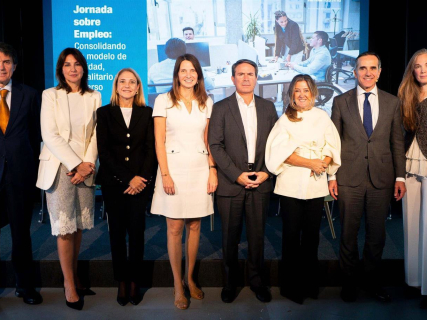
These data are collected in the new "Pharmaceutical Industry Employment Report", presented at a conference organized by Farmaindustria in Madrid and focused on quality, equal, and diverse employment.
In his intervention, the general director of Farmaindustria, Juan Yermo, emphasized that employment is one of the dimensions of which the sector feels "especially proud". "The data in the report show that we are not starting from an aspiration, but from a reality: we have an industry that grows, that incorporates talent, that offers stability, that is committed to equality and diversity and that generates professional opportunities linked to science, technology, production and knowledge," he pointed out.
For this reason, he insisted that Farmaindustria defends the importance of consolidating a framework that drives innovation and pharmaceutical investment in Spain. "We are also talking about our ability to create new job opportunities, attract and retain talent and continue generating qualified and stable employment," he added.
Leading sector in equality and diversity
The director of Farmaindustria's Legal Department and head of the HR Working Group, Ana Bosch, highlighted that innovative pharmaceutical companies, in addition to offering stable, quality, and highly qualified employment, "is one of the sectors that has long led the way toward equality and diversity in the country".
According to the report, women already account for 54 percent of direct employment in this industry. This female presence is also reflected in leadership positions: they occupy 47 percent of the seats on the companies' management committees, while in the Ibex 35 companies female representation is still at 21 percent.
Likewise, in the 135 companies associated with Farmaindustria there are already more than 50 (almost 38%) with a woman as CEO or general director. In the companies of the IBEX 35 this percentage barely reaches 7%. "We still have a long way to go in this area, but in this sector we are on the right track," Bosch has stated.
The study also shows that 78.4 percent of companies have specific Diversity and Inclusion policies, 87.8 percent maintain agreements with labor insertion entities, 63.6 percent adapt positions for people with disabilities and 42.9 percent have modified their selection processes. "Diversity is not only an ethical imperative, but also a driver of competitiveness and talent," Bosch has pointed out.
Stable and highly qualified employment
The report also highlights that stability is a hallmark of employment in the pharmaceutical industry. 96.2 percent of the workforce has permanent contracts, compared with 84.7 percent of the Spanish economy as a whole, and more than 99 percent of these stable positions are full-time.
Added to this solidity is a high level of education: 71 percent of professionals have higher education, a percentage that rises to 96 percent among those working in R&D. More than seven out of ten new positions created in the last year were filled by university graduates.
The report also reflects the growing weight of young people: those under 30 already account for 11 percent of direct employment, after doubling their presence in the last decade, and accounted for 37.6 percent of all new hires in 2025. In addition, two out of every three companies convert internships into permanent contracts.