
A study led by the Cell Cycle and Cancer Group of the Vall d'Hebron Institute of Oncology (VHIO) has uncovered a specific vulnerability of liver cancer that could guide the design of future treatments, according to what VHIO itself announced this Monday.
The research, published in the journal "Proceedings of the National Academy of Sciences", reveals that certain tumor cells depend on the cooperation of two proteins, CDK16 and CDK18, to repair damaged DNA and maintain their ability to divide. When both proteins are inhibited at the same time, genetic damage accumulates and the cells drastically reduce their chances of survival.
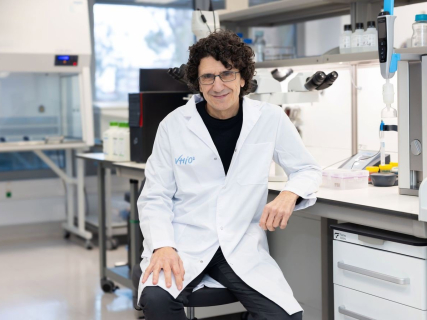
The study, led by Dr. Marcos Malumbres, ICREA Professor, head of the Cell Cycle and Cancer Group and director of the Systems Oncology Program at VHIO, focuses on hepatocellular carcinoma, the most common form of primary liver cancer in adulthood.
Malumbres has pointed out that "although there are treatments that can control the disease and prolong survival, the advanced forms still pose significant difficulties" and that detecting new dependencies of malignant cells opens the door to therapies that act on mechanisms different from those targeted by current drugs.
In this regard, he has emphasized that in order to promote new therapeutic approaches it is key to understand what allows the tumor cell to stay alive despite the accumulated damage: "In this work we have identified two proteins that support each other. By eliminating both, we leave the tumor without an important support to repair its genetic material".
The role of the nuclear pores
The team verified that the isolated elimination of one of these proteins had little impact due to the compensatory capacity of the other. Only by simultaneously blocking CDK16 and CDK18 are their protective functions completely neutralized, which reveals an essential weak point to stop the survival of cancer cells.
The study also shows that CDK16 and CDK18 control the nuclear pores that allow the entry into the nucleus of the proteins responsible for repairing DNA. By suppressing these two kinases, tumor cells accumulate lesions in their genetic material, lose the ability to multiply and finally die, thus opening a possible development path for new therapeutic strategies against hepatocellular carcinoma.