
The Government of Cuba has calculated the economic impact derived from the "energy siege, the extreme intensification of the blockade, and the application of secondary sanctions" by the United States between March 1, 2025, and February 28, at 8.083 billion dollars (about 6.955 billion euros).
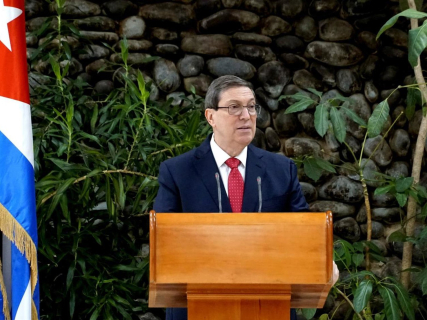
"The damages caused by the U.S. economic suffocation policy between March 1, 2025, and February 28, 2026, amount to 8,083,300 dollars, a record figure, 7% higher than that reported in the previous report," explained the Cuban Foreign Minister, Bruno Rodríguez, at a press conference.
In accumulated terms, the Foreign Minister pointed out that the effect of Washington's blockade on the Cuban economy now amounts to 178.7 billion dollars at current value, which represents an increase of 4.7% compared to the previous report.
Rodríguez denounced that this is a "collective punishment" that directly impacts the quality of life of the Cuban population, affecting essential areas such as food, water supply, access to electricity, healthcare, education, and transportation.
The minister referred to the "long months" with "only 2 or 3 hours of electricity a day or less." "Food going bad, the heat that prevents sleep, parents fanning their babies, children in darkness doing their schoolwork, young people without connectivity or recreation, grandparents without television or sometimes without radio, all family life damaged," he stated.
Rodríguez also recalled that the Executive Order signed on January 29, 2026, by Donald Trump establishes a fuel blockade that hinders the arrival of hydrocarbons to the island "due to the threat of sanctions, intimidation of the companies owning the tankers, and harassment of them."
As he explained, "they threaten shipping companies and prohibit them from transporting parts and pieces for the thermoelectric plants. If fuel and diesel could be imported for the generators of distributed generation, the blackout could be reduced to a minimum, but the fuel blockade prevents their import."
In response, the Cuban authorities have promoted a shift "acceleratedly" towards an energy matrix based on renewable sources, particularly solar. However, the chancellor has denounced that "now shipping companies are being threatened not to bring solar panels and batteries for the new photovoltaic parks that we have learned to install in 45 days."
Rodríguez has also advanced that Havana will submit to a vote in the UN General Assembly a draft resolution on the "Need to end the economic, commercial, and financial blockade imposed by the United States of America against Cuba." "Despite the extraordinary pressure and intimidation from the US on the member states, Cuba trusts in the overwhelming support for the claim to end the blockade in the vote that will take place on Wednesday, October 28," he pointed out.