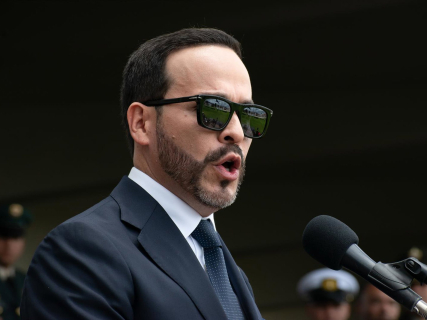

The president of Colombia, Abelardo de la Espriella, has signed a new decree that introduces changes to the intervention protocols of the security forces during protests. The regulation will already apply to the mobilizations and strikes called for this Wednesday against the authorities of the South American country.
"I kept my word and here is the decree. In Colombia, peaceful protest is respected, but violence, vandalism, and blockades that infringe on the rights of millions of citizens are not tolerated!" De la Espriella has stated in a message disseminated on social media.
The leader has emphasized that the objective of the decree is "to strengthen the guarantees of those who manifest peacefully and ensure that the authorities act, within the framework of the law, against those who intend to sow chaos." "The right to protest is not above the right to work, study, move, and live in peace!" he has reiterated.
In the same vein, he has insisted that "to the citizens who protest peacefully, all guarantees. To the violent, the full weight of the law, with respect for due process. The disorder is over! The protest is respected, but violence is not tolerated! I promised, I fulfilled, and I will continue to fulfill! Firm for the Homeland! Long live Christ the King!".
According to a statement from the Colombian Presidency, the decree "defines the new protocol for the authorities' actions within the framework of public demonstrations" and, at the same time, "regulates the legitimate use of state force to protect citizens and guarantee the right to peaceful protest."
The text specifies that "the regulation orders changes in the procedures for dialogue and mediation and police intervention. It also defines the criteria for police action in the face of violent events and road blockades," and clarifies that "when violent events occur, police intervention against those responsible will not have to wait for the dialogue with the group of protesters to conclude."
In this regard, Article 1 establishes that "in the face of acts of violence, the obligation to prioritize dialogue and mediation constitutes a rule of preference of means of intervention regarding the demonstration as a whole, and not a prior requirement that conditions, suspends, or postpones the intervention actions directed individually against those who execute acts of violence."
Likewise, it is noted that "dialogue and mediation may be resumed even after the use of force has been employed, as long as violent actions have ceased and measures aimed at guaranteeing the rights of those who peacefully demonstrate and those who do not participate in the demonstration are adopted."
The decree also authorizes the action of security forces "when from the beginning of the meeting or demonstration the carrying or use of firearms, sharp weapons, explosives, or incendiary devices is identified or determined," according to the document fully disseminated by the Presidency.
In its third point, the text emphasizes that "the guarantee of the fundamental right to public and peaceful assembly and demonstration will be weighed against the effective protection of other fundamental rights and constitutional goods in tension, including life, health, mobility, work, education, security, and the provision of essential public services."
United States security alert regarding the marches
At the same time, the United States Embassy in Colombia has issued a security alert directed at its citizens due to the protests, which will be the first major mobilizations since De la Espriella's arrival at the Casa de Nariño last August.
"On October 14, a protest called 'Mobilization Day in Preparation for the Strike against the Government' will take place," the diplomatic mission has indicated, adding that "it is expected that the activity will coincide with other mobilizations that day, which could cause traffic disruptions, road closures, and delays in public transportation in downtown Bogotá."
In its note, the Embassy has stated that "U.S. citizens should stay alert for local updates to obtain the latest information, avoid protests, as they have the potential to escalate into violence, and plan alternative routes (for their travels)."
The message also advises Americans to "wear little or no jewelry and few valuables," to "maintain a low profile," and to "avoid using their mobile phones in public." "Do not physically resist any attempt at robbery," it added, insisting on the advisability of "following local media" to know the developments of the day.
The protests have been driven by trade union organizations, teacher collectives, student movements, and various political formations, within the framework of a national strike that will be accompanied by an increase in the security apparatus in Bogotá.