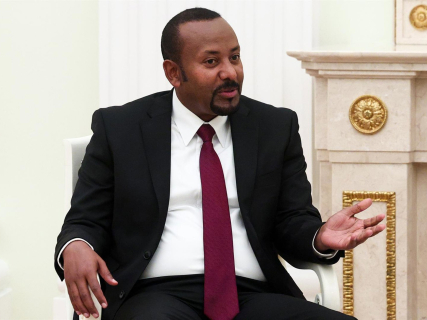

The U.S. Secretary of State, Marco Rubio, warned this Wednesday the Ethiopian Prime Minister, Abiy Ahmed, that the Horn of Africa "can no longer tolerate more conflicts," urging "all" countries in the region to respect the sovereignty of their neighbors and to avoid "cross-border incursions."
Rubio conveyed these warnings to the Ethiopian head of government in a phone conversation in which both discussed the "escalation of tensions" between Ethiopia and Eritrea, following the offensive launched at the end of September by the Tigray People's Liberation Front (TPLF) against Ahmed's government.
The top U.S. diplomat also called on "all" parties involved in the conflict to lean towards "de-escalation," emphasizing that dialogue is "the only possible solution" to the disputes. In a brief note, he recalled the peace agreement signed in July 2018 by the current Ethiopian Prime Minister, a pact that earned him the Nobel Peace Prize.
Last week, Ethiopia accused Eritrea of supporting the TPLF through a supposed troop deployment in the Tigray region. A day later, Asmara responded by denouncing that Addis Ababa is waging an "aggression war" against the country, taking advantage of the advance of the forces loyal to the Ethiopian government -- the Tigray Peace Forces (FPT) -- which ended up taking control of the regional capital, Mekelle.
The normalization phase between Ethiopia and Eritrea after 2018 was reflected, in fact, in Asmara's support for Addis Ababa during the war against the TPLF between 2020 and 2022. However, the Ethiopian government declared the agreement signed in Pretoria (South Africa) after that conflict terminated in July, which left between 100,000 and 600,000 dead, according to different estimates.
The confrontation has been accompanied by an increase in frictions between Ethiopia and several neighboring states, besides Eritrea, such as Egypt and Sudan, with disputes over the dam on the Blue Nile and Ethiopian demands for access to the Red Sea as a backdrop.