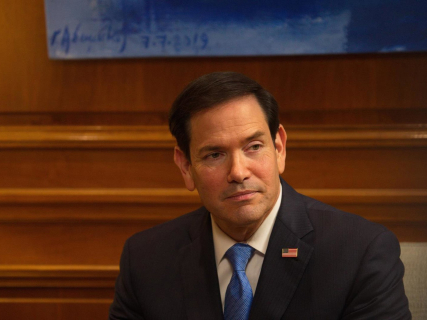

The authorities of the United States have communicated this Thursday that they will prevent the entry into the country of more than 60 people, including former public officials and high-ranking officials from Colombia and Bolivia, as part of the Trump Administration's campaign against corruption and drug trafficking in the region.
The State Department has detailed that visa restrictions have been imposed on 21 Colombian citizens who "through activities of corruption or drug trafficking, undermine the democratically elected governments in our hemisphere, regardless of their political affiliation."
This group includes the former president of Ecopetrol, Ricardo Roa; the mayor of Sincelejo, Yahir Acuña; and Senator Wadith Alberto Manzur, sanctions that have been celebrated on social media by the president of Colombia, Abelardo de la Espriella.
The measure also affects the deputy Karen Manrique, currently detained in Colombia for the corruption case of the National Unit for Risk Management (UNGRD), as well as former senators Julio Chagui and Liliana Esther Bita and former deputy José Ignacio Mesa Betancurt.
With the same purpose, Marco Rubio's department has expanded these restrictions to another 40 people in Bolivia. Among those affected are former prosecutors Juan Lanchipa, Félix Balderas, and Armando Rojas, as well as magistrate Julio César Porras, responsible for the Controlled Substances Unit in Santa Cruz.
The latter two were removed from their duties this Tuesday, along with 58 other employees of the Public Ministry.
Also included in the ban, linked to this region, are the president of the Departmental Court of Justice of Santa Cruz, Aldo Quezada, and judge Julio Alba, whose resignation has already been demanded.
The president of the Supreme Court of the country, Romer Saucedo, has publicly demanded that both decide "to submit to the relevant investigation, without enjoying any privilege due to their status as judicial servants," as he stated in a message disseminated on his social media.
The list is completed by deputies Rafael López and Rolando Pacheco; the commander of the Police of Tarija, Freddy Pereira; the director of the General Personal Identification Service, Óscar Ortiz; the former general director of Migration, Katherine Calderón; and the former head of Airport Security of the Special Force to Combat Drug Trafficking (FELCN) at the Viru Viru International Airport, Fernando Velasco.