
The Government of Honduras has announced that 28 additional municipalities are now on red alert due to the drought linked to the climatic phenomenon of El Niño, associated with the increase in temperatures on the surface of the Pacific Ocean. With this update, the number of Honduran localities under maximum alert for the lack of rain has already surpassed one hundred.
Authorities have justified the decision due to the severe water scarcity, which is heavily impacting agricultural production and compromising the food security of thousands of families in the country. Among the areas most affected by the lack of water resources are the departments of Comayagua, La Paz, Francisco Morazán, El Paraíso, Valle, Choluteca, Intibucá, and Lempira, among other territories in the interior.
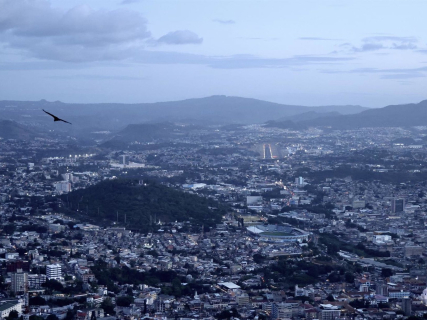
According to the Secretariat of Risk Management and Contingencies, the red alert has been declared indefinitely in a total of 103 municipalities that are already in a state of emergency. In its latest bulletin, the agency details that the water problem also extends to the capital, Tegucigalpa, where the level of the reservoirs that supply the city is "concerning."
The official report also specifies that 82 municipalities remain on yellow alert and another 48 on green alert of a preventive nature, while the delay in the onset of rains exacerbates the water deficit throughout the territory.
In parallel, other countries in the region, such as El Salvador and Panama, have also declared maximum alert due to the drought associated with El Niño, a phenomenon that is shaping up to be one of the most intense recorded to date and that is already raising fears of a significant loss of crops.