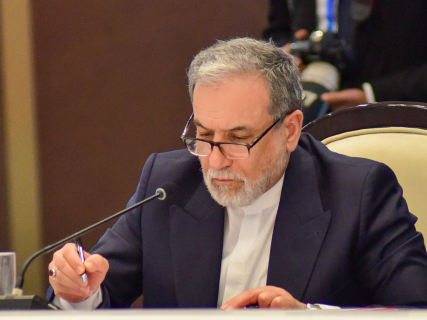

The Iranian Ministry of Foreign Affairs has repudiated this Wednesday the attack launched the day before by the United States Army against several Iranian tankers in the waters of the Persian Gulf, in a context of growing tension between both countries and with the dialogue mediated by Pakistan completely blocked to try to close the war that began on February 28 after the joint offensive of the United States and Israel.
In a statement disseminated on social media, Iranian diplomacy has condemned "in the strongest terms" this attack, which it has labeled as "aggressive," and has emphasized that, added to the sanctions and the naval blockade imposed by Washington, it constitutes "a flagrant violation of the United Nations Charter and International Law."
According to the text, "the aggressive actions of the United States against Iranian merchant vessels not only represent a dangerous escalation of tensions in the region, but also constitute a clear threat to regional and international peace and security."
The Ministry, led by Abbas Araqchi, has also justified the Iranian attacks against the Al Azraq military base in Jordan, framing them within "its inherent right to legitimate defense" against previous operations by the United States, stressing that these facilities "support the aggression of the United States against Iran."
In this line, Tehran has insisted that its "Armed Forces will not hesitate to exercise" that right and "will respond decisively and appropriately to any military aggression from the enemy."
For his part, the President of the United States, Donald Trump, has assured this same Wednesday before the media that the conflict with Iran will conclude immediately after the midterm elections scheduled for November.
"I think the war is going to end right after the elections. Because they can’t hold on any longer. They are desperate to try to influence the elections," he stated before heading to Dallas to participate in the first Republican convention two months before the aforementioned elections.
At the same time, the UN Secretary-General, António Guterres, has again declared himself "deeply concerned" about the escalation in the Strait of Hormuz, including the latest exchanges of attacks and "the threats of new actions against maritime and energy infrastructures."
The highest official of the United Nations has reiterated his call "to all parties involved to act with the utmost restraint and to refrain from actions and statements that could further exacerbate an already unstable situation," as indicated in a press conference by his spokesperson, Stéphane Dujarric, also warning of the "serious consequences" that any new escalation would have for the civilian population.