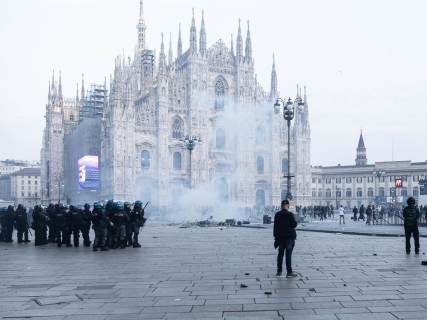

Europe is heating up. In Spain, the housing problem led to a new camp in Sol and will cause a general strike. In France, the streets are burning and losing all their trust in Macron. And, in Italy, there have been several days of social tension, with disturbances in Milan and other cities and protests by transporters in the south due to the increase in fuel prices. The clashes between protesters and police, the looting of shops, and the material damage have led the Government of Giorgia Meloni to approve a new security decree that toughens the criminal consequences of certain violent acts during mobilizations.
The conflict hotspots have distinct characteristics. In Milan, the protests of the weekend over the cost of living and public services led to clashes, destruction, and looting. The police intervened to disperse the violent groups and made arrests. In the south of the country, transporters have staged blockades due to the rise in fuel prices, with consequences for the supply of raw materials and the activity of food companies.
Meloni introduces penalties of up to five years in prison
In response, the Council of Ministers approved on October 20 a decree that creates a new crime of violent participation in a demonstration. The Prime Minister, Giorgia Meloni, explained that those who join a group of five or more people and throw stones, firecrackers, or sticks endangering public safety could face penalties of up to five years in prison and fines of up to 20,000 euros. The penalties can be aggravated in certain cases, such as when the face is concealed or injuries are caused.
"If during a march or demonstration you join a group of five or more people and start throwing stones, firecrackers, sticks, endangering the safety of everyone, you risk up to five years in prison and a fine of up to 20,000 euros," Meloni stated in a video released after the meeting of the Executive.
The leader summarized another of the measures with the phrase "whoever breaks, pays". The decree includes mechanisms to claim damages caused to public and private property and provides that parents may have to respond financially for the damage caused by their minor children, under the terms established by the regulation.
More measures on minors and liability for damages
The package includes changes related to the preventive detention of minors and advances the application of a provision regarding the comprehension capacity of adolescents between 14 and 18 years old. Meloni recalled that this last measure had already been approved previously and was in parliamentary processing, but defended that the decree allows it to be applied immediately.
The Government of Giorgia Meloni maintains that the measures seek to prevent new violent episodes and protect merchants, workers, and security agents. The reform also opens a debate about the limits of the criminal response, the treatment of minors, and the need to distinguish between violent acts and the peaceful exercise of the right to protest.
The decree law must be examined by the Italian Parliament and converted into law within a period of 60 days. During the processing, modifications may be introduced before its final scope is defined.