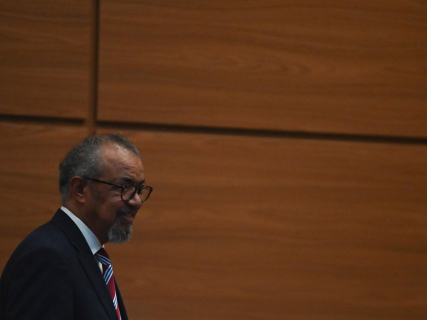

The Director-General of the World Health Organization (WHO), Tedros Adhanom Ghebreyesus, has warned that the current Ebola epidemic "is by no means under control." The head of the international organization issues this warning after nearly 5,000 infections have been confirmed, the majority in the Democratic Republic of the Congo, and more than 2,300 people have died.
"The outbreak is driven by insecurity and displacement, as well as by intense population movements along roads, rivers, and mining routes," the head of the WHO pointed out during the second meeting of the Emergency Committee of the International Health Regulations (IHR).
According to the latest available data, dated August 15, health authorities in the Democratic Republic of the Congo have reported 4,945 cases and 2,325 deaths. In light of these figures, Tedros insists that the situation remains very serious. "We must be honest: the epidemic is by no means under control," he emphasized, recalling that the outbreak had "a spectacular start and we are still trying to recover from that advantage."
The WHO director has acknowledged that one of the most concerning elements is that a good portion of the victims die outside treatment centers and do not appear on the lists of contacts identified by tracing teams.
"Each of these deaths points to a chain of transmission that we have not yet located," warned the top official of the WHO, stressing that the epidemic will not subside until all those chains of infection are detected and cut.
"The risk does not stop at the borders of the Democratic Republic of the Congo. Uganda has already halted transmission after the initial jump, and I congratulate the government and the people of Uganda for their decisive response. Last month, however, a traveler transported the virus to France. Borders may slow down a response, but they do not stop a virus," Tedros highlighted, alluding to the threat of international spread.
In this context, the WHO director has valued the role of the Congolese government, which leads the health response in coordination with the WHO and the African Centers for Disease Control and Prevention (CDC).
"We are strengthening community-based surveillance, expanding healthcare capacity, supporting safe and dignified burials, working with communities to build trust and a sense of identification, and promoting clinical trials for vaccines and treatments," he detailed, describing the main lines of action in response to the outbreak.