

The 7.4 magnitude earthquake that shook Colombia this Monday, August 10 has left images of damaged buildings, streets covered in rubble, and citizens trying to locate and assist possible victims among the debris.
The epicenter of the quake was located near San José del Palmar, in the department of Chocó, and the tremor was felt strongly in different areas of the country. Authorities have deployed emergency devices while search, rescue, and damage assessment efforts continue.
The images released in the hours following the earthquake show the extent of the damage in some of the affected places: from partially destroyed facades and vehicles hit by rubble to large structures reduced to debris.
The structure of the Cathedral of Manizales gives way
One of the images shows numerous citizens in the vicinity of the Cathedral of Manizales, one of the cities hardest hit by the quake, while a large cloud of dust envelops part of the building.

Several people remain on the street observing what happened while others move away from the affected area as the structure of the building gives way as a consequence of the seismic movement.
Debris and damaged vehicles in the streets
The damage is also visible in residential areas. One of the photographs shows a partially affected building, rubble scattered across the roadway, and a vehicle hit by the remains of the building.

The urban wiring appears surrounding the damaged area.
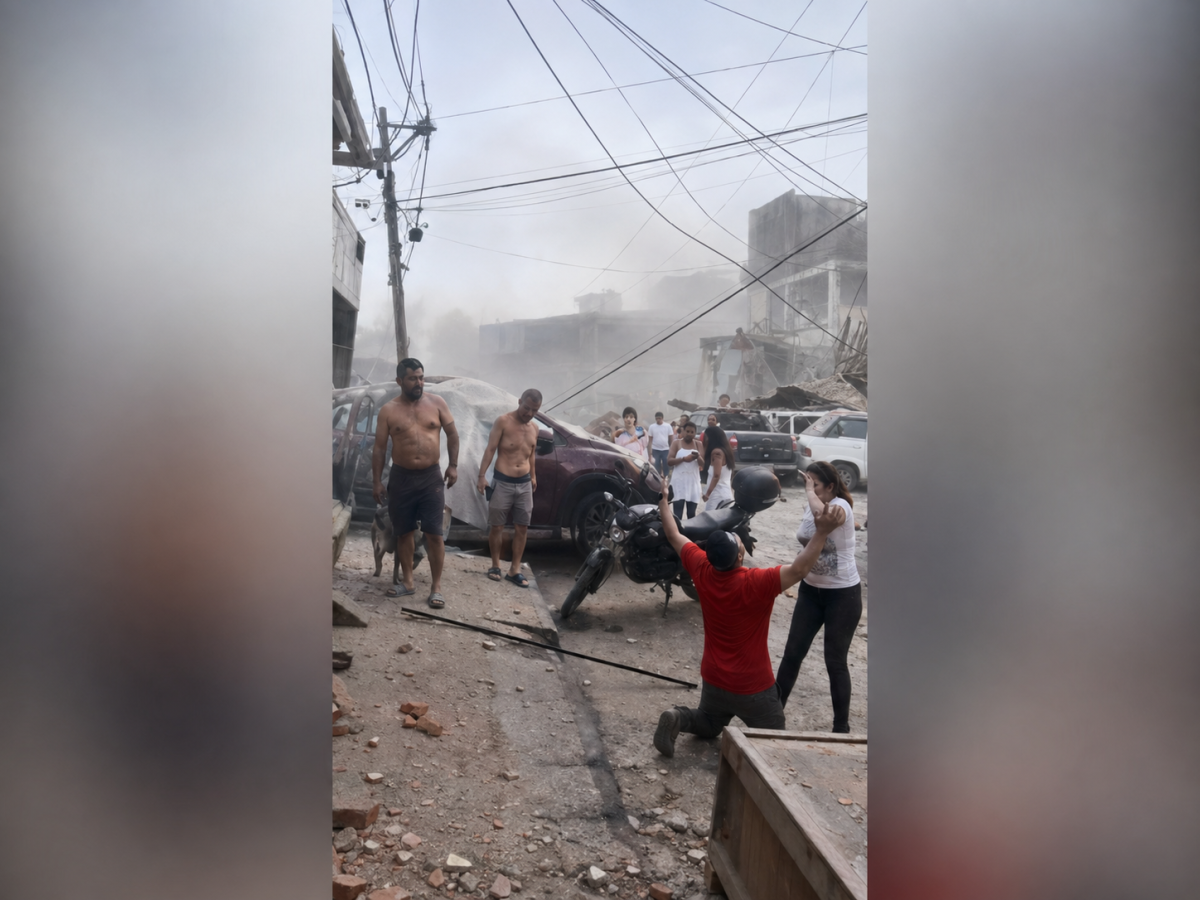
Neighbors in the middle of a dust-covered street
Another of the scenes reflects the first moments after the earthquake. Several people remain on a road filled with debris while a cloud of dust reduces visibility between the buildings. Vehicles and motorcycles were trapped in the middle of the affected area.
Citizens on the debris searching for victims
One of the most striking images shows dozens of people concentrated in front of a completely collapsed structure. Some citizens are directly on the concrete remains while others wait at the foot of the building.

In the foreground, a paramedic can also be seen in a scene that reflects the initial aid efforts developed after the quake.
The magnitude of some damages is especially evident in the constructions that have suffered collapses. Large fragments of concrete appear piled on top of each other while neighbors and emergency teams advance among the debris.
The search in this type of structures constitutes one of the most delicate tasks in the hours following the earthquake due to the instability of the elements that remain standing.
Damage to buildings in the urban area
The earthquake has also caused scenes of alarm in commercial and residential areas. Another image shows a cloud of dust rising at the foot of a multi-story building, while some citizens remain in the vicinity.

Emergency services continue inspecting the affected constructions to determine their condition and detect possible risks arising from the structural damages.
Rescue efforts continue
The operation deployed after the earthquake prioritizes the location of possible trapped individuals and the assessment of damaged structures. The presence of debris, unstable elements, and damage to buildings also forces extreme precautions in the most affected areas.
The images left by the earthquake thus show the two sides of the first hours of the emergency: the destruction caused by the seismic movement and the immediate mobilization of neighbors and emergency services to search for and assist the victims.