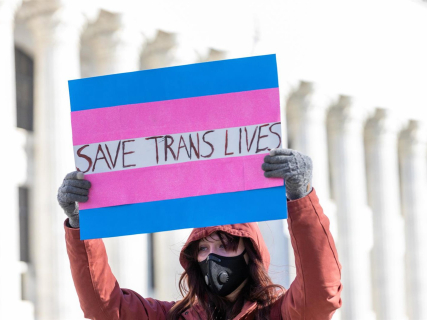

The Supreme Court of the United States has dismissed this Wednesday the Government's request to maintain the suspension of hormonal treatments for around a thousand transgender inmates, which represents a new blow to the Trump Administration in the field of LGTBI rights.
The judges have chosen to support the ruling of a lower court that concluded that the government policy of "denying gender-affirming care to patients for whom such care is medically necessary can lead to a deterioration of mental health and increase rates of depression, anxiety, and self-harm."
On this basis, federal district judge Royce Lamberth, based in Washington, decided last June to block Trump's order that banned the use of federal funds for "any medical procedure, treatment, or drug in order to adapt the appearance of an inmate to that of the opposite sex," a measure that included both the administration of hormones and the use of wigs and makeup, as reported by Bloomberg agency.
The presidential order, signed by the president one day after taking office in January 2025, established that officials must deny these services following the criteria of the Bureau of Prisons, which argued that "concerns regarding security and prison management outweighed any benefit, medical or otherwise, derived from facilitating greater access to sex reassignment surgeries, hormonal treatments, and social adaptations in the prison environment."
For Lamberth, the Bureau of Prisons of the United States did not adequately analyze the effectiveness of the treatments before eliminating them, despite the impact it has on those whose medication is interrupted. One of the three incarcerated individuals who received hormonal therapy and challenged the measure, Alishea Kingdom, claims that since then she has suffered from debilitating distress, panic episodes, and suicidal thoughts.
In parallel, the Supreme Court has supported in recent years the ban on transgender individuals in the U.S. Armed Forces and has accepted that new passports reflect the sex listed on the holder's birth certificate.