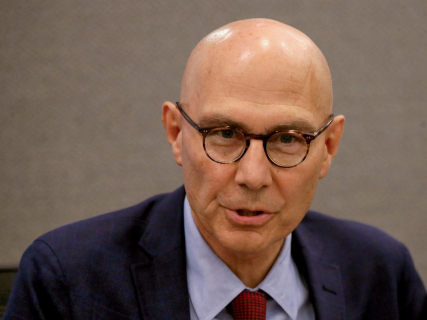

The United Nations High Commissioner for Human Rights, Volker Türk, has denounced this Friday the rise of violence in Sudan and has warned that the recent campaign of drone attacks has left at least 306 dead and hundreds injured during the first three weeks of October.
According to the UN Human Rights Office (OHCHR), the bombings —attributed to both the Sudanese Armed Forces (SAF) and the paramilitary Rapid Support Forces (RSF)— have hit homes, markets, health centers, shelters for displaced persons, basic infrastructure, and power plants in key regions such as Kordofan, Darfur, Blue Nile, and the capital, Khartoum.
"The increasing use of drones, which already accounts for the majority of civilian deaths related to the conflict in Sudan this year, is deeply disturbing and is taking a horrific toll," Türk stated.
The UN blames both sides and warns of a "worrying trend"
The United Nations denounces a "particularly worrying trend" after documenting numerous attacks against shelters, places where people who had already escaped the fighting had sought protection.
According to UN investigations, between October 6 and 10, alleged drone attacks attributed to the military government forces —led by military leader Abdel Fattah al Burhan— struck displaced persons' shelters in Ghubeish and El Nuhud, in Western Kordofan, in the south of the country, causing the deaths of at least 25 civilians, including women and minors.
Furthermore, on October 19, the UN reports that an alleged RSF drone attacked a group of displaced persons working in artisanal gold mining near a displaced persons camp in Abu Shendi, in the Blue Nile state, in the southeast, resulting in the deaths of at least 31 people.
On October 18, at least 139 people lost their lives when a transport truck was hit in a "double tap" of successive attacks in Dibab, in Western Kordofan, an area under the control of the RSF militia.
Essential infrastructure and health services have also been seriously affected. Among the documented incidents is an incursion attributed to the RSF on October 11 against the Um Darfa hospital, in the Blue Nile state, which left the center out of service and caused serious injuries to two members of the health staff.
"Dozens of civilians have died, including internally displaced persons, and vital infrastructure and services have been destroyed, which has caused more displacements and worsened the already serious humanitarian crisis," declared the spokesperson for UN Human Rights, Seif Magango.
Urgent call for a ceasefire and respect for International Law
In light of this scenario, Türk has demanded that the warring parties strictly comply with the obligations set by International Humanitarian Law, particularly the principle of distinction, which prohibits deliberate attacks against the civilian population and civilian objects.
"Broader peace efforts must directly address the ongoing influx of weapons that fuels the conflict and push for an end to the transfer of arms used with manifest disregard for international obligations to protect the civilian population," emphasized the high commissioner.
In the same vein, the highest official for Human Rights at the UN has demanded an immediate ceasefire from both sides and their allied groups, stressing that a negotiated solution based on respect for Human Rights and accountability constitutes "the only viable path to sustainable peace in Sudan."
The civil war in the African country began in April 2023 due to deep disagreements over the integration process of the paramilitary group within the Armed Forces, which derailed the transition opened after the overthrow in 2019 of the regime of Omar Hasán al Bashir, already weakened after the coup that forced the exit of then Prime Minister, Abdalá Hamdok.
The conflict, in which several countries support different factions, has plunged Sudan into one of the worst humanitarian crises on the planet, with millions of displaced persons and refugees and growing international alarm over the spread of diseases and the severe damage to critical infrastructure, which prevents assistance from being provided to hundreds of thousands of affected people.