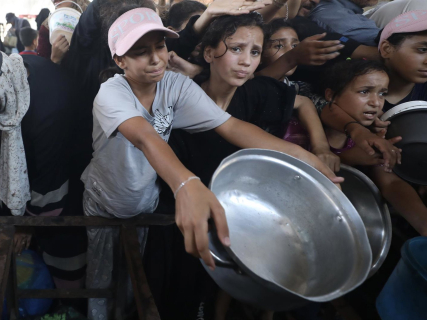

UNICEF has warned this Tuesday that in the Gaza Strip, "concerning" levels of chronic malnutrition are being recorded among children, a situation that translates into growth delays affecting 12.2% of children under five years old.
According to the organization, the latest SMART survey reflects a low rate of acute child malnutrition, but at the same time highlights alarming chronic malnutrition, a diet of poor quality, and high levels of maternal malnutrition, which paints a complex nutritional picture in the Palestinian enclave.
Chronic malnutrition or growth delay, an indicator that captures the accumulated conditions of health and nutrition over time, affects 12.2% of children under five years old, while overweight stands at 4.0%. The simultaneous presence of both problems "points to poor diet quality, and not just the quantity of food."
According to the study's data, 73% of children aged 6 to 23 months had consumed unhealthy foods the day before the survey, and only 22.4% received a minimally acceptable diet. Additionally, around 37.1% of children under five experienced episodes of diarrhea in the two weeks prior to the data collection.
"Children's nutrition improves when aid and commercial supplies reach them, and deteriorates just as quickly when they do not," noted Edouard Beigbeder, UNICEF's regional director for the Middle East and North Africa, emphasizing that progress in the food situation "is fragile and depends on sustained humanitarian access, sufficient funding, and functioning commercial markets."
"Without these conditions, progress could be reversed in a matter of months and childhood will pay the highest price again," he insisted, also warning that acute malnutrition may show some improvement in a few weeks "but its broader effects do not disappear."
In this scenario, UNICEF demands continued and unobstructed humanitarian access to the Gaza Strip in order to provide essential services of nutrition, health, water, and sanitation, as well as to ensure the supply of fuel and stable funding. The survey itself highlights the difficulties in reaching the entire Gazan population, as approximately 17% of the inhabitants of Gaza were left out of the sampling due to access restrictions and the security situation.