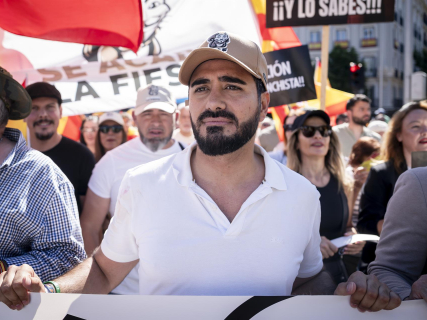

Se acabó la fiesta (SALF), the formation headed by MEP Luis 'Alvise' Pérez Fernández, will make its debut on November 29 in general elections with candidacies for the Congress in 46 constituencies: all except Vizcaya, Guipúzcoa, Cantabria, Ciudad Real, Girona and Lleida. The organization has chosen not to register lists for the Upper House.
Thus appears in the Official State Gazette (BOE) released this Wednesday, where all the candidacies submitted for the Congress and the Senate are detailed. In any case, the definitive list of formations that will be able to run in the elections will not be closed until next week, once the electoral boards review whether the registered lists meet all legal requirements.
Alvise's project made its debut at the polls as an electoral grouping in the 2024 European elections, in which it won three seats, one of them for its promoter. The following year, the other two elected MEPs --Nora Junco and Diego Solier-- broke with SALF, amid accusations of thuggishness and corruption directed against their leader.
The brand was registered as a political party with the Ministry of the Interior in January 2025 and, since then, has run in the regional elections of Castilla y León, Aragón and Andalucía, without achieving parliamentary representation in any of these communities.
November 29 will mark its first participation in a general election, although it will limit its presence to the Lower House, since, after the agreement reached between PP and Vox for the Senate, the SALF leadership announced that it was renouncing presenting lists to the Upper House.
Alvise repeats as list head for Madrid
Alvise will be the "number one" for Madrid and, in the event of winning a seat, he will have to give up his MEP seat, given that both positions are incompatible. The candidacies also include applicants who already ran unsuccessfully in the different regional elections held over the last year.
According to the lists released by the BOE and consulted by Europa Press, SALF places 31 men as list heads and 15 women, so only approximately one third of the candidacies (32.6%) is headed by women.