
The Court of Auditors warned this Friday of the scarcity of data available on the effective execution of the European funds linked to the Recovery, Transformation and Resilience Plan, and stressed that none of the governance bodies of said plan is carrying out monitoring tasks for these resources.
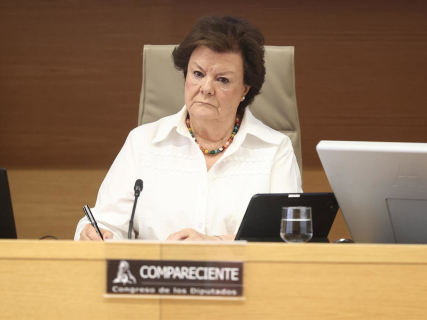
This warning is among the main conclusions of the audit report prepared by the body headed by Enriqueta Chicano on the functioning of the governance bodies of the Recovery Plan since its launch until December 31, 2024.
In this document, approved by the Plenary of the institution and to which Europa Press has had access, the Court of Auditors emphasizes that no governance body of the Recovery, Transformation and Resilience Plan (PRTR) carries out control of the actually executed spending of the European funds, and focuses on the lack of precision of the governing bodies, as well as on the shortcomings in the transparency of the information offered to the public as a whole.
A plan of more than 100 billion euros
The Plan contemplated a maximum contribution of 102.560 million euros, of which 79.854 million were allocated to transfers and 22.706 million were structured in the form of loans. The report points out that the settlement of the budget items linked to the Plan cannot be known exactly because a relevant part of the amounts recorded as executed are, in reality, transfers to autonomous communities, local entities and other institutional bodies, without it being stated whether those funds have ultimately been spent.
The auditing body also recalls that Spain opted to create a specific service in the Budgets in which the Plan's expenditures are grouped, which have accounted for between 4% and 5% of the State's final appropriations and which have undergone numerous modifications derived from the budget extension that has been in place for three fiscal years.
In particular, the institution details that the Recovery Plan appropriations represent between 4% and 5% of the total appropriations of the General State Budgets (PGE) in these years and that, due to the budget extensions, they have accumulated a very high volume of internal transfers and appropriation changes.
The report concludes bluntly: "The monitoring of this service does not make it possible to know the amount of the funds spent in the Recovery, Transformation and Resilience Plan and no authority carries out its monitoring".
Lack of key information on the official website
In another of the sections, the Court of Auditors reproaches the Recovery Plan website for not offering data on the degree of compliance with the milestones and objectives that Spain must achieve in order to receive the funds, nor on the modifications or budget execution of the Plan itself.
In view of this situation, the institution proposes to the Government that it plan with greater advance the implementation of any plan, clearly defining the specific role of each body provided for, detailing its functions and activities and precisely establishing the relations between them.
It also urges the responsible authority to promote the necessary measures to guarantee effective control of the Plan's budget execution, reinforcing the availability and quality of the economic and cost information associated with it.
Finally, the Court recommends that the Secretaría de Estado de Comunicación update, expand and reorganize the content published on the website, considering that the main source of data should become the CoFFEE-MRR management system. The purpose is to correct the discrepancies between different official publications, improve knowledge about the progress of each measure and avoid duplications in the information that is disseminated.