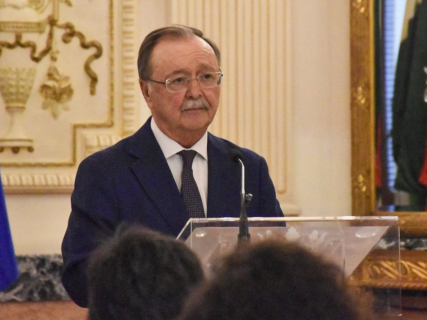
Sánchez and Vivas take their breakup to television: "He boycotts the interests of Ceuta" against "I can't trust him."

The president of the Government accuses the Ceuta leader of having changed his attitude for electoral interests, while Vivas holds the Executive responsible for not addressing the previous alerts and maintains that Morocco was behind the massive entry.

3 minutes

fotonoticia 20260826144201 1920

fotonoticia 20260826144201 1920

Add DEMÓCRATA to Google

Ask FREN

Published

Last updated

3 minutes

Most read

The crisis in Ceuta has opened a public rift between Pedro Sánchez and Juan Jesús Vivas that this Monday has been transferred in parallel to two of the main television programs. While the president of the Government accused the Ceutian leader in El Intermedio of "boycotting the interests of Ceuta" by breaking institutional loyalty, Vivas stated in El Hormiguero that the events of the last few weeks have led him to conclude that he cannot trust Sánchez to defend either Ceuta or Spain.

The two interviews practically coincided in timing and heightened the confrontation between both administrations after weeks of reproaches over the management of the massive entry of migrants recorded on July 30 and 31.

Sánchez has assured that he has "noticed a change" in Vivas regarding the cooperation that both maintained during the migration crisis of 2021. The Ceutian president, for his part, has accused the Executive of not heeding prior warnings and has again blamed Morocco for what happened.

Sánchez: "If you boycott institutional loyalty, you boycott the interests of Ceuta"

Asked on La Sexta about the collaboration of the Government of Ceuta with the central Executive, Sánchez directly contrasted Vivas's actions in 2021 with his behavior during the crisis this summer.

"I have noticed a change. I have always worked with an attitude of unity and institutional loyalty. If you boycott institutional loyalty, what you do is boycott the interests of Ceuta," he stated.

The head of the Executive recalled that both governments worked together during the previous border crisis. "With Vivas we had a similar management in 2021, where we worked shoulder to shoulder, but in 2026 we did not", he added.

Sánchez has linked that change in attitude to the electoral interests of the PP and has assured that the central Government has found "certain difficulties" in negotiations with the Autonomous City to use certain spaces and infrastructures related to the management of the emergency.

Vivas breaks with Sánchez: "I cannot trust" that he will defend Ceuta

Practically at the same time, Vivas presented a completely different version in El Hormiguero. The Ceutian president has held the Government responsible for not having reacted adequately to the signals prior to the mass entries.

"The Government has not been up to the task, the alarms and alerts were not attended to, nor my calls nor anyone from the CNI", he stated. Vivas has also questioned why there was not —or was not applied— a device prepared after the precedent of 2021.

"The precedents disqualify the possibility that I trust Sánchez to defend Ceuta; the precedents disqualify the possibility that I trust Sánchez to defend Spain", he affirmed.

Vivas has also criticized the Minister of the Interior, Fernando Grande-Marlaska, and has argued that the use of state resources could have prevented the scale reached by the emergency.

Vivas points directly at Morocco

One of the main breaking points between Sánchez and Vivas continues to be the role attributed to Morocco in the events of late July.

The Ceuta president has publicly defended again that Rabat was behind what happened and has even rejected defining it solely as a migration crisis.

"It is not a migration crisis, it is a full-blown invasion. One must have enough courage to recognize things", Vivas has stated, justifying that definition "by the scale, the manner, and the actor".

The Ceuta leader has emphasized the magnitude of the entries: "80,000 people in one day in a city of 80,000 people without knowing why they came and if they were going to return".

Sánchez, on the contrary, has rejected during his interview that a passive attitude can be attributed to Morocco in the crisis and has maintained the position that the Government has been defending regarding the actions of the neighboring country.

Two interviews and a confrontation in prime time

The political dispute also had a television dimension this Monday. The interviews of Sánchez on El Intermedio, on La Sexta, and of Vivas on El Hormiguero, on Antena 3, coincided for a good part of their broadcast.

In Ceuta, hundreds of people gathered in the Plaza de los Reyes to follow Vivas's interview via a giant screen. According to published information, the initiative came from local entrepreneurs who sought to show their support for the Ceuta president and his management of the crisis.

Vivas closed his intervention by thanking the support received from various parts of Spain and demanding that "they do not forget us". He also urged the people of Ceuta to continue defending their interests without resorting to violence.

The exchange of accusations thus confirms the deterioration of an institutional relationship that both leaders claimed as an example of cooperation during the 2021 crisis. Five years later, Sánchez accuses Vivas of harming the interests of Ceuta and the Ceuta president openly states that he no longer trusts the head of the Executive.

More key points, information and questions with FREN

AI-GENERATED CONTENT

What parliamentary status does any initiative to modify the migration crisis protocols in Ceuta currently have?

At this moment, the clearest initiative related to the management of migration crises with a direct impact on Ceuta that is under parliamentary processing is the Bill derived from Royal Decree‑Law 2/2025, on urgent measures for children and adolescents in the face of extraordinary migratory contingencies. There is no law "just for Ceuta," but this text precisely regulates the action protocols in episodes of mass arrivals, with explicit mention of Ceuta and Melilla.

1. The key initiative under processing: Bill derived from RDL 2/2025

The Royal Decree‑Law 2/2025, of March 18, approves urgent measures to guarantee the best interests of children and adolescents in situations of “extraordinary migratory contingencies”. The Congress:

  • Ratified the decree-law in the Plenary on April 10, 2025.
  • Decided to process it as a Bill (file 121/000055), through the urgent procedure, to be able to introduce changes and improvements through amendments.

According to the official file of the Congress of Deputies, the bill is:

  • Under processing in the Congress, referred to the Youth and Childhood Committee, with full legislative competence.
  • In the phase of amendments to the articles: the deadline to submit amendments is open until September 16, 2026.
    (See the file and the text in the Congress: Bill file 121/000055 )

The bill's statement of reasons emphasizes that the recent migratory pressure has had a particularly intense impact on Canary Islands and the cities of Ceuta and Melilla, and that the objective is to establish a regulated protocol for transfers and guardianship of unaccompanied foreign minors in contexts of mass arrivals. In other words, it legally configures part of the “protocols” for responding to migration crises in these territories.

2. Scope of this regulation on “crisis protocols”

Although the bill focuses on the protection of minors, in practice it means:

  • Defining how the transfer of minors from border territories like Ceuta to other autonomous communities and cities is activated and organized.
  • Clarifying the distribution of guardianship and custody competences between the State, communities, and autonomous cities (including Ceuta).
  • Establishing a stable framework for these actions, which until now have been articulated through political agreements and ad hoc decisions in Sectoral Conferences.

All this connects with the debate opened after the latest mass entry crises in Ceuta: the Government and various actors have raised the need for clear and foreseeable protocols that avoid saturation and improvisation situations in the city.

3. Other related initiatives and their status

Besides this bill, in the current and previous legislatures, broader reform initiatives of the Organic Law 4/2000 (Immigration Law) or the migratory framework have been processed, which indirectly affect crisis management at borders like Ceuta:

  • Bill proposal to amend Organic Law 4/2000, presented by the Socialist and Plurinational SUMAR Groups (file 122/000123): it included references to the situation of unaccompanied minors and the distribution of responsibilities among communities, with mention of Ceuta and Melilla. It was rejected by the Plenary of the Congress on October 5, 2024, so its processing has ended.
  • Popular Group initiatives to reform the Immigration Law to enable border rejections of swimming entries in Ceuta and Melilla and strengthen the legal protection of the State Security Forces and Corps. The press reports that these proposals have been registered as parliamentary initiatives, but in the prioritized legislative files they do not yet appear as bills in an advanced phase; many are proposals in initial phases or political initiatives (questions, PNL, requests for appearances).
4. Conclusion

In summary, as of today:

  • There is an ongoing legislative initiative with a direct impact on the crisis management protocols affecting Ceuta: the Bill derived from RDL 2/2025, in the amendment phase in Congress.
  • Other broader reforms of immigration or minor distribution mentioning Ceuta have been rejected or are in very preliminary stages.
  • There is not, for now, a specific and exclusive law on “migration crisis protocols in Ceuta”, but a set of state reforms (especially the one related to minors) that try to organize the legal and operational response in such scenarios.

What are the legal competences of the President of the Autonomous City of Ceuta according to the Statute of Autonomy?

The Statute of Autonomy of Ceuta configures the President of the City as the central piece of the self-government institutions: he concentrates the political representation of the City, directs the executive power, and articulates the relationship between the Assembly and the Government Council. These functions derive from various provisions of the Statute whose literal content appears in the consulted excerpts.

1. Institutional representation and bodies presided over

The Statute expressly establishes that “the President of the city of Ceuta presides over the Assembly, the Government Council, whose activity he directs and coordinates, and holds the supreme representation of the City”. From this formulation, three core competences derive:

  • Presidency of the Ceuta Assembly: the president not only represents it but effectively presides over it. Consistently, the Statute provides that the Assembly meets “in ordinary sessions, upon convocation by its President,” so the power to convene ordinary and extraordinary sessions is linked to this presidency.
  • Presidency of the Government Council: the president heads the collegiate body that “holds the executive and administrative functions of the city of Ceuta.” This grants him a position of head of the autonomous-local executive power.
  • Supreme representation of the City: acts as the highest institutional representative of the Autonomous City before the State, other autonomous communities, Melilla, and third public actors, without prejudice to the Assembly’s own competences.
2. Appointment, nature of the office, and relationship with the municipality

The Statute provides that “the President, who also holds the status of Mayor, shall be elected by the Ceuta Assembly from among its members and appointed by the King”. Additionally, it specifies:

  • The election must be made “among the members of the Ceuta Assembly who headed any of the electoral lists that obtained seats.”
  • An absolute majority of the Assembly is required in the first vote; if no candidate obtains it, the president is designated as the one who heads “the list that obtained the highest number of votes.”

That the president also holds the status of mayor implies that he accumulates the functions proper to the mayoralty of the municipality of Ceuta, under the terms of local regime legislation, integrated into the statutory institution of the Autonomous City.

3. Power of appointment and organization of the Government Council

The Statute attributes to the president the competence to freely appoint and dismiss councilors:

“The President appoints and dismisses the Councilors and may temporarily delegate his own executive functions to some members of the Council.”

Several powers derive from this:

  • Political configuration of the Government: decides the personal composition of the Government Council.
  • Power of dismissal: can dismiss councilors without prior authorization from the Assembly.
  • Delegation of executive functions: can temporarily delegate part of his executive functions to specific councilors, maintaining political leadership and ultimate responsibility.
4. Relations of trust and responsibility with the Assembly

The Statute articulates a scheme of rationalized parliamentarism around the president:

  • Vote of confidence: “The President, after deliberation of the Government Council, may submit to the Ceuta Assembly a vote of confidence on his program or on a declaration of general policy.” Confidence is considered granted if supported by a simple majority of the Assembly members.
  • Motion of censure: the Assembly may demand the president’s responsibility “by adopting by absolute majority a motion of censure, which must include a candidate for the Presidency of the city, from among the Assembly members.” Once approved, the candidate is understood to be invested and “shall be appointed President of the City.”
  • Incompatibility between confidence and censure: “The President may not submit a vote of confidence while a motion of censure is pending,” thus avoiding reciprocal blocking of mechanisms.
  • Dismissal of the Government Council: it ceases, among other cases, due to “the resignation, incapacity, or death of its President, the approval by the Assembly of a motion of censure, or the denial by the same of the requested confidence.” The president, therefore, is the axis of the Government’s continuity or replacement.
5. Initiative for cooperation with the State Administration

In matters of inter-administrative cooperation, the Statute provides that:

“At the initiative of the President of the city of Ceuta and the Government Delegate in the same, organs may be constituted, by mutual agreement between both Administrations, responsible for preparing and, if applicable, controlling the execution of joint plans and programs of works and services, when deemed necessary for the better satisfaction of the City’s interests.”

This provision grants the president a power of initiative in creating mixed cooperation bodies between the Autonomous City and the General State Administration, with the capacity for planning and monitoring joint actions.

Overall, the Statute configures a president who concentrates the executive leadership, the presidency of the Assembly, the mayoralty of the municipality, and the institutional representation of Ceuta, also articulating parliamentary confidence mechanisms and cooperation with the State.

What legal requirements must be met for the central Government to use autonomous infrastructures in emergency situations?

The central Government can use autonomous infrastructures and means in emergency situations, but not at its discretion: it must rely on the constitutional distribution of competences, basic civil protection and national security legislation, and, if applicable, exceptional states. In practice, this is articulated by combining inter-administrative cooperation and coordination with reinforced direction mechanisms in severe crises.

1. Basic constitutional principles

The Spanish Constitution sets a framework that conditions any use of autonomous infrastructures:

  • Competence distribution: autonomous communities have assumed competences in health, civil protection, emergencies, etc., while the State reserves public security and the bases of civil protection (art. 149.1 CE). The central Government does not “absorb” autonomous competences but exercises coordination functions and, in extreme cases, direction.
  • Unity and solidarity: the principle of interterritorial solidarity and the unity of the State legitimize that, in the face of major disasters, the Government coordinates and, if necessary, directs the joint action of all administrations to protect people and property.
  • Cooperation and institutional loyalty: constitutional jurisprudence has emphasized that State–community relations must be governed by cooperation, reciprocal information, and institutional loyalty. The use of autonomous means is usually articulated, in the first instance, through these cooperative mechanisms (agreements, joint plans, aid requests).
  • Crisis regulation: article 116 CE and Organic Law 4/1981 regulate the states of alarm, exception, and siege, which allow the Government to more intensively dispose of public and private resources, including autonomous ones, but under strong guarantees and parliamentary control.

2. Civil protection emergencies

The Law 17/2015, of the National Civil Protection System organizes the response to ordinary emergencies and so-called “national interest emergencies.” For the central Government to use autonomous infrastructures based on this law, these requirements must be met, in summary:

  • Emergency qualification: when the magnitude of the disaster requires it, a national interest emergency may be declared. At that moment, the National Coordination Center becomes the operational center and the autonomous centers are “operatively integrated” into it.
  • Duty of reinforced collaboration: the law specifies the reciprocal duties of cooperation among administrations. All administrations that have mobilizable resources are obliged to put them at the service of emergency management, which includes autonomous infrastructures and services.
  • State direction and respect for competences: the State’s operational intervention focuses on national interest emergencies. The competent minister (usually Interior) exercises powers of direction and coordination, but without “emptying” autonomous competences, rather integrating their services into a common device.
  • Planning and agreements: many uses of autonomous infrastructures are based on territorial and special civil protection plans and on agreements and prior accords approved in the National Civil Protection Council, which set in advance which means are made available to whom and how they are coordinated.

3. National security and situations of interest

The Law 36/2015, on National Security provides for the situation of interest for national security, an intermediate figure between normality and exceptional states. To activate intensive use of autonomous means:

  • The President of the Government must formally declare the situation by royal decree, defining the crisis, territorial scope, duration, possible extension, and, if applicable, the functional authority that will direct the response.
  • That declaration implies the obligation of the competent authorities (state and autonomous) to provide the human and material resources under their dependency foreseen in the plans, and additional ones if necessary.
  • Management is done with the ordinary powers of each administration (fundamental rights are not suspended), but under reinforced coordination directed by the Government.
  • The Government must immediately inform the Congress about the measures adopted and the evolution of the crisis, which introduces relevant political control.

4. States of alarm, exception, and siege

If the crisis requires it, the Government can resort to the exceptional states of Organic Law 4/1981. This intensifies its powers over autonomous means:

  • Formal declaration by royal decree (state of alarm) and, for extensions or more serious states, with prior authorization from Congress; scope, duration, and effects are determined.
  • During the state of alarm, all civil authorities of the affected territory, including autonomous and local police forces and their personnel, are under the direct orders of the competent authority (usually the Government).
  • The Government can intervene and occupy companies or services and mobilize their personnel to ensure their operation, which includes services of autonomous ownership when necessary for emergency management.
  • Strict guarantees apply: limited duration, continuous parliamentary control, judicial review of administrative acts, and right to compensation for those who suffer damages they are not legally obliged to bear.

In summary, the use by the central Government of autonomous infrastructures in emergencies rests, under normal conditions, on duties of cooperation and civil protection plans and agreements; when the situation worsens, it is articulated through the declaration of emergencies or situations of interest for national security, and, ultimately, through exceptional states, always with time limits, parliamentary control, and respect for autonomous competences.

Play

Test your knowledge with FREN!

How much do you know about this topic? Answer the following 3 questions.

What term did Juan Jesús Vivas use to refer to the massive influx of migrants in Ceuta?

Question 1 of 3

Where did hundreds of Ceutans gather to follow Vivas's interview?

Question 2 of 3

What was one of Vivas's main criticisms of the central government regarding the migration crisis?

Question 3 of 3

Hola, soy Fren. ¿Cómo te ayudo?