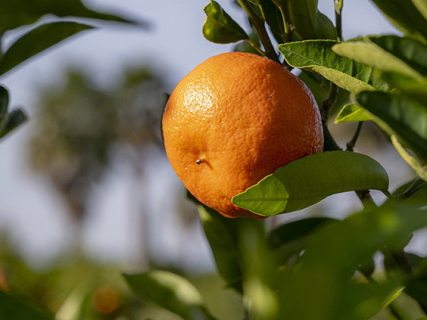

The agrarian organization Asaja, with the support of the Valencian Association of Farmers (AVA-Asaja), has registered a formal request with the European Commission to activate the bilateral safeguard clause contemplated in Article 34 of the Economic Partnership Agreement between the EU and the SADC States (Southern African Development Community), in relation to the imports of small citrus fruits from South Africa, mainly mandarins and clementines.
The initiative, defended in Brussels at the Civil Dialogue Group on International Aspects of Agriculture, aims to correct the imbalances resulting from the strong increase in European purchases of mandarins, clementines, and other small South African citrus fruits, which have quadrupled in the last decade, rising from 55,768 tons in 2017 to 221,245 tons in 2025, according to official figures from the Ministry of Agriculture, as specified by AVA-Asaja.
Along with the increase in volume, the overlap of these imports with the start of the European citrus campaign is generating a "particularly negative" effect on the extra-early and early varieties of small citrus produced in the EU.
"This is not a request against international trade. It is also not a protectionist request. It is simply a request for justice, for balance, and for the defense of reciprocity that must govern any trade agreement that aims to be sustainable and beneficial for all parties," emphasizes the agrarian organization.
AVA-Asaja recalls that, traditionally, there was a "reasonable separation" between the trading windows of the southern hemisphere and the northern hemisphere. However, it warns that "this temporal boundary has been progressively blurred, causing a significant portion of South African imports to compete directly with the early varieties produced by our farmers."
Among the consequences it denounces are "the saturation of European markets, downward pressure on prices at origin, difficulties in marketing, and a constant loss of profitability for thousands of family farms that constitute the economic and social fabric of numerous rural areas in Spain."
REQUIRES "NOT TO WAIT FOR IRREVERSIBLE DAMAGE"
AVA-Asaja argues that the signs of market disruption are "more than sufficient" to warrant a thorough and urgent assessment by the community institutions: "We cannot wait for the damage to be irreversible. Trade policy must be compatible with the survival of our producers and with the maintenance of agricultural activity in the territory."
The entity emphasizes that this claim is made in a context where European agriculture faces increasingly strict regulatory, environmental, labor, and phytosanitary demands. "It is not acceptable to impose higher costs and obligations on our farmers while allowing the entry of products from third countries that compete under different conditions," it argues.
Asaja has sent this proposal to the Directorate Generals of Agriculture and Trade of the European Commission and, at the same time, has raised it within the European agricultural confederation COPA-COGECA, with the aim of gathering support from other agricultural organizations and cooperatives from the member states producing citrus fruits that are suffering a similar profitability crisis due to the increase in imports from South Africa.