
The Provincial Council of Cáceres has launched a new call for aid, endowed with 300,000 euros, aimed at local hunting societies to finance initiatives aimed at the recovery of small game species and to reinforce the conservation of the natural environment.
This line of subsidies, which will be published in the coming days in the Official Bulletin of the Province (BOP), will allow funding for projects of up to 8,000 euros for each applicant hunting society. In the province of Cáceres, there are around 300 social hunting grounds, a figure that even exceeds the number of municipalities, as several hunting grounds are concentrated in some municipal terms.
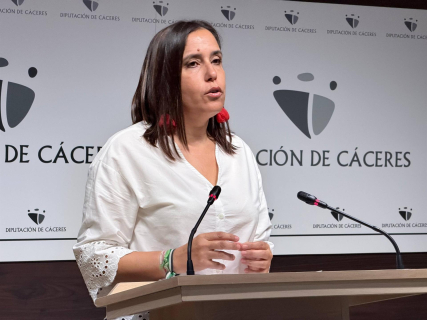
The deputy for Environment and Ecological Transition, Agriculture and Livestock, Angélica García, has detailed that among the actions that may receive economic support are measures for the recovery and improvement of habitats for small game species, such as the creation of multifunctional margins, the installation of feeders and drinkers, non-productive cereal crops, brush clearing with the sowing of grassland or meadow, and the construction of water points.
The call also includes specific interventions to promote the recovery of the wild rabbit, such as the creation of semi-extensive breeding nuclei with repopulation, the construction of artificial nurseries or mounds, duly authorized repopulations, the installation of specific feeders and drinkers, non-productive cereal and legume crops, and selective brush clearing in areas designated for the recovery of this species.
García emphasized in a press conference that the objective of the initiative goes beyond supporting social hunting, as it seeks the active conservation of the rural environment, the improvement of ecosystems, the restoration of habitats, and the strengthening of biodiversity.
In this line, the deputy has highlighted the strategic alliance with the hunting sector, emphasizing the joint work with the Extremadura Hunting Federation (Fedexcaza), because "they are the ones who know the territory" and the specific needs of local hunting societies in the towns.
Likewise, it has affected the environmental and preventive effect that these projects will have in the province, recalling that the preservation of natural environments also constitutes "a way to collaborate, for example, in the fight against forest fires," since "having spaces cared for by the people who live and work in the territory itself is one of the most effective ways to protect the environment," it has pointed out.
Details of the call and evaluation criteria
During her intervention, the deputy has broken down the essential points of this new line of subsidies, which is framed in the agreement signed between the provincial institution and Fedexcaza. The hunting societies will have the direct support of the regional network of Fedexcaza offices for the preparation and processing of their proposals, located in Navalmoral de la Mata, Coria, and Brozas.
In the administrative aspect, each local society can only submit one application linked to the social hunting ground of which it is the owner. All actions must be carried out within the territory of the province of Cáceres, comply with the current hunting technical plan, and have, before their implementation, the necessary licenses and sectoral authorizations in hunting, environmental, health, or water resources matters.
The call will give preference to comprehensive and complementary projects that coherently combine habitat improvement with the availability of water, food, and shelter, over specific or isolated interventions.
In the evaluation of the applications, among other aspects, the social implantation of the entity, the participation of female members, the technical quality and environmental impact of the proposals, the location in areas of the Natura 2000 Network, the rotation in the granting of aid, and the existence of commitments for monitoring and maintenance of the actions will be taken into account.
The general execution period of the projects will extend from September 15, 2026, to September 15, 2027, with an extension until October 15, 2027, for sowings, non-productive crops, or other interventions conditioned by specific agronomic cycles.
Applications must be submitted exclusively by electronic means through the electronic headquarters of the Provincial Council of Cáceres, within a period of one month counted from the day following the publication of the extract of the call in the Official Bulletin of the Province (BOP).