
For more than eighteen months, from ASFACUME we have held meetings, drafted proposals, and conveyed to the Administration the problems that families receiving the benefit for the care of minors affected by cancer or another serious illness, the CUME, face daily.
We did not arrive at this reform with a blank slate. We arrived with a dossier of more than 80 pages, real cases, and proposals born from the experience of families from all over Spain who know perfectly what happens when a regulation comes out of the BOE and lands in the reality of a serious illness. That is why, when we learned about the draft of the new Royal Decree, the impact was enormous.
After eighteen months of meetings and contributions, we expected a reform that would strengthen the protection of families, correct existing problems, and provide greater legal certainty. However, the first text we received seemed to us, in many aspects, a true nonsense. The focus was once again placed on families: more accreditations, more controls, more verification capacity, and the obligation to repeatedly justify medical situations that, in many cases, have been part of their lives for years. But we missed something fundamental: protection against those who control.
Throughout this process, ASFACUME has persistently requested to participate in the working group alongside the technicians responsible for drafting the new text. We did not intend to replace their work or draft a regulation from an association. We asked to contribute something that is difficult to find in an office: the accumulated knowledge of what really happens when the CUME reaches families.
Featured story
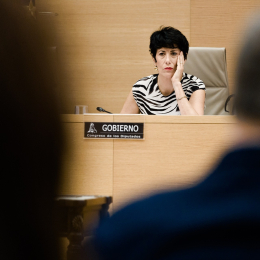
The Government faces in Congress the doubts about the aid to families with seriously ill children
4 minutes
Our requests were ignored, and perhaps there lies an important part of the problem. Listening to families should not be limited to receiving documents, holding meetings, or allowing them to present allegations when the text is already drafted. Participating means being able to warn of a problem before that problem appears written in a draft. ASFACUME is the only national association specifically dedicated to representing the more than 19,000 families receiving the CUME.
It is difficult to understand that this experience has not been present directly in the technical space where it was decided how this benefit should be applied in the coming years. Because one of the major problems of the CUME is not only in what the regulation says, but in how it is interpreted and who applies it. A very important part of the benefit is managed by the collaborating mutuals with the Social Security. And families know well the consequences that certain restrictive interpretations can have: requests for additional documentation, new reports, checks, constant renewals, or decisions that put the continuity of the benefit at risk. We do not question that there is control. What we question is its imbalance.
Those who receive the benefit are exhaustively controlled, but there are no equally effective mechanisms to control those who can condition its continuity. Families are required to prove, renew, justify, document, and undergo checks. But when a family considers that a mutual has acted disproportionately or restrictively, too often the response ends up being the same: go to court. That cannot become the normal functioning of a public policy created precisely to protect families in a situation of enormous vulnerability.
Going to court means lawyers, possible expert reports, months or even years of waiting, uncertainty, and money. And we are talking about households whose economy may have been bearing reductions in working hours, displacements, treatments, therapies, and numerous expenses derived from a serious illness for years. If a family has to go to a court for a right that perhaps should never have been lost to be finally recognized, something has failed before. And while that judicial resolution arrives, the consequences have already occurred: the benefit may have expired, the family economy may have suffered, and work-life balance may have become unsustainable.

For this reason, it is essential that obligations work in both directions. If controls over families are strengthened, the mechanisms of supervision and accountability over those who manage the provision must also be reinforced. One cannot be permanently under suspicion while certain administrative actions remain practically without consequences, even if they are later corrected.
After knowing that draft, ASFACUME went back to work. We analyzed the text, gathered the concerns of families again, and submitted our allegations within the established deadline. We have continued trying to correct those issues we consider harmful until the last moment. But an important concern remains: the speed with which the entire subsequent procedure has developed. We wonder if there has been sufficient material time to analyze with the necessary depth the more than 1,200 contributions made and assess the real consequences that some provisions may have. A sentence can take minutes to draft, but its effects can accompany thousands of families for years.
Our fear is precisely that: that the absence of families in the decisive drafting phase ends up generating a norm that, instead of reducing conflicts, produces new situations of confrontation with the mutuals and turns the courts back into the only solution. And alongside all this, another essential question remains open: the age limit. Today there are families that, as their sons and daughters approach 26 years old, face a reality that is difficult to understand. Because the day after that birthday, the illness does not disappear. Disability does not disappear. The dependency does not either. And the care continues; in fact, families stop having resources provided by the administration to take care of their sons and daughters with serious illness.
We should ask ourselves until when the need for care that gave rise to that protection remains
We are not talking about automatically extending a provision without control. We are talking about people who may continue to present a serious illness, a high disability or dependency, and a proven need for direct, continuous, and permanent care. Perhaps that is why we have been formulating the question incorrectly for too long. We should not only ask up to what age the CUME should exist.
We should ask ourselves how long the need for care that gave rise to that protection remains. From ASFACUME we will continue to defend a CUME with controls, but proportionate; with legal certainty; with homogeneous criteria; with effective mechanisms against possible abuses; and in which Justice is truly the last resort and not the only way out. And we will continue to demand something even more basic: that when legislation is made regarding these families, the families are present in the room. Because legislating for them without really involving them carries an enormous risk. And those who may end up paying the consequences are not files or statistics. They are fathers and mothers who, while all this is decided, continue doing exactly the same thing every day: caring.
ABOUT THE SIGNATURES:
Ainhoa Urones and Inga Aguirreamalloa are vice president and head of communication of the Association of Families in CUME and assimilated permits (ASFACUME).