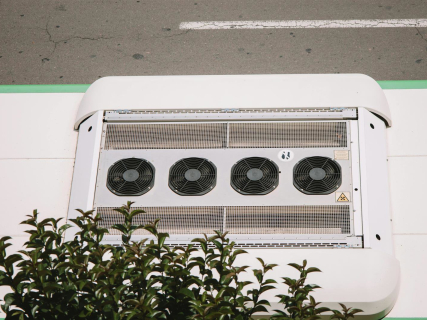

Homeowners’ communities that want to replace their building’s heating boiler with an air-source heat pump system may benefit from new economic incentives approved by the Government. The Ministry for Ecological Transition and the Demographic Challenge (MITECO) has established a system of bonuses that allows the value of the energy savings generated by these installations to be increased, with the aim of facilitating the replacement of conventional heating systems with renewable technologies. The measure, published in the Official State Gazette (BOE) last 7 November, is aimed both at residential buildings with district heating and at communities that decide to replace the individual boilers in their homes with a collective installation.
The main novelty is that buildings with centralized heating may multiply by three the recognized energy saving through the Energy Saving Certificates (CAE), while those that replace individual systems with a centralized heat pump may multiply it by four. These coefficients make it possible to increase the economic value of the actions, although they do not mean that the Government will pay three or four times the cost of the work. The incentive is obtained through a mechanism that allows the monetization of the certified energy savings, so the final amount will depend on the characteristics of the installation and on the conditions agreed with the participating companies.
The approval coincides with the publication of a new practical guide from the Institute for Diversification and Energy Saving (IDAE), aimed at resolving residents’ doubts about installing air-source heat pumps and ground-source heat pumps in existing buildings. The document explains the adaptation possibilities for the installations, the necessary procedures, and the available financing mechanisms, in a context in which many communities must face the renovation of old heating systems.
The new incentives to replace a boiler with air-source heat pump: up to four times the energy saving
The resolution of the MITECO, dated 3 November and published in the BOE on the 7th, develops the incentive plan for heat pumps provided for in the Royal Decree-Law 7/2026, of 20 March. Its objective is to increase the economic attractiveness of investments that make it possible to replace traditional boilers with more efficient heating and cooling systems by applying multiplier coefficients in the CAE system.
This means that a homeowners’ association that replaces its old centralized boiler with a heat pump may obtain certificates calculated on three times the recognized energy savings, provided that it meets the required technical conditions. If the building has individual boilers and the neighbors agree to install a centralized system, the multiplier will reach four times the savings.
For example, if an action generates certificable energy savings of 100,000 kilowatt-hours (kWh) and meets the requirements to apply the three coefficient, the system will recognize 300,000 kWh for the purposes of the CAE. However, this multiplication does not equate to automatically receiving a subsidy in a determined amount. The income will depend on the economic value agreed for the certificates and on the costs and conditions of the procedure.
What are Energy Saving Certificates and how do they allow part of the investment to be recovered
The Energy Saving Certificates (CAE) are an instrument that makes it possible to recognize energy savings achieved through certain energy efficiency actions. Each certificate represents one kilowatt-hour of final energy saved and can be used within a regulated system in which obligated energy companies participate to meet savings targets.
In practice, a homeowners’ association that replaces its boiler can obtain an economic compensation for the savings generated. To do so, the owner of those savings must agree to assign them to a company authorized to participate in the system, directly or through an authorized intermediary, such as an installation company. The savings must be verified and certified in accordance with the established procedure.
The difference with respect to a traditional grant is important. CAE do not consist of a fixed amount that the Administration grants for installing aerothermal heating, but rather in a mechanism that allows the sale or transfer of the recognized energy savings in exchange for consideration. Therefore, two communities with similar installations could obtain different amounts depending on the accredited savings, the characteristics of the project, and the economic conditions negotiated.
The new multiplying coefficients aim to raise that economic value so that boiler replacement is more attractive. However, the resolution establishes technical requirements and a global limit on the volume of savings that can benefit from these multiplying coefficients, so its application is not guaranteed in unlimited fashion for any installation.
Who can apply for incentives to install aerothermal heating in their building
The new system is aimed at owners of single-family homes, flats with individual installations, and homeowners’ communities that replace their heating systems. In the case of residential buildings, both those that have a community boiler and those that decide to move from individual boilers to a centralized system may qualify.
The regulations also contemplate deep energy rehabilitation actions and installations that combine certain existing boilers with heat pumps, although the latter must meet specific requirements depending on the climatic zone and the technical characteristics of the building.
Not any air-conditioning unit or climate control system allows access to the new multiplying coefficients. The resolution refers to electrically driven hydronic heat pumps, that is, equipment that uses water or a water-based fluid as the secondary circuit. Among the approved technologies are air-to-water aerothermal systems and certain geothermal and hydrotechnical installations.
In addition, the actions must be consistent with the technical sheets approved by the Ministry, which set conditions on minimum energy efficiency, the operation of the equipment, the installation, and maintenance. For this reason, before approving a project, the community must check with a specialized company whether the project meets the necessary requirements to generate certificates with the new coefficients.
Although the owners are the ones who can promote the investment and benefit economically from the savings, the formal request for the issuance of the CAE corresponds to the obligated parties or authorized delegates in the system, not to any neighbor on their own. The community must route the transaction through the corresponding agreements and contracts.
Vulnerable households may access additional incentives of 50%
The resolution incorporates a specific measure to strengthen the protection of households with fewer resources. Actions carried out in homes inhabited by vulnerable consumers, severely vulnerable consumers, or at risk of social exclusion may apply an additional multiplier of 1.5, provided that the required requirements are met.
This means that the coefficient provided for the action may be increased by 50% when the condition of vulnerability recognized by the regulations applies. For example, a multiplier of three could be raised to 4.5 on the corresponding eligible savings, although the calculation must be adjusted to the conditions established for each home and action.
The Ministry uses as a reference the categories of vulnerability regulated for the electric social bonus. However, those who have the social bonus recognized only for having a large family status, without meeting the income requirements provided, are excluded from this improvement.
The regulation also allows applying this protection when the vulnerable consumer is a tenant or a person who occupies a home that has been provided. In these cases, it establishes additional conditions: the situation of vulnerability must be maintained for at least two years and the landlord may not increase the rent during that period. If the contract ends earlier, the commitments provided to ensure continuity of the protection must be met.
Until when can the new aerothermal incentives be requested
The schedule is one of the most important aspects for communities that are studying whether to renew their facilities. The new coefficients can be applied to actions started from March 22, 2026, the date the Royal Decree-law that established the heat pump incentive plan entered into force.
In general, the application period ends on November 30, 2027, but actions promoted by homeowners’ associations have an extension until December 31, 2027. This allows certain projects started during 2026 to also benefit from the new system if they meet the required conditions.
In addition, the resolution distinguishes between the date of execution of the works and the submission of CAE files. Requests that include the new multiplying coefficients may be submitted starting January 15, 2027, with the general deadline until December 31 of that year. For homeowners’ associations, processing may be extended until February 28, 2028.
The regulations also establish that the multiplier may be requested only once per action. Operations whose certificates have already been issued through a favorable resolution cannot be submitted again in order to obtain the incentive again.
Therefore, communities that are preparing a boiler replacement must coordinate the execution of the work, the technical documentation, and the certification procedure, especially when they intend to benefit from the new coefficients.
What a neighbors’ community must approve to change the central heating
The replacement of a communal boiler does not depend exclusively on the existence of an economic incentive. The homeowners’ association must adopt the corresponding resolution and assess the technical and financial feasibility of the project, including the cost of the equipment, possible modifications to the indoor installations, and subsequent maintenance.
The article 17.2 of the Horizontal Property Law states that improvement actions for energy efficiency that can be accredited through an energy certificate, or the implementation of renewable sources for common use, may be approved by a simple majority of owners and participation shares when certain economic conditions are met. Specifically, the annual amount charged, once public aid has been deducted and, if applicable, financing has been applied, must not exceed twelve ordinary monthly installments of common expenses.
This rule does not mean that any boiler change can always be approved by simple majority. If the action exceeds the foreseen limits or has different characteristics, it will be necessary to examine which majority regime applies.
Before making a decision, the IDAE recommends analyzing the building’s thermal needs, the condition of the insulation, the required power, and the characteristics of the heating distribution systems. Aerothermal heating can be integrated into certain existing radiator or air-conditioning systems, but its performance depends on factors such as the operating temperature, the location of the equipment, and the insulation of the property.
Also, the available space for the outdoor units must be studied, along with the acoustic impact, the contracted electrical power, and the investment required. The new IDAE guide includes recommendations to address these aspects and a practical case on the costs and savings of an installation in a residential building.
Can the new CAE be combined with other aid to change the boiler?
In addition to the Energy Saving Certificates, some autonomous communities and town councils maintain grant programs to renovate thermal installations, although the requirements and deadlines vary depending on the territory. These programs must be distinguished from the new state mechanism, since not all of them offer the same amounts or accept the same technologies.
For example, the Madrid City Council keeps open until November 13, 2026 a call for replacing oil boilers with less polluting technologies. Among other beneficiaries, private residential property owners’ communities of buildings with at least two dwellings can access it, provided they meet the established conditions. The application is processed through the municipal platform Calderas y Clima.
In Andalusia, the Andalusian Energy Agency opened last October 22 new energy efficiency grants, also aimed at property owners’ communities and other beneficiaries. However, each funding line specifies which actions are eligible and what technical conditions must be met, so not all aerothermal installations will necessarily be entitled to funding.
The possibility of combining public grants with income derived from CAE must be examined in accordance with the applicable rules on compatibility and on the counting of savings. It is not correct to assume that any grant can be fully stacked with any other incentive, nor that the total amount of the installation will be covered by the aid.
How to request the incentives and what to check before changing the boiler
For homeowner communities interested in replacing their heating system, the first step is to commission a technical study that determines whether the installation of aerothermal or geothermal energy is feasible and what energy savings it could generate. With that information, owners can compare bids, study financing, and assess the amount they could obtain through the new Energy Saving Certificates.
The project must be submitted for approval by the homeowners' association in accordance with the applicable legal majorities. Subsequently, it will be necessary to hire an authorized installing company and agree with an obligated party or a delegate of the CAE system on the economic conditions for the transfer of the savings. It is recommended to document in writing what amount the community will receive, who will assume the costs of verification and processing, and how the certificates will be managed.
In addition, bids, contracts, invoices, technical documentation, and proof of execution of the work must also be kept, as well as the certificates and checks required by the corresponding guides.
The key to the new incentives is that they multiply the recognized energy savings, not the money that each building will automatically receive. Their impact will depend on the consumption of the old installation, the efficiency of the new system, and the economic conditions agreed upon. Even so, the measure provides a new source of financing for communities that want to move away from conventional boilers and move toward renewable heating systems, with a specific timeline that expands their options through the end of 2027.