Supermarkets open today, October 12: Carrefour, Lidl, Aldi, Dia, Alcampo, and Ahorramás

Finding open supermarkets this Monday, October 12, depends on the municipality and the establishment. Carrefour, Lidl, Aldi, Dia, Alcampo, and Ahorramás have openings in certain stores, but there is no single schedule for all of Spain.

1 minute

fotonoticia 20261006103922 1920

fotonoticia 20261006103922 1920

Add DEMÓCRATA to Google

Ask FREN

Published

Last updated

1 minute

Most read

The main precaution is to check the specific branch: the same chain may open in one location and close in another, or reduce its hours during the National Holiday.

Carrefour, Lidl, and Aldi: check the establishment

Carrefour has stores of different formats, including hypermarkets, Market, and Express. To confirm which one opens near home, its search engine allows entering the municipality or postal code and selecting the type of establishment.

In Lidl and Aldi, it is also advisable to check the store's information before heading out. The openings published for Madrid include establishments from both chains, but they should not be automatically extrapolated to the entire country.

You can check it in the locators of Carrefour, Lidl, and Aldi.

Dia and Alcampo: different hours depending on the store

Dia and Alcampo also offer shopping options during the holiday in certain establishments. The information published for Madrid includes openings, although with differences between stores and possible reduced hours.

In the case of Dia, the official search engine allows locating the supermarket before traveling. Its regular hours on Mondays should not be confused with the special holiday hours.

Ahorramás: openings and holiday hours

The official locator of Ahorramás lists establishments open on October 12 and others with regular Sunday and holiday hours from 9:00 to 15:00.

The check must be done by address in its store locator, because not all branches have the same calendar.

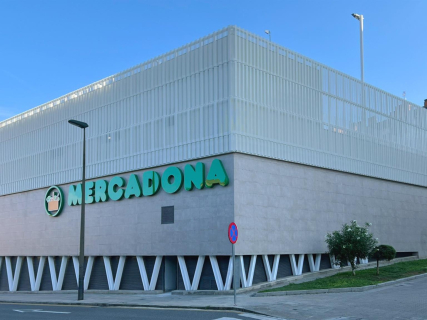
Mercadona closes for the National Holiday

Mercadona maintains the closure of its supermarkets this Monday, October 12. Those who need to make a last-minute purchase will have to look for an alternative and confirm both the opening and closing time of the chosen store.

More key points, information and questions with FREN

AI-GENERATED CONTENT

What legal requirements regulate the opening of supermarkets on national holidays in Spain?

The opening of supermarkets on national holidays in Spain is governed by a combination of basic state regulations and regional development. There is no single rule of “closed/open on all national holidays,” but rather a general framework of opening hours and days on which each autonomous community sets its specific calendar of authorized opening holidays and possible extensions or restrictions.

1. Basic state framework of hours and holidays

The central regulation is Law 1/2004, of December 21, on Commercial Hours (text in BOE), modified in key aspects by Royal Decree-Law 20/2012, of July 13. This law is enacted under article 149.1.13ª of the Constitution (foundations of economic regulation) and establishes:

  • General principle of freedom of hours (art. 1): each merchant can freely set opening and closing hours and opening holidays, always “within the framework defined by this Law and by what the autonomous communities develop.”
  • Regional competence to specify hours (art. 2): communities regulate hours in their territory but must respect state minimums and the framework of fair competition.
  • Minimum global weekly hours (art. 3, after the 2012 reform): communities cannot set a global weekly schedule below 90 hours for working days.
  • Sundays and holidays of opening (art. 4, reformed in 2012): a state minimum of 16 possible Sundays and holidays of opening per year is established, which communities can increase or reduce, but never below 10.

In other words, the State does not specify which specific national holidays supermarkets may open, but sets how many Sundays/holidays per year must be allowed to open and requires communities to choose those days following certain criteria (sales periods, Christmas campaign, periods of higher tourist influx, or long holiday weekends).

2. Role of the autonomous communities

Within this framework, each autonomous community annually approves its calendar of Sundays and authorized opening holidays:

  • It selects which holidays (national, regional, or local) count as authorized commercial opening days, up to at least the state minimum.
  • It can increase the number above the minimum or reduce it (not below 10).
  • It usually distinguishes tourist areas or specific zones with more openings than the rest of the territory.

In practice, whether a supermarket can open on a national holiday (for example, January 6, October 12, or November 1) depends on whether that day appears in the regional calendar as an authorized opening holiday and whether the establishment is subject to a special schedule regime.

3. Special regime for certain establishments

Law 1/2004 regulates a set of establishments with full freedom of hours, which can open any Sunday or holiday, regardless of whether the regional calendar indicates it or not:

  • Establishments mainly dedicated to bread, pastries, prepared dishes, press, fuels, florists, and plants, as well as convenience stores.
  • Establishments located in stations and means of transport, border points, and areas of high tourist influx.
  • Small-scale retail establishments (sales area under 300 m²) not belonging to large groups that are not SMEs, which also enjoy full freedom of hours and opening days.

Many neighborhood or small supermarkets can fall under this “small-scale retail” category. In contrast, supermarkets and large stores above those thresholds, linked to large chains, are subject to the commercial holiday calendar set by the autonomous community, even on national holidays.

4. Zones of High Tourist Influx (ZGAT)

Article 5 details the ZGAT, whose declaration corresponds to the communities at the proposal of municipalities, considering criteria such as:

  • High concentration of tourist accommodations or second homes.
  • Municipalities or areas with relevant historical heritage or major sporting/cultural events.
  • Ports with tourist cruises or areas whose main attraction is shopping tourism.

In ZGAT, included establishments (usually all commerce) have total freedom of hours and holidays. Therefore, a supermarket located in a ZGAT can open on all national holidays if the operator so decides, without depending on the general regional calendar.

5. National, regional, and local holidays

The state law does not legally differentiate between national, regional, or local holidays for commercial hours purposes: all count as “Sundays and holidays” on which the community decides which are valid for commerce. The practical difference is:

  • A holiday can be non-working and, at the same time, be a commercial opening day if the community sets it so in its calendar.
  • Municipalities can add nuances through ordinances (for example, within ZGAT), always within the regional and state framework.

Additionally, Law 7/1996, on Retail Trade Regulation, although focused on other aspects (hiring, special sales, supplier–distributor relations), complements this framework, and the Constitutional Court has defined in several rulings the division of powers between State and communities on hours and internal commerce.

In summary, to know if a specific supermarket can open on a national holiday, one must check: (1) if by size or type it falls under a freedom of hours regime; (2) if it is in a ZGAT; and (3) what the annual regional calendar of authorized Sundays and holidays says.

What are the competences of municipalities and autonomous communities regarding commercial hours?

In Spain, commercial hours are governed by a shared competence scheme: the State sets the bases, the autonomous communities develop and specify the hours regime in their territory, and municipalities act on a more limited level, usually through ordinances and the authorizations granted by regional regulations.

The basic pillar is Law 1/2004, of December 21, on Commercial Hours, enacted under article 149.1.13ª of the Constitution (bases and economic regulation). This law:

  • Proclaims in its article 1 a general principle of freedom of hours for each merchant, but “within the framework” defined by the law itself and by what the autonomous communities establish.
  • Recognizes that autonomous communities have competence in internal commerce, thus configuring a basic framework they can develop.
Competences of the State

Law 1/2004 sets several elements that limit or channel regional regulation:

  • Minimum global weekly hours (art. 3): autonomous communities cannot restrict the global schedule on working days below 90 hours per week. Above that minimum, they can set limits or allow full freedom.
  • Sundays and holidays of opening (art. 4): the state minimum number is 16 per year, but the law allows communities to reduce it, never below 10. They can also increase it above the minimum.
  • Special regime of total freedom (art. 5): establishes a list of establishments with full freedom of hours nationwide (e.g., gas stations, bakeries, press, florists, convenience stores, and commerce in stations, airports, or high tourist influx areas). Communities can only modulate some aspects within the margins the law allows.
  • Zones of high tourist influx: the law defines the concept and sets homogeneous criteria nationwide (areas with high tourist offer, cultural heritage, cruise ports, shopping tourism, etc.) and requires that, in certain cases of tourist intensity, at least one zone with freedom of hours be declared in the municipality.
  • Supplementary freedom clause: the first and second additional provisions foresee that if a community does not exercise the options the law grants regarding weekly hours or Sundays and holidays, a regime of freedom of hours and choice of Sundays and holidays applies directly for merchants.
Competences of the autonomous communities

Based on these state foundations, article 2 of Law 1/2004 expressly attributes to autonomous communities:

  • The specific regulation of opening and closing hours of commercial premises in their territory, respecting free competition and state bases (minimum 90 hours, range of 10–16 or more holidays, freedom for certain establishments, etc.).
  • The setting of maximum or minimum global weekly hours within those limits and, in practice, the configuration of the community’s general commercial hours model.
  • The determination of Sundays and holidays of opening and their distribution throughout the year (sales, Christmas campaign, long weekends, tourist periods), within the range set by state law.
  • The declaration of zones of high tourist influx, usually at the proposal of municipalities, being able to specify their territorial and temporal scope as long as justified according to commercial, tourist, and consumer interests.
  • The establishment of public information obligations about hours (art. 3.3) and the design of the sanctioning regime for infractions in calendars and commercial hours (art. 6).
  • The specific regulation of hours for cultural establishments (e.g., bookstores or similar), within the law’s limits (art. 5.7).

In practice, each community approves its own law or commercial hours regulation, detailing these aspects and which can be more or less liberalizing.

Competences of the municipalities

Municipalities do not have a general direct competence to define the basic commercial hours regime, but they do have a relevant role in several areas:

  • Proposal of zones of high tourist influx: Law 1/2004 foresees that autonomous communities declare these zones “at the proposal of the corresponding municipalities.” Municipalities can thus promote the liberalization of hours in specific areas of their territory.
  • Specific closures for public order reasons: the third additional provision of Law 1/2004 enables communities to enact rules allowing municipalities to agree on the individualized closure of establishments selling alcoholic beverages for public order reasons.
  • Municipal ordinances: to the extent regional legislation allows, municipalities can specify local application aspects (e.g., compatibility with noise or terrace ordinances) without altering the minimums and maximums set by the State and the autonomous community.

In summary, the State establishes the basic framework and certain total freedom cases; autonomous communities design the general regime of hours, holidays, and tourist zones in their territory; and municipalities act mainly through proposals and specific measures, or through competences delegated or recognized by regional regulations.

Which political parties have recently proposed regulatory changes regarding the liberalization of commercial hours?

In the approximate horizon of the last 12–18 months, several political actors can be identified based on parliamentary initiatives and press coverage who have proposed regulatory changes in Spain related to the liberalization of commercial hours, especially on Sundays, holidays, and zones of high tourist influx. Broadly speaking, there is one bloc seeking to restrict liberalization and another that has promoted or defended its expansion.

State level: Sumar in Congress

The clearest movement at the state level comes from Sumar:

  • In Congress, the Plurinational Parliamentary Group SUMAR has registered the Bill to amend Law 1/2004 on Commercial Hours to guarantee the right to Sunday rest and family life enjoyment (file 122/000277), admitted for processing and published in May 2026 (text in BOCG).
  • This initiative proposes to reduce the maximum number of Sundays and holidays of opening to 8 per year, allowing autonomous communities to reduce it further. Although it maintains a regime of freedom of hours for certain establishments (convenience stores, gas stations, small shops…), it reinforces the idea that the general calendar should be more restrictive and prioritize Sunday rest.
  • In parallel, Sumar, through Compromís deputy Alberto Ibáñez, has announced and explained in the press (for example in Demócrata) the same line: a state bill to limit the capacity of autonomous communities to authorize widespread Sunday openings and curb the “free-for-all” opening in territories like the Community of Madrid or certain tourist zones.

Consequently, at the state level the clearly identified actor is Sumar (including Compromís within its group), with an agenda of less liberalization and reinforcement of Sunday rest and work-life balance.

Regional level: Aragón and Community of Madrid

Aragón: PP, IU, and Chunta Aragonesista

In Aragón, the debate has focused on the regional law on commercial hours:

  • According to the newspaper Demócrata, the PP in Aragón promoted a modification of Law 7/2005 on commercial hours and holiday openings processed by a single reading, aiming to increase the number of holiday openings for large stores. This is a clearly more liberalizing orientation.
  • Opposing this reform, Izquierda Unida Aragón has positioned itself against it, highlighting precarious employment in commerce and work-life balance problems derived from expanding work on Sundays and holidays. Their goal is to reverse the holiday extension and limit liberalization.
  • In the strictly parliamentary sphere, the Chunta Aragonesista Parliamentary Group (CHA) has presented in the Cortes of Aragón a Non-Law Motion rejecting the opening of more holidays in large commercial surfaces (PNL no. 173/25), processed in the Institutional and Statutory Development Commission (BOCA). This initiative explicitly seeks to stop new liberalizations on holidays.

In Aragón, therefore, two blocs confront each other: PP as promoter of greater holiday openings for large stores, and IU Aragón and CHA as promoters of initiatives to maintain or reinforce restrictions.

Community of Madrid: PSOE

In the Community of Madrid, where since 2012 a very liberalizing regulation on commercial hours has been in force, at least one initiative has been registered in the last year and a half aiming to modulate that framework:

  • The Socialist Parliamentary Group in the Assembly of Madrid has presented the Bill to amend Law 16/1999, on Internal Commerce of the Community of Madrid (initiative PROP.L-12/2026, admitted for processing on 06/15/2026; initiative file).
  • This bill focuses on so-called convenience stores: it maintains freedom of hours for those meeting legal requirements but tightens the regime for establishments that claim that category without respecting the required percentages. For the latter, it proposes applying the general commercial hours regime and prohibiting alcohol sales between 10:00 p.m. and 8:00 a.m..

Although it does not globally question Madrid’s freedom of hours, the regional PSOE promotes here a partial correction of liberalization, especially in the nighttime segment and regarding certain commerce formats.

Summary by parties

  • Sumar / Compromís (state level, Congress): bill to reform Law 1/2004 and reduce the number of Sundays and holidays of opening and the regional margin to liberalize hours. Direction: less liberalization.
  • PP (Aragón): reform of Law 7/2005 on commercial hours to increase holiday openings for large stores. Direction: more liberalization.
  • Izquierda Unida Aragón: strong opposition to that holiday extension, focusing on labor rights and local commerce. Direction: restrict or reverse liberalization.
  • Chunta Aragonesista (CHA): Non-Law Motion rejecting more holiday openings in large stores. Direction: less liberalization.
  • PSOE (Assembly of Madrid): bill on convenience stores and nighttime alcohol sales, limiting “fraudulent” use of freedom of hours regime and introducing specific restrictions. Direction: partially limit existing liberalization.

Other regional governments have approved annual holiday opening calendars or worked on broader reforms of their commerce laws, but with the available information, the above parties are clearly linked to recent regulatory changes explicitly related to the debate on liberalization of commercial hours.

Play

Test your knowledge with FREN!

How much do you know about this topic? Answer the following 3 questions.

Which supermarket keeps all its stores closed on October 12th?

Question 1 of 3

What should a customer do before going to a supermarket on October 12th?

Question 2 of 3

What does the news indicate about the opening hours of supermarkets like Ahorramás during the holiday?

Question 3 of 3