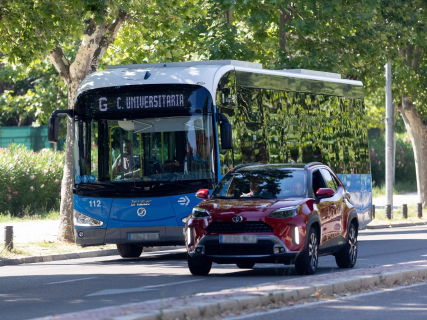

The Bus-VAO lane is designed to facilitate the circulation of buses and vehicles that transport several people. The acronym VAO stands for high occupancy vehicle, a category whose minimum number of passengers is specifically established for each section.
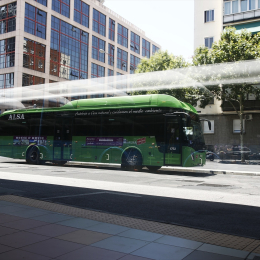
These lanes are usually installed at the accesses to large cities, where traffic jams concentrate at the beginning and end of the workday. By reserving space for collective transport, the Administration seeks to move more people with fewer vehicles and reduce congestion.
What is the difference between a BUS lane and a Bus-VAO?
A BUS lane is primarily reserved for public transport and, according to the applicable regulation, may admit taxis or other authorized vehicles.
The Bus-VAO also allows the circulation of cars that reach the required minimum number of occupants. In most state sections, at least two people are required, including the driver, although the figure, schedules, and exceptions may vary. The signage located at each access determines who can use it at that moment.
Who can circulate in a Bus-VAO lane?
In general, these lanes may admit:
- Buses.
- Cars with the established minimum number of occupants.
- Two or three-wheeled motorcycles.
- Adaptable mixed vehicles.
- Taxis, when the regulation of the section authorizes it.
- Emergency vehicles and maintenance services.
- Vehicles that transport people with reduced mobility and carry the corresponding sign.
Cars with trailers, bicycles, mopeds, personal mobility vehicles, and animal-drawn vehicles cannot circulate in the VAO lanes regulated by the General Traffic Regulation.
Can an electric car with a single occupant enter?
It depends on the section. The traffic regulation of 2026 allows certain cars with 0, ECO, C, or B labels to circulate with a single occupant when the light panels expressly authorize it. Having an environmental label, therefore, does not automatically grant access to all Bus-VAO lanes.
The new Bus-VAO of the A-2 constitutes a more restrictive example. During its testing phase, buses, motorcycles, authorized vehicles, and cars with two or more occupants, regardless of their propulsion system can circulate. The DGT has expressly warned that an electric vehicle cannot use it if only the driver is traveling.
How do these lanes work?
A Bus-VAO can have a physically separated roadway, as occurs in certain accesses, or use one of the existing lanes and change function according to the time.
In the case of the A-2, the left lane temporarily becomes Bus-VAO during the activated time slots and returns to general circulation when the reserved hours end. The variable message panels and beacons indicate when it can be used and at which points it is allowed to enter or exit.
A red cross over the lane prohibits occupying it and requires leaving it safely. The driver must always pay attention to the dynamic signage, even when they normally meet the requirements to access.
How many people must the vehicle carry?
There is no single figure for all of Spain. The minimum occupancy is set by the traffic authority for each road, although it is usual to require two people, including the driver.
In some sections, different requirements may be established or exceptions allowed depending on traffic intensity, the type of vehicle, and the messages displayed on the panels. Before accessing, the driver must check both the schedule and the conditions indicated on the road.
The new Bus-VAO of the A-2
The lane of the A-2 began its testing phase in August between Madrid and Torrejón de Ardoz. During the first week, it operates from 7:00 to 9:00 hours in both directions. Subsequently, it will also include the time slot from 15:00 to 17:00 hours in the direction of leaving Madrid while the tests continue.
Outside of those hours, the left lane is open again to general traffic. This infrastructure affects trips to Madrid from towns in the Henares corridor and from provinces connected by the A-2, such as Guadalajara and Soria.