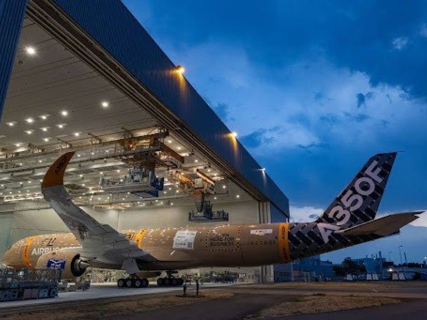

Airbus estimates that the global air cargo transport business will grow by 46% by 2045. This advance would imply increasing the current fleet of 2,360 cargo planes to 3,460 aircraft over a horizon of 19 years, according to a press release communicated this Wednesday that includes what was presented at the Cargo Facts symposium.
The aerospace group projects a total need for 2,670 additional freighters, which will mainly be used to replace veteran aircraft (1,580 units), although they will also serve to support the expansion plans of airlines (1,090 aircraft).
By regions, most of the demand will come from North America and Asia-Pacific, with 925 and 850 planes, respectively, which accounts for about two-thirds of the global volume. In Europe and the Commonwealth of Independent States (CIS), 515 aircraft will be required, while Latin America will need 165, the Middle East 125, and Africa 90.
According to Airbus's forecasts, global trade will grow over the long term at a compound annual growth rate of 2.9%, so global air cargo traffic will increase by around 3.2% annually over the next twenty years.
Asia-Pacific will continue to hold the top position as the main hub for international air cargo traffic, with routes to North America and Europe concentrating the largest volumes.
"Despite high fuel prices, ongoing geopolitical disruptions, and supply chain constraints, air cargo transport has demonstrated remarkable resilience," Airbus has pointed out.
Although air cargo represents less than 1% of global trade in terms of weight, it accounts for more than 30% of its value, highlighting that it is a "vital mode of transport" for products that require reduced delivery times.
In this regard, Airbus has detailed that the weight of computers and high-tech goods shipped by air has doubled in the last three years, reaching 15% by 2026.
The rise of e-commerce and disruptions in key maritime routes, such as the Strait of Hormuz or Bab al-Mandeb, also reinforce the role of aviation as an alternative for transporting these types of goods.