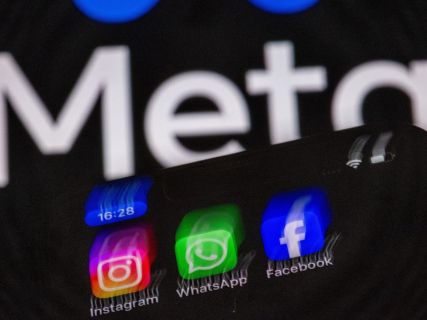
Historic fine to Meta: condemned to pay 25 billion dollars for deceiving Facebook users

A judge from New Mexico considers that the tech company violated consumer protection laws 43 million times by offering misleading information about its privacy and content moderation policies.

fotonoticia 20260622182940 1920

fotonoticia 20260622182940 1920

Add DEMÓCRATA to Google

Ask FREN

Published

Last updated

2 minutes

Most read

Elecciones 29N · Encuestas

La media de las encuestas

Media a 21 de octubre de 2026 · 15 institutos

  • PP31,6 %
  • PSOE26,9 %
  • Vox18,7 %
  • Sumar6,3 %
  • Podemos3,1 %
  • ERC2,2 %
010203040ene 2024jul 2024ene 2025jul 2025ene 2026jul 2026

Media del último estudio de cada instituto en 30 días y su evolución semanal desde el 23J. Partidos con al menos un 2 %.

Todas las encuestas

Elecciones generales del 29 de noviembre · Demócrata

New judicial blow for Meta in the United States. A judge in New Mexico has condemned this Wednesday the company owner of Facebook, Instagram, and WhatsApp to pay 25 billion dollars for deceiving Facebook users about their privacy and content moderation policies. The ruling represents one of the largest economic sanctions imposed on Mark Zuckerberg's company.

Judge Francis Mathew has determined that Meta violated consumer protection regulations up to 43 million times, according to information gathered by Associated Press. The sentence responds to a lawsuit driven by the Attorney General of New Mexico, Raúl Torrez, who has led various legal actions against the tech company's practices.

The amount finally imposed is below the 35 to 40 billion dollars that the State was claiming. Meta, for its part, had rejected that claim as disproportionate and argued that the sanction should not exceed 3.4 billion.

The 25 billion will be allocated to education

The Attorney General of New Mexico has celebrated the ruling and announced that the 25 billion dollars will be deposited into a state fund intended for education.

The procedure has focused on the information that Facebook provided to its users about the handling of their personal data and content moderation measures. The court has considered that the platform's practices violated the obligations established by state consumer protection legislation.

The conviction adds to a growing judicial pressure on Meta in the United States, where various states have questioned both its privacy policies and the impact of its platforms on minors.

Meta accumulates new convictions and million-dollar agreements

This is not the first judicial setback that the tech company has received in New Mexico this year. In August, another court in the state condemned Meta to pay 567 million dollars for the harm caused to the well-being and mental health of minors.

In that case, the funds were allocated to finance mental health programs for adolescents. The ruling also forced the company to introduce restrictions on the operation of Instagram and Facebook to protect underage users.

That same month, Meta reached a settlement of 18 billion dollars to resolve lawsuits brought by attorneys general from various U.S. states. The accusations stated that the company had designed its platforms to encourage addictive behaviors among minors and improperly collect their personal data.

The new sentence of 25 billion expands the economic consequences of the proceedings against the company and reinforces the role of New Mexico in the U.S. legal actions against large digital platforms.

More key points, information and questions with FREN

AI-GENERATED CONTENT

What is the status of other similar lawsuits against Meta in the United States?

Lawsuits against Meta in the United States are at different stages: agreements pending approval, convictions, and ongoing proceedings. If by "similar" you mean those related to addiction, mental health, and child protection, the main development is the agreement announced in August 2026, which does not close all litigation. This is the situation as of October 21, 2026.

1. States' macro-case: agreement pending approval

The federal trial in Oakland, California, began in August with claims about the allegedly addictive design of Facebook and Instagram, misleading information about their safety, and data collection from children under 13 without parental consent. California, Colorado, Kentucky, and New Jersey led the first trial, within a broader set of claims.

During the proceedings, a settlement of up to $16.68 billion was announced to resolve lawsuits from 29 states, according to Demócrata, August 26. Meta did not admit wrongdoing. It is important to distinguish the settlement from a judgment: subsequent information indicated that it still needed judicial approval to be binding and enforceable; no later approval is recorded in the sources consulted. This was explained by Demócrata about the agreement.

2. Florida: independent litigation and precautionary measures

Florida maintains a separate proceeding and did not join the general agreement. In October, its attorney general requested precautionary measures, that is, provisional obligations while the main litigation is resolved.

The request includes removing accounts of children under 13, limiting daily use by teenagers to two hours, and disabling certain features such as infinite scrolling and nighttime notifications. The request is still pending: what the prosecution requested should not be confused with obligations already imposed by the court. See EFE, October 7.

3. New Mexico: there are already conviction rulings

This proceeding has passed the initial review phase. On March 24, 2026, a jury imposed a sanction of $375 million for deceptive practices related to child safety and sexual exploitation on the platforms, according to Demócrata about the verdict.

Later information, from August 17, also reported a $567 million sanction intended for a youth mental health fund and network modifications. The news consulted does not clarify how these amounts relate, so they should not be summed or presented as a single firm sanction. That later ruling appears in Demócrata about the macro-trial.

4. Private lawsuits: some with verdicts and others ongoing

In Los Angeles, an individual lawsuit for damages associated with the use of Instagram and YouTube has already ended with a favorable verdict for a young woman. Meta expressed disagreement and said it was evaluating its legal options; that statement alone does not prove that an appeal was filed. This is covered by Demócrata about the individual case.

Additionally, thousands of claims are grouped through multidistrict litigation, which allows sharing evidence and resolving common issues. The state agreement does not automatically resolve those private lawsuits.

5. Antitrust: a different front

Separately, the Federal Trade Commission's lawsuit over the acquisitions of Instagram and WhatsApp is on appeal before the D.C. Circuit, after a decision favorable to Meta. There is no final order to sell both platforms. The follow-up is available at Law360. This case concerns competition, not harm to minors.

What are the powers and responsibilities of a state attorney general in the United States?

The Attorney General of the United States is the highest official of the federal Department of Justice and, at the same time, the main legal advisor to the federal government on criminal matters and many general legal issues. It is an executive branch position, appointed by the president and confirmed by the Senate, combining political leadership, administrative management, and legal action functions.

In general terms, their powers and responsibilities can be grouped into four main areas: leadership of the Department of Justice, federal criminal prosecution, legal advice to the Executive, and defense of the legal interests of the United States in courts.

1. Leadership of the Department of Justice (DOJ)

The Attorney General is the head of the Department of Justice (DOJ), a "super ministry" of legal-criminal nature with tens of thousands of employees. Among their leadership functions are:

  • Setting federal criminal policy priorities, for example, deciding whether to focus more effort on fighting organized crime, public corruption, financial crimes, terrorism, cybercrimes, civil rights, drugs, etc.
  • Overseeing agencies under the DOJ, such as the Federal Bureau of Investigation (FBI), the Drug Enforcement Administration (DEA), the Bureau of Prisons (federal prison system), or the Bureau of Alcohol, Tobacco, Firearms and Explosives (ATF), among others.
  • Appointing and supervising federal prosecutors (United States Attorneys) in each federal district, who handle specific cases before federal trial courts.
  • Managing the internal organization of the Department of Justice: division structure (criminal, civil, antitrust, civil rights, environment, national security, etc.), human resources, budgets, and internal protocols.
2. Powers in federal criminal prosecution

From a criminal perspective, the Attorney General is the pinnacle of federal public prosecution. Their powers include:

  • Directing federal crime prosecution policy, issuing instructions and criteria to district prosecutors on what types of cases to charge, when to use plea bargains, or what priorities to follow in investigations.
  • Authorizing or supervising especially sensitive investigations, for example, those involving high-ranking public officials, national security, or politically impactful issues.
  • Ultimately deciding on filing or dropping charges in certain matters of national relevance, although day-to-day work is done by district prosecutors.
  • Issuing law enforcement guidelines (guidelines, memos) that guide how to interpret certain criminal laws or how to use tools like wiretaps, cooperation agreements, or seizures.
3. Principal legal advisor to the federal government

The Attorney General is also one of the main legal advisors to the president and the entire federal Executive:

  • Issuing formal legal opinions (opinions) at the request of the president or federal departments, on the legality of policies, executive orders, or administrative actions.
  • Overseeing the Office of Legal Counsel (OLC), a specialized unit that prepares technical opinions on constitutional and legal interpretation that, in practice, guide many executive decisions.
  • Participating in the preparation of federal regulatory projects from the perspective of their constitutional and legal fit, especially in criminal and federal-state competence areas.
4. Representation and defense in courts

Another essential function is representing the interests of the United States in courts:

  • Leading federal litigation in cases where the United States is a party, both in criminal and civil contentious processes (for example, lawsuits against the federal government or actions filed by it).
  • Overseeing the relationship with the Solicitor General’s Office, which is the office that, in practice, handles government cases before the Supreme Court and other appellate courts, deciding which cases to appeal and what legal position to defend.
  • Participating in coordination with state prosecutors when the same act may give rise to state and federal crimes, to avoid conflicts and overlaps.
5. Political dimension and limits

The Attorney General is part of the presidential cabinet, so it is a trusted position with an inevitable political dimension. However, in practice, they are expected to act with a high degree of professional independence, especially in criminal investigations affecting members of the government or political life.

Their powers are not unlimited: they are subject to the Constitution, laws passed by Congress, budgetary control, judicial scrutiny (courts can overturn illegal actions), and political oversight by Congress, which can summon them to testify and, in extreme cases, initiate removal processes against high executive officials.

In summary, the Attorney General of the United States is simultaneously the federal Justice Minister, head of federal public prosecution, and key legal advisor to the government, with powers ranging from leading major security agencies to defining criminal policy and defending the state's interests in courts.

What requirements must digital platforms meet to adjust their privacy policies to U.S. legislation?

Digital platforms must adapt both their privacy policy and their actual practices to a fragmented U.S. framework: federal rules, sectoral laws, and state legislation. There is no general federal law equivalent to the European GDPR; therefore, obligations depend on the users served, the data processed, and the activity carried out. Publishing a correct notice is not enough if the platform acts otherwise.

1. Determine which rules apply

The first step is to identify where the platform operates, what information it collects, and whether it processes data of minors, health, or finances. It must review applicable state laws, without assuming that complying with California guarantees compliance throughout the United States. As a general reference, the Federal Trade Commission —FTC— pursues deceptive or unfair practices: privacy promises must be truthful and effectively respected.

2. Provide clear and accurate information

The policy must be accessible, understandable, and consistent with the service's operation. According to applicable rules, it should explain:

  • What categories of data it collects, their sources, and their purposes.
  • With which categories of third parties data is shared and whether there is data sale or personalized advertising.
  • Retention periods or criteria to determine them.
  • Available rights, how to exercise them, and how to contact the company.
  • The use of tracking technologies, profiling, or automated decisions, when applicable.

Relevant uses should not be hidden in ambiguous clauses nor protections announced that technically do not exist.

3. Facilitate real rights and options

The California Consumer Privacy Act (CCPA), amended by the CPRA, applies to certain businesses operating in that state and exceeding legal thresholds. It recognizes, with exceptions, rights of access, deletion, correction, opting out of data sale or sharing, and limiting certain uses of sensitive information. It also prohibits discrimination for exercising these rights.

Subject platforms must enable simple mechanisms and respect recognized opt-out signals, such as Global Privacy Control, when applicable. Sharing data for behavioral advertising across contexts may trigger obligations even if there is no conventional sale.

4. Obtain consent when required

There is no general federal obligation to obtain prior consent for all collection. However, sectoral, state, or specific processing rules may require it. When applicable, consent must be informed, specific, and affirmative, without pre-checked boxes or manipulative interfaces. Accepting general terms does not automatically substitute for specific consent.

5. Apply sectoral protections
  • Minors: COPPA requires, for services directed at children under 13 or that know they collect their data, parental notices and verifiable parental consent, with legal exceptions. It also contemplates review, deletion, security, and limited retention.
  • Health: HIPAA imposes obligations on covered entities and their associated providers. A wellness application is not automatically included.
  • Finance: GLBA requires covered institutions to provide privacy notices, certain opt-out options, and security safeguards.
6. Support the policy with operational controls

Adaptation requires inventorying data, limiting retention, controlling access, evaluating providers, and preparing incident responses. Measures must be proportional to risk; the FTC guidance highlights security and third-party oversight. Breach notifications depend on state and sector.

Contracts and international transfers must also be reviewed: there is no general federal regime equivalent to the European one, but there are specific restrictions. In short, the policy must describe controls that actually work, not just reproduce a template.

Play

Test your knowledge with FREN!

How much do you know about this topic? Answer the following 3 questions.

Why was Meta ordered to pay 25 billion dollars in New Mexico?

Question 1 of 3

Who initiated the lawsuit that resulted in the 25 billion dollar fine against Meta?

Question 2 of 3

To which state fund will the 25 billion dollar fine against Meta be allocated?

Question 3 of 3