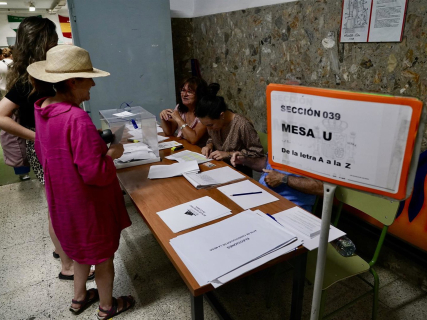

Citizens designated to be part of an electoral board in the general elections of November 29, 2026 have a series of labor rights intended to facilitate the fulfillment of their obligations during the voting day. In addition to the financial compensation for participating in the electoral process, the legislation establishes paid leave and a reduction of five hours in the workday of the following day, a measure that also applies when Sunday coincides with the worker’s usual rest day.
Article 28 of the Organic Law of the General Electoral Regime (LOREG) recognizes these rights for employees and civil servants who serve as presidents or members. The regulation also extends to alternates who ultimately must occupy one of these positions, although not to those who only go to the polling station and are released after the board is constituted. The main question concerns Monday, November 30, when thousands of workers will have to return to their jobs after having participated in the elections.
How many hours can you miss work if you are assigned to an electoral board on November 29
The regulations distinguish between the leave corresponding to the electoral Sunday and the reduction of the workday on the following Monday. If you have to work on Sunday, November 29, and you have been designated president or member of an electoral board, you have the right to be absent for your entire workday without losing pay. This is a paid leave that allows compliance with a legal obligation and that the company must respect.
This right does not depend on whether the voting ends before or after your usual work schedule. Electoral boards must be constituted first thing in the morning and their members are obliged to remain until the count and the corresponding procedures are completed, so it is not possible to freely combine both activities.
In addition, all workers who actually serve as board members have the right to a reduction of five hours in their workday on Monday, November 30, even when Sunday the 29th was not expected to be a workday because it is their rest day. This is expressly established by LOREG, which recognizes this second leave regardless of the weekly rest period.
The five free hours of Monday, November 30: how they are applied
The five-hour reduction in working hours constitutes one of the main rights of those who take part in an electoral table. These are not hours that must be made up later nor can they be deducted from the salary, since the leave is paid and responds to the fulfillment of a public duty.
In practice, if a worker has a usual eight-hour workday on Monday, they will only have to work three hours, maintaining the remuneration corresponding to their full workday. For example, a person whose schedule is from 9:00 to 17:00 hours will be able to enjoy the reduction during the first five hours of work and begin their activity at 14:00 hours, in accordance with the general criterion for applying the leave.
The Central Electoral Board states that this reduction is enjoyed on the day immediately after the elections, so it corresponds to Monday, November 30. If that day is not worked because of weekly rest, the leave is not automatically moved to Tuesday nor can it be accumulated to vacations or other days off.
The measure is especially important for those who must remain at the polling place until late at night. Although the polls generally close at 20:00 hours, the presidents and members must later take part in the count and complete the electoral documentation, so their workday may be extended several more hours.
What happens if you work at night or have rotating shifts
Workers who carry out their activity on night shifts are also protected by electoral leave, although the application of the free hours must take into account when their workday begins.
The Central Electoral Board establishes that the night shift that begins on the day of the elections itself is considered the workday of the election day. Therefore, a person who has to work from the night of Sunday the 29th until the early morning of Monday the 30th may avail themselves of the paid leave corresponding to the voting day if they have served as a member of the table.
Likewise, the five-hour reduction can be enjoyed in the following night shift when this begins on Monday, November 30. This rule prevents workers with night schedules from losing the right recognized for those who work daytime shifts.
In any case, it is advisable to notify the company of the electoral appointment as soon as the notification is received and to specify how the leave will be applied, especially when there are rotating shifts or workdays that extend over two calendar days.
Do alternates have the right to five hours off on Monday?
It depends on whether they ultimately have to replace a regular member. The alternates are obliged to report to the polling station at 8:00 a.m. on Sunday, November 29, but their labor rights change depending on whether they end up forming part of the table.
If the president or one of the regular members does not appear and the alternate must take their place, they will be entitled to the same paid leave and the reduction of five hours on Monday, November 30. At that point they assume the functions and responsibilities of an effective member of the polling station.
On the contrary, if the regular members appear and the alternate is released after the table is constituted, they are not entitled to the five-hour reduction the following day. Nor are they entitled to the full-day leave on Sunday, although they may justify the indispensable time they needed to fulfill the obligation to appear, in case it coincided with their work schedule.
This distinction also applies to financial compensation: alternates who do not end up serving as effective members of the table do not receive the electoral allowance.
How to justify to the company that you have been part of a polling station
To benefit from these rights it is important to communicate the appointment to the company and subsequently prove effective participation in the polling station. The notification received after the draw allows the designation to be justified initially, but it does not necessarily prove that the position has been carried out, especially in the case of alternates.
For this reason, workers may request a certificate of attendance or participation in the table through the corresponding electoral officials. This document makes it possible to prove that they have fulfilled their obligation and facilitates the application of labor leave.
The company cannot require that the hours of paid leave be made up in later days nor deduct them from vacations. If discrepancies arise over their application, the worker may go to their labor representatives or seek advice to enforce the rights recognized by the electoral regulations.
What is the difference between the leave to vote and that of the members of the polling station
The legislation also provides leave for citizens who have to work during the general elections and need to go vote. However, these authorizations must not be confused with the rights of those who are part of a polling station.
Article 13 of Royal Decree 605/1999 establishes that workers whose schedule coincides with voting may have up to four paid hours to exercise their right to vote, depending on the specific conditions of their workday and the applicable provisions.
By contrast, the presidents and members who must work on Sunday have the right to be absent during the entire workday and, in addition, to enjoy the five hours of reduction on Monday, November 30.
The difference is important: while the ordinary leave makes it possible for a worker to vote, that of the members of the polling station compensates, in labor terms, for the fulfillment of an electoral obligation that may last for a good part of the day and night.