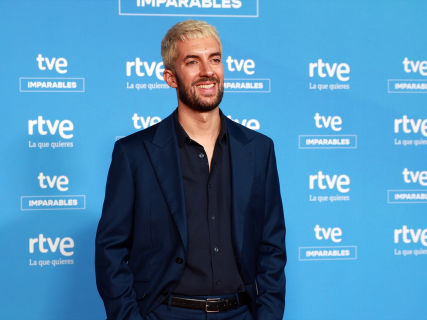
The influencers and their digital power before the 29N: David Broncano, the humor that also enters the campaign

The comedian who made uncomfortable questions his television hallmark receives Pedro Sánchez this Thursday on 'La Revuelta', a program that brings entertainment to political conversation and ensures debate on social networks.

EuropaPress 6947457 david broncano presentacion temporada 2025 2026 television espanola estudio

EuropaPress 6947457 david broncano presentacion temporada 2025 2026 television espanola estudio

Add DEMÓCRATA to Google

Ask FREN

Published

Last updated

6 minutes

Most read

Elecciones 29N · Encuestas

La media de las encuestas

Media a 21 de octubre de 2026 · 15 institutos

  • PP31,6 %
  • PSOE26,9 %
  • Vox18,7 %
  • Sumar6,3 %
  • Podemos3,1 %
  • ERC2,2 %
010203040ene 2024jul 2024ene 2025jul 2025ene 2026jul 2026

Media del último estudio de cada instituto en 30 días y su evolución semanal desde el 23J. Partidos con al menos un 2 %.

Todas las encuestas

Elecciones generales del 29 de noviembre · Demócrata

David Broncano has been asking his guests how much money they have in the bank and how many sexual relationships they have had in the last month for years. This Thursday, however, the person who will sit across from him will be the president of the Government, Pedro Sánchez, in an interview that comes just over five weeks before the general elections on November 29. The meeting turns the sofa of 'La Revuelta', accustomed to athletes, actors, and musicians, into a new stage for the electoral pre-campaign.

It will not necessarily be the only candidate to go through the program. Broncano has invited the main contenders for the Moncloa, including Alberto Núñez Feijóo, Santiago Abascal, and Ada Colau. The candidate of the Frente Amplio has already publicly accepted the proposal, while the leaders of the PP and Vox have not confirmed their participation.

David Broncano Aguilera (Santiago de Compostela, 1984) has built his career between comedy, radio, television, and streaming platforms. Although he is not an influencer in the traditional sense of the term, his ability to generate viral videos, connect with young audiences, and turn an interview into public conversation has made him a relevant figure in the world of communication in Spain.

Before fame, the monologues

Broncano was born in Santiago de Compostela, but grew up in Orcera, a small municipality in the Sierra de Segura, in Jaén, which he has referenced numerous times during his programs. His professional trajectory did not begin directly in the media. He first moved to Madrid to study and worked in the advertising sector before dedicating himself to humor.

In 2008 he sent a monologue to Paramount Comedy and managed to participate in the program 'Nuevos cómicos'. That opportunity opened the doors of television comedy for him and allowed him to later collaborate in spaces such as 'Estas no son las noticias', 'Ilustres ignorantes', and 'El club de la comedia'.

His first works already showed signs of what would later be his style: unexpected questions, absurd humor, improvisation, and an unusual way of conversing for what we understand as an interview.

'La vida moderna', the humor that found its audience on the internet

In 2011 he arrived at 'Hoy por hoy', from Cadena SER, with a section called 'Las preguntas de Broncano', in which he went out to the street to answer uncomfortable questions from citizens and conduct surveys with quite a bit of unconventionality. He later transferred that humor to 'A vivir que son dos días', where he continued roaming the streets with the microphone.

He also went through Los 40: between 2013 and 2015 he was co-host of 'Yu: No te pierdas nada', alongside Dani Mateo, and later collaborated on 'Anda Ya', where he sought the listener of the week to give them their ten minutes of prominence.

The big leap came in 2014 with 'La vida moderna', the humor program he shared with Ignatius Farray and Quequé. The space combined current information with improvisation and usually ended in crazy conversations that could drift for minutes into topics completely unrelated to the initial subject.

Although it was broadcast on the radio, a good part of its impact extended to the internet. The fragments of the program circulated on YouTube and social media, where they found an audience that did not need to listen to the entire broadcast to enjoy its best moments. The program received the Premio Ondas for the best radio program in 2018 and became a live show that gathered thousands of spectators.

'La Resistencia', precursor of 'La Revuelta'

The collaboration with Andreu Buenafuente in 'Late Motiv' and his time at the helm of 'LocoMundo' preceded the project that ended up transforming his career. In February 2018 he began to host 'La Resistencia' on Movistar Plus+, an interview program that broke with numerous codes of conventional television.

The guests came to promote movies, albums, books, or sports competitions, but the conversations rarely followed the usual script of a promotional interview. Broncano could spend several minutes on an apparently irrelevant anecdote, interrupt with an absurd question, or involve the audience in the conversation.

The questions about money and sexual relationships became one of his hallmarks. Alongside them, the interventions of collaborators like Ricardo Castella, Jorge Ponce, and Grison helped to build a recognizable humorous universe.

The program found in YouTube and social media a second distribution channel. Its interviews could be seen in full or through brief fragments that accumulated views and reached viewers who were not subscribed to Movistar Plus+. In 2019, 'La Resistencia' received the Ondas Award for the best entertainment program.

The leap to RTVE and the competition with Pablo Motos

In 2024, Broncano starred in one of the most talked-about television signings in recent years. RTVE approved his incorporation to La 1 to compete in the access slot to prime time, previously dominated by 'El Hormiguero', by Pablo Motos. The contract and negotiations for his arrival at public television caused a political and media controversy. The opposition questioned the cost and timing of the hiring, while his defenders highlighted the possibility of attracting young viewers to RTVE.

The program premiered in September 2024 under the name 'La Revuelta', retaining much of the team, the structure, and the humor from its previous stage. The main difference was its reach, it stopped being broadcast on a paid platform and became available to the entire audience of public television.

Its arrival also intensified the rivalry with 'El Hormiguero'. Both programs began to compete directly for viewers, guests, and the impact of their content on social media.

One of the most controversial episodes occurred in November 2024, when 'La Revuelta' could not broadcast the scheduled interview with the pilot Jorge Martín. Broncano denounced pressures coming from the environment of 'El Hormiguero', while Pablo Motos later questioned the version offered by the RTVE program. The controversy occupied headlines and digital conversations for days.

That same year, 'La Revuelta' received another Ondas Award for the best entertainment program. Broncano also presented the New Year's Eve Countdown of RTVE alongside Lalachus, a sign of his growing prominence on the public channel.

Political humor and controversies about public television

Political current affairs have never been completely absent from Broncano's programs. Since his radio stage, the comedian has resorted to references about parties, leaders, and government decisions, although his spaces do not have the structure of a political information program.

With his incorporation into RTVE, jokes about politics acquired a different dimension. The host has habitually responded to controversies with humor and has avoided turning his program into a space for conventional political debate. However, some of his interventions have generated criticism regarding the treatment of certain parties and the relationship between entertainment and politics.

On October 14, Broncano explained that the program had a special responsibility for being broadcast on public television during an electoral period. During the conversation with Ricardo Castella, he joked about the need to "simulate impartiality". Immediately after, the host announced his intention to send invitations to the main candidates.

The digital power of prime time

Unlike other content creators or communicators on social media, Broncano did not build his career by publishing content on Instagram or TikTok. His popularity comes from radio and television. Broncano is not a journalist nor does he intend for his program to be a space for political information, but his interviews generate headlines, fuel debates, and are part of current affairs.

Pedro Sánchez will be the first to attend 'La Revuelta' this Thursday, while Ada Colau has already accepted the invitation, although she does not have a date yet. For the candidates, sitting in front of Broncano means something more than appearing on television. It is an opportunity to reach viewers who may not follow electoral debates or political interviews, and to do so in a less formal environment. The fragments of that conversation can multiply their dissemination on social media, where the audience also comments, shares, and reinterprets what they have seen.

There lies a good part of Broncano's digital power. He does not need to talk about politics every day to influence how it is discussed. His program combines the reach of traditional television with the ability of social media to take a conversation far beyond the set.

More key points, information and questions with FREN

AI-GENERATED CONTENT

What is the status of the parliamentary processing of the regulations governing electoral coverage on RTVE?

As of October 22, 2026, the reform that aimed to introduce new obligations regarding debates and electoral coverage on RTVE has expired without completing its parliamentary processing. It should not be confused with another amendment to the electoral legislation approved in June 2026, related to territorial representation in the Senate. Electoral coverage continues to be subject to the current legal framework and the decisions of the Electoral Administration.

The reform on debates and coverage: expired

The initiative directly related to your question is the Organic Bill modifying Organic Law 5/1985, of June 19, on the General Electoral Regime, promoted by the Ministry of the Interior. Its course was as follows:

  • The Council of Ministers examined the draft bill on April 15, 2025.
  • The public hearing and information period was open from June 13 to 26, 2025.
  • The Government announced its approval to continue its course in the Cortes in July 2025, according to the Council of Ministers reference.
  • The initiative expired on October 6, 2026. Therefore, it is no longer pending approval in that processing.

The text submitted for consultation proposed expressly incorporating into the LOREG the referral of public media coverage plans to the electoral boards for validation. These plans had to include debates, interviews, and electoral programs. It also proposed holding at least one debate, the mandatory attendance of certain parties unless justified cause exists, and the participation of significant political groups, as explained by Demócrata. These are proposals from the preparatory text, not new obligations approved through that bill.

Which regulation continues to apply

The current core remains Article 66 of the LOREG: political and social pluralism, equality, proportionality, and informational neutrality in public media. Its application is specified through the instructions and agreements of the electoral boards, especially Instruction 4/2011 and its 2015 amendment regarding significant political groups.

Additionally, Article 26 of Law 17/2006 refers to electoral legislation during electoral processes and assigns communication with the Electoral Administration to the RTVE Board of Directors, through its president. It can be consulted in the text of the law. The RTVE framework mandate also refers to legislation and electoral resolutions for criteria of representation and proportionality.

The coverage plans for each call are not processed as laws in the Cortes: they are submitted to the procedure before the Electoral Administration and may be subject to claims. This is stated, for example, in the publication on the 2024 European elections.

Other reforms to distinguish

Organic Law 2/2026, of June 30, published on July 2, has already completed its processing, but adapts the LOREG to the reform of Article 69.3 of the Constitution: it is not the reform of electoral debates. This is identified in its publication in the BOE.

The project derived from Royal Decree-Law 5/2024 on the legal regime of RTVE also expired on October 6, 2026. That organizational initiative is different from the specific regulation of electoral coverage. In short, the debate reform was not approved and does not replace the electoral rules that RTVE must continue to apply.

What are Pedro Sánchez's powers as Prime Minister according to the Spanish Constitution?

Pedro Sánchez's powers as Prime Minister are not personal but those that the Spanish Constitution assigns to any Prime Minister. They are dispersed across several provisions, mainly Articles 97, 98, 99, 100, 115, and 116 of the 1978 Constitution. Below is a summary and systematic ordering.

1. Direction of Government action and general policy
  • Direction of domestic and foreign policy: Article 97 establishes that the Government directs domestic and foreign policy, civil and military administration, and state defense. Although the competence is attributed to the Government as a whole, the Prime Minister sets the major guidelines and coordinates the ministers to execute them.
  • Coordination among ministers: according to Article 98, the Prime Minister directs Government action and coordinates the functions of other members. He decides the Cabinet structure, distributes portfolios, and resolves conflicts of competence between ministries.
  • Government representation: the Prime Minister holds the highest representation of the Government domestically and abroad, both in relations with other State powers and with other States and international organizations (without prejudice to the representative function of the King as Head of State).
2. Relationship with the Cortes Generales
  • Investiture: Article 99 provides that the King, after consulting with representatives designated by political groups, proposes a candidate for Prime Minister to the Congress of Deputies. That candidate presents their program and undergoes an investiture vote. Once the Congress supports them, the King appoints them Prime Minister.
  • Vote of confidence: according to Article 112, the Prime Minister may raise a vote of confidence before the Congress on their program or a general policy declaration. If lost, the Government must resign.
  • Dissolution of the Cortes and calling elections: Article 115 grants the Prime Minister the power to propose to the King the dissolution of the Congress, the Senate, or the Cortes Generales and the calling of elections. This decision is presidential (although formally adopted by the King) and has limits: it cannot be proposed while a motion of censure is pending, nor before one year has passed since the previous dissolution by this means.
  • Political responsibility: The Government, particularly the Prime Minister, is politically accountable to the Congress. The Chamber may demand their dismissal through a constructive vote of no confidence (Article 113), which must include an alternative candidate for the premiership.
3. Appointment and dismissal of Government members
  • Appointment and removal of vice presidents and ministers: Article 100 establishes that other Government members are appointed and removed by the King, at the proposal of the Prime Minister. In practice, the Prime Minister decides the Executive's composition, ministerial changes, and the creation or suppression of vice presidencies.
  • Internal Government configuration: within legal margins, the Prime Minister decides the structure of ministries and senior officials, the allocation of competencies among departments, and the existence of Government delegations or delegated commissions.
4. Powers in exceptional situations
  • States of alarm, exception, and siege: Article 116 CE, developed by Organic Law 4/1981, grants the Government a central role in declaring and managing states of alarm, exception, and siege. The Prime Minister leads these decisions and their relationship with the Congress; the state of alarm is declared by Government decree, and the other states require parliamentary authorization.
  • Defense and security: although formally the King holds supreme command of the Armed Forces (Article 62.h), Article 97 assigns the Government the direction of state defense. The Prime Minister coordinates defense and national security policy and chairs collegiate bodies related to these matters.
5. Other key powers
  • Proposal of consultative referendum: according to Article 92, the consultative referendum on political decisions of special significance is convened by the King, but always at the proposal of the Prime Minister, previously authorized by the Congress.
  • Normative direction of the Government: as head of the Executive, the Prime Minister promotes the approval of royal decree-laws, royal legislative decrees, and other Government regulations, even when they are collegiate acts of the Council of Ministers.
  • Resignation and dismissal: the resignation of the Prime Minister or the loss of a vote of confidence entails the dismissal of the entire Government (Article 101). Until a new Executive takes office, the Government remains in functions, with limited powers.

In summary, according to the Constitution, Pedro Sánchez, as Prime Minister, directs the Executive's action and general policy, appoints and dismisses ministers, relates to the Cortes (including dissolution and confidence), manages exceptional situations, and leads the normative and political orientation of the State, always within the constitutional framework and under the control of the Congress of Deputies.

What are the differences between the powers of the Prime Minister and those of the King according to the Constitution? How exactly does the investiture procedure of the Prime Minister work step by step? What limitations does the Prime Minister have when in acting capacity according to the Constitution and laws?

What has been Ada Colau's political and professional trajectory before her candidacy for Prime Minister?

Before her candidacy for Prime Minister, Ada Colau had developed a trajectory combining work in human rights, housing activism, and eight years as mayor of Barcelona. Her path did not begin in institutions but in social movements, especially the Platform for People Affected by Mortgages (PAH).

Education and early jobs

Born in Barcelona on March 3, 1974, Colau began Philosophy studies at the University of Barcelona but did not complete them. Before holding institutional responsibilities, she performed various jobs related to communication, audiovisual production, and translation, including Italian, according to profiles published by El Confidencial and The Objective.

An important part of her professional experience was linked to the Observatori DESC, dedicated to economic, social, and cultural rights. The Barcelona City Council itself describes her as a researcher and human rights defender specialized in housing, placing that work among the antecedents of her arrival at the mayoralty (municipal review).

From social activism to the PAH

Her participation in social mobilizations preceded her public notoriety. She was linked to protests against the Iraq war and, since 2006, to the Housing V movement. In 2009 she was one of the founders of the PAH, of which she served as spokesperson until 2014 (biographical profile).

From that platform, she participated in opposition to evictions and claims for social rent and mortgage debt cancellation by handing over the home. The PAH combined support for families, citizen mobilization, negotiation with financial entities, and pressure to change legislation. This stage made Colau a public figure at the national level (trajectory in ABC).

The municipal leap and the mayoralty

In 2014 she left the PAH spokesperson role and promoted Guanyem Barcelona, a platform that later adopted the name Barcelona en Comú. Her candidacy brought together activists, neighborhood movements, and various political organizations (profile in Artículo14).

After the 2015 municipal elections, she was invested on June 13 and became the first woman mayor of Barcelona. She remained in office until June 2023. Her two terms focused on housing, social services, regulation of tourist accommodations, and transformation of public space and mobility (summary of her municipal stage).

She initially governed without partners and later incorporated the PSC; that agreement broke in 2017. In 2019 she regained the mayoralty through a pact with the PSC, although her candidacy was not the most voted. That stage added negotiation and coalition government experience to her activist trajectory (biographical reconstruction).

After the City Council

After losing the mayoralty in 2023, she continued as a councilor and municipal spokesperson until resigning her seat in 2024. In 2025 she became president of the Sentit Comú Foundation and participated in the Global Sumud Flotilla to Gaza, maintaining her social and political activity (later stage).

On October 12, 2026, Movimiento Sumar, Comuns, Más Madrid, and IU agreed to propose her as the Broad Front candidate for the November 29 elections. She thus arrived at that candidacy with professional experience in human rights, social leadership, and two terms of municipal management (Demócrata, October 12).

Play

Test your knowledge with FREN!

How much do you know about this topic? Answer the following 3 questions.

Who will be interviewed by David Broncano on 'La Revuelta' just over five weeks before the general elections on November 29?

Question 1 of 3

Which David Broncano program received the Ondas Award for best radio program in 2018?

Question 2 of 3

What was the main novelty of 'La Revuelta' compared to 'La Resistencia'?

Question 3 of 3