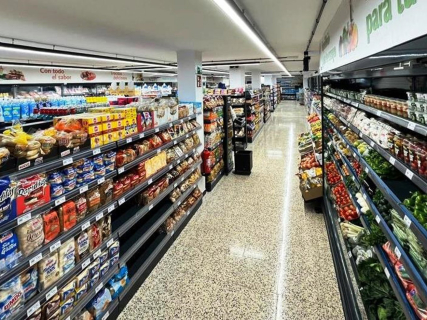

A large-scale cyberattack has affected hundreds of supermarkets in France during the early hours of this Monday, October 12, after a group of hackers managed to access the refrigeration systems of numerous establishments and remotely modify their temperatures. The offensive has caused the loss of large quantities of fresh and frozen products, with economic damages that could reach several million euros and have forced various distribution chains to activate their emergency protocols.
Among the main companies affected are Intermarché, Coopérative U and, according to initial reports, E.Leclerc, as well as other commercial establishments. The attackers are believed to have exploited vulnerabilities in outdated versions of the refrigeration software from the Danish company Danfoss to alter the operation of the equipment, continuously activating a defrosting function that is usually used for brief periods. In some systems, the programmed temperature reached 50 degrees, although that does not mean that all refrigerators physically reached that temperature.
Hackers manipulate refrigeration and cause food loss
The attack began during the night from Sunday to Monday and affected the systems responsible for maintaining the cold chain in supermarkets and food establishments. According to initial technical investigations, the cybercriminals managed to remotely activate the defrosting mechanism of the equipment, preventing refrigerators and freezers from maintaining the necessary temperatures to preserve food.
This function, designed to periodically eliminate accumulated ice in refrigeration systems, would have been modified to remain activated for hours. As a consequence, numerous chambers and display cases began to heat up instead of refrigerating the products, causing foods such as meats, fish, dairy, and frozen items to stop meeting the required preservation conditions.
The problem was mainly detected during the opening of the establishments this Monday morning. In some supermarkets, workers found abnormally high temperatures and products that had completely lost the cold chain, which forced the withdrawal of goods from sale. In other cases, where the incident occurred later, employees managed to recover some of the food before it became unusable.
Up to 200 Intermarché supermarkets affected and losses of hundreds of thousands of euros
Initial estimates suggest that between 150 and 200 Intermarché establishments could have been affected, while Coopérative U has acknowledged incidents in nearly a hundred stores. Problems have also been reported in E.Leclerc establishments and other businesses equipped with similar systems, including independent businesses and wholesale establishments. The definitive number of affected parties has not yet been determined.
One of the most significant cases has been recorded in Haguenau, in the French region of Alsace, where an Intermarché supermarket reportedly had to discard its entire inventory of frozen products, with estimated losses of 50,000 euros. In another establishment in the same locality, identified as E.Leclerc in various reports, the damage from the destruction of fresh and frozen food could reach 220,000 euros.
Thus, these two businesses alone would accumulate losses close to 270,000 euros, a figure that reflects the possible economic consequences of the incident. On a national scale, the impact could rise to several million euros, although companies are still assessing the value of the destroyed merchandise and the costs associated with repairing the equipment.
Intermarché and Coopérative U activate emergency teams
The magnitude of the incident has led the affected chains to mobilize their technical teams to try to restore the operation of the refrigeration systems as soon as possible. Intermarché has acknowledged the problems recorded in numerous establishments and has implemented measures aimed at facilitating the restocking of supermarkets that have had to remove products from their shelves.
For its part, Dominique Schelcher, president of Coopérative U, has publicly confirmed that several establishments in its network have suffered the consequences of the attack. The head of the chain has described the situation as "unprecedented" and of "extreme seriousness", considering it especially concerning that cybercriminals have acted on essential facilities to ensure the preservation of food.
The company has activated crisis teams and is working with refrigeration specialists to restore the affected systems. The priority of the establishments is to recover the appropriate storage conditions, assess which goods must be destroyed, and ensure that the products offered for sale meet food safety requirements.
The Paris Prosecutor's Office investigates the origin of the cyberattack
The Paris Prosecutor's Office has opened an investigation to determine the circumstances of the attack, identify those responsible, and establish the extent of the damages. The investigations will also need to clarify whether the incidents recorded in different chains respond to the same computer vulnerability and what mechanisms allowed the attackers to access the refrigeration controls.
The first indications point to old versions of the software developed by Danfoss, used to remotely manage refrigeration facilities. However, it has not yet been publicly confirmed what specific vulnerability was exploited or whether the attackers accessed the manufacturer's systems directly or those of its clients.
The incident highlights the cybersecurity risks associated with industrial systems connected to the internet, especially when they control physical equipment essential for the operation of businesses and services. Unlike other cyberattacks aimed at stealing information or blocking computers, this offensive has had immediate material consequences, as it has altered the preservation conditions of food.
The cold chain, an essential element for food safety
The attack has also highlighted the importance of maintaining an uninterrupted cold chain during the storage, transportation, and marketing of food. Frozen and refrigerated products must be kept within appropriate temperature limits to reduce the risk of microorganism proliferation and prevent spoilage.
When there is a prolonged disruption of those conditions, establishments may be forced to withdraw and destroy large quantities of merchandise, even if some products show no visible signs of spoilage. This circumstance explains why economic damages can be so high in an attack that, apparently, is limited to modifying the digital controls of refrigerators.
French authorities and affected companies continue to work to determine the total extent of the cyberattack, restore systems, and quantify losses. For the moment, the identity of those responsible is unknown and it has not been confirmed what their motivation was, while the investigation seeks to clarify how a computer manipulation managed to simultaneously affect numerous food establishments in France.