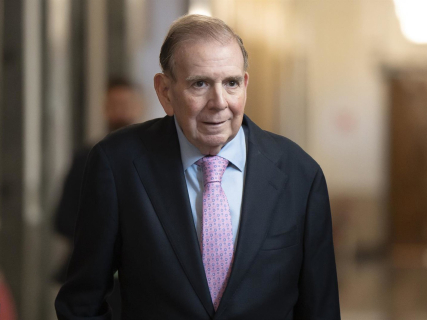

The former opposition presidential candidate from Venezuela, Edmundo González, has warned this Sunday that the revenues announced by the interim president, Delcy Rodríguez, linked to the recent investment agreement with the United States, run the risk of ending up in the hands of "some" instead of translating into improvements for the entire citizenry.
"Venezuela has had a lot of money before. Enough to know that one thing is for resources to enter the country and another very different thing is for them to reach the lives of the people (...). And there is a question that I cannot stop asking myself. This time, is oil going to improve the lives of all Venezuelans? Or just some?" González has raised in a message disseminated on social media.
The opposition leader has supported "recovering the oil industry (...), but recovering Venezuela is recovering the lives of its people" and has emphasized that this recovery must translate into tangible advances in housing, education, and healthcare for the population.
"The recovery of Venezuela cannot be measured only by the barrels it produces again, but by the lives that this wealth allows to be rebuilt," he has argued, insisting that the real impact must be appreciated in the day-to-day lives of Venezuelans.
In his first reaction to the agreement announced by the U.S. president, Donald Trump, through which Washington will control one-fifth of Venezuela's oil reserves, González has questioned the "huge figures" of "millions of barrels" that both parties are handling, as well as the "investments that are even hard to imagine."
The opposition figure has recalled that Venezuelan society faces urgent needs, such as the reconstruction of homes damaged by the earthquake, the shortcomings of the healthcare system, the problems of water and electricity supply, the educational deterioration, or "those who work and still cannot live on their salary."
He has also mentioned corruption, the lack of infrastructure maintenance, and the absence of opportunities for young people, in addition to "hunger and the complex humanitarian crisis, which continues and deepens," as examples of the seriousness of the situation that, in his opinion, the new flow of resources should prioritize.
The veteran Venezuelan diplomat, currently exiled in Spain, was a presidential candidate in the 2024 elections, a vote that the opposition labels as fraudulent for having declared Nicolás Maduro the winner, who was captured by American military in an incursion in Caracas in January. His substitute, Delcy Rodríguez, has initiated a political and economic rapprochement with Washington.