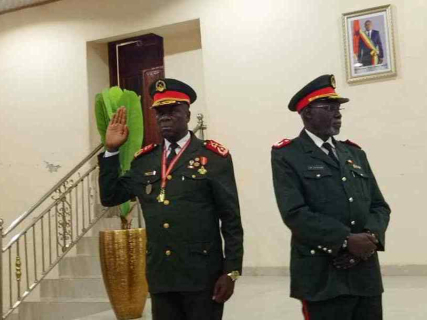

The citizenship of Guinea-Bissau goes to the polls this Sunday to decide in a referendum whether to give the green light to a new Constitution that seeks to strengthen the authority of the transitional president, the coup leader Horta N'Tam, just a few months before the call for general elections.
The new charter, ratified in January, just two months after the coup against the then head of state, Umaro Sissoco Embaló, grants the president the authority to appoint the prime minister and the rest of the members of the Executive.
In the same way, the president will have the power to dissolve Parliament, which in the new text will be called the National Assembly, although it will maintain its legislative functions and oversight of the Government's actions.
The historic African Party for the Independence of Guinea and Cape Verde (PAIGC), the main opposition force, has rejected the consultation and urged the population not to participate, warning of a possible deep imbalance between powers at a time when the country is trying to rebuild a minimal democratic normality.
At the same time, there is growing suspicion that, if the Constitution goes ahead, Horta N'Tam may resort to the new prerogatives to evade the transitional framework, which establishes that neither the president nor the transitional prime minister may run in the general elections scheduled for next December, at the end of the process.
Specifically, the opposition fears that Horta N'Tam will use the reinforcement of his institutional weight to configure a Government aligned with his interests, taking advantage of the rules that he himself has promoted in the new constitutional text.
The constitutional proposal also includes reducing the number of seats in Parliament from 102 to 65, decreasing the electoral constituencies from 29 to 12, and significantly tightening the conditions required to present a presidential candidacy.