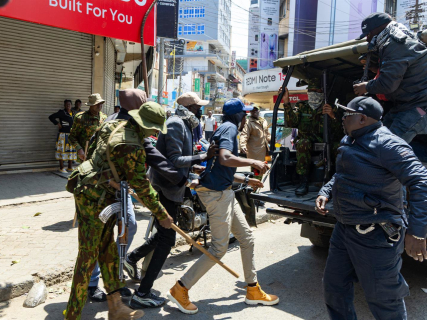

Human Rights Organizations in Kenya have brought the country’s police leadership before Justice, whom they point to for allowing a wave of political violence ahead of the 2027 elections. These entities use the complaint to highlight an excessive use of force by officers, which would have caused the death of at least 46 people at the hands of the security forces during the first seven months of the year.
Among the high-ranking officials named are the director general of the National Intelligence Service, Noordin Mohamed Haji; the Inspector General of Police, Douglas Kanja; the Cabinet Secretary for Interior and National Administration, Onesimus Murkomen, and the Attorney General, Dorcas Oduor.
The legal action has been filed, among others, by the Kenya National Commission on Human Rights, whose latest report, also released this Wednesday, includes this preliminary count of deaths in security forces operations between January and July. Three citizens, Kwamchetsi Makokha, Mary Kambo and Elphas Osoro, who claim to have suffered political violence, have joined the lawsuit.
The commission’s report, cited by the newspaper Daily Nation, details that Nairobi concentrates the largest volume of incidents of this type: 106 cases, which represents 43.8% of the 242 incidents examined.
The organizations and individuals involved hold the high-ranking officials responsible for "allowing violence against political, civic and religious gatherings to continue despite repeated warnings from senior government leaders," according to the Commission on its website. The text denounces "repeated attacks carried out since the beginning of 2025 by armed groups, often referred to as 'thugs', which have disrupted press conferences, civic forums, religious services and political meetings" while the Police remains inactive.
Among the highlighted events is the July 6, 2025 assault against the commission’s offices in Nairobi, when armed individuals burst into a hearing by mothers of victims of extrajudicial executions and enforced disappearances. During the attack, journalists and attendees were assaulted or intimidated, and electronic equipment was stolen. Despite having security camera recordings and having filed a formal complaint, the plaintiffs maintain that no one has been arrested or prosecuted.
The lawsuit also refers to the attack of June 12, 2026 against a public forum in the Cathedral of All Saints of Nairobi, as well as the violent events of August 16, 2026 in Homa Bay, where there were fatalities, vehicles set on fire and assaults on journalists.
According to the filing, these episodes "are evidence of deliberate, financed and recurrent violence, represent a violence without restraint that "threatens the constitutional rights of Kenyans and undermines the prospects for free, fair and peaceful general elections in 2027".
The petition asks the Supreme Court to declare that organized violence, together with the State's failure to act to prevent it, investigate it and prosecute it, violates constitutional rights. The complainants ask that the Police and intelligence services be ordered to investigate the attacks, identify the financing and recruitment networks, preserve the evidence and present their findings before the court.