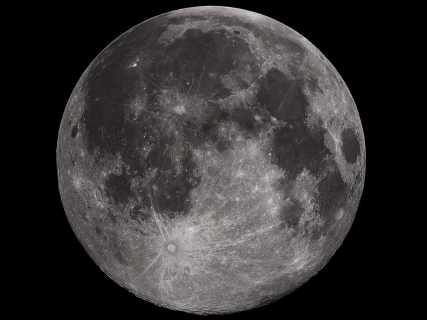
Complete guide to tonight's lunar eclipse: what time it is, where to see it, and why the Moon will turn red

The partial eclipse will be visible this morning from all of Spain and will reach its maximum around 06:12 hours in the Peninsula and Balearic Islands, when 93% of the lunar diameter will be within the Earth's shadow.

7 minutes

fotonoticia 20260823131658 1920

fotonoticia 20260823131658 1920

Add DEMÓCRATA to Google

Ask FREN

Published

Last updated

7 minutes

Most read

This night the second great astronomical show of August arrives. The lunar eclipse of August 28 will be visible from all of Spain during the early hours of Friday and will be very close to being total: at its maximum moment, around 93% of the diameter of the Moon will be in the umbra, the darkest part of the shadow cast by the Earth. Special glasses will not be needed and it will be enough to look towards the west, although the time of the Moon's setting will mark important differences depending on the point in Spain from which it is observed.

The phenomenon will technically be a partial lunar eclipse, but especially deep. NASA anticipates that the satellite may appear "dramatically darkened," with coppery tones in the part covered by the Earth's shadow.

This is the guide to not miss anything this early morning.

What time does the lunar eclipse start tonight

The first phase will begin during the early morning. The Moon will initially enter the penumbra, the outer and less dark area of the Earth's shadow. At that moment, the change in brightness will be so subtle that it may be difficult to appreciate it with the naked eye.

The really interesting moment will come when the partial phase begins, around 04:33 hours in the Peninsula and Balearic Islands. The Moon will then start to penetrate the umbra and it will be clearly distinguishable how the Earth's shadow advances across the lunar disk.

The culminating moment will arrive approximately at 06:12 hours in the Peninsula and Balearic Islands and one hour earlier in the Canary Islands. NASA places the global maximum around 04:13 UTC.

Phase Peninsula and Balearic Islands Canary Islands
Penumbral start 03:23 02:23
Partial start 04:33 03:33
Maximum 06:12 05:12
Partial end 07:51 06:51
Penumbral end 09:01 08:01

It will be partial, but very close to a total eclipse

Here is one of the peculiarities of this night. The eclipse will have a magnitude of 0.93, according to the National Geographic Institute.

The figure does not mean that "93% of the Moon will simply disappear." The threshold magnitude measures what proportion of the lunar diameter penetrates into the Earth's umbra.

NASA offers the same reference: at the maximum, approximately 93% of the diameter of the Moon will be within the central and dark shadow of the Earth.

For the eclipse to be total, the entire disk would have to be introduced. This early morning a small portion will remain outside, enough to officially maintain the classification of a partial eclipse.

Visually, however, the result can be spectacular: practically the entire Moon will be submerged in the shadow of our planet.

Will the Moon turn red?

It can do so. NASA anticipates that the eclipsed part could present a reddish, rusty, or coppery appearance, although we will not be facing a total "blood moon."

The Moon does not disappear when it enters the Earth's shadow because part of the sunlight manages to pass through our planet's atmosphere. The colors of shorter wavelengths, such as blues, scatter more easily, while some of the reddish light passes through the atmosphere and eventually reaches the lunar surface.

It is, essentially, the same phenomenon that allows us to see red and orange tones during sunrises and sunsets.

The exact intensity of the color cannot be determined in advance. The conditions of the Earth's atmosphere influence the amount and characteristics of the light that ultimately reaches the Moon.

Where the lunar eclipse will be best seen in Spain

The IGN confirms good news: the partial phase can be observed from all of Spain before the Moon sets.

That does not mean, however, that all regions can enjoy the same spectacle.

In the center and east of the Peninsula, the Balearic Islands, and Melilla, the Moon will set before the partial phase ends. Observers will be able to see the maximum, but will miss the final segment because the satellite will disappear below the horizon.

In the rest of the Peninsula, the Canary Islands, and Ceuta, the lunar sunset will occur after the end of the partial phase, according to IGN's calculations.

This gives an advantage to the western areas. Galicia, Extremadura, and the west of Andalusia and Castilla y León will have more leeway to follow the phenomenon as the Moon descends.

The key will not just be finding darkness: you have to look to the west

To observe this eclipse, there is an even more determining factor than escaping the city lights: having a clear western horizon.

The Moon will be descending during the most spectacular phases. A building, a mountain, trees, or any other obstacle to the west can cause it to disappear from view before its astronomical setting.

An elevated and open place can significantly improve the observation. This will be especially important in the provinces where the satellite is already very close to the horizon during the maximum.

Whoever goes out expressly to see it should, therefore, check beforehand where the Moon sets from the chosen place.

Madrid will be able to see the maximum, but not the entire eclipse

Madrid is among the places from which the moment of maximum obscuration can be contemplated.

At 06:12 hours, the Moon will continue above the horizon, although it will be descending towards the west. Afterwards, it will end up hiding before the entire partial phase concludes.

The recommendation for Madrid and a good part of the central peninsula is clear: look for a point with the western horizon as clear as possible.

The forecast from AEMET for the Guadarrama and Somosierra mountains points, for Friday the 28th, to a beginning of the day slightly cloudy or clear, although some bank of low clouds on the northern slope is not ruled out.

Are glasses needed to see the lunar eclipse?

No. And neither should the glasses from the solar eclipse of last August 12 be used.

A lunar eclipse is completely different from the point of view of eye safety. The observer looks at the Moon, not directly at the Sun, so it can be contemplated throughout the process with the naked eye and without any special filter.

The IGN expressly states that its observation "poses no danger" and that it does not require special instrumentation. NASA also confirms that it can be viewed directly with the eyes.

Using glasses for solar eclipses would be counterproductive: they block such a quantity of light that they would greatly hinder seeing the Moon.

Is it worth using binoculars or a telescope?

They are not necessary, but they can greatly enhance the experience.

With binoculars, it will be easier to appreciate the difference in brightness between the narrow area that continues to receive direct sunlight and the enormous surface introduced into the umbra.

A telescope will allow for a more detailed observation of how the curved edge of the Earth's shadow crosses craters and lunar seas. NASA specifically recommends binoculars or a small telescope to observe the movement of the shadow in greater detail.

How to photograph the lunar eclipse with a mobile phone

The difficulty will increase as the eclipse progresses. A normal full Moon is extraordinarily bright, but during the maximum, much of that brightness will disappear.

To photograph it with a phone, it is advisable to avoid excessive digital zoom and manually reduce the exposure during the brightest phases. When the disk darkens, it will be especially important to keep the device stable.

A tripod is the simplest solution. If one is not available, the mobile can be placed on a stable surface and the timer can be used to avoid the movement of the finger when pressing the shutter from ruining the image.

The reddish tones will be more difficult to capture than a conventional full Moon, especially with phones that automatically process night scenes.

Will there be clouds this morning?

This point should be checked practically at the last minute because cloud cover can decide whether the eclipse is seen or not from a specific location.

The forecasts from AEMET available for Friday point, for example, to little cloudy or clear conditions at the beginning of the day in areas of the Central System and the Rioja Iberian, while in Sierra Nevada, cloudy intervals and even possible showers are expected during the first half of the day.

Therefore, it is not advisable to extrapolate a national forecast to each city. The recommendation is to consult the hourly forecast from AEMET for the specific municipality before going out and pay special attention to the expected cloud cover between approximately 04:30 and 07:00.

How to follow the lunar eclipse live and in video

Those who do not have a clear horizon, are under the clouds, or simply prefer to follow the phenomenon from home can resort to live broadcasts of the eclipse.

The most interesting moment will arrive around 06:12 hours, when the eclipse reaches its maximum from Spain and almost the entire lunar diameter is within the shadow.

Democrat will also offer a specific piece to follow the lunar eclipse live and in video, along with the main news during the early morning.

Why it arrives only 16 days after the total solar eclipse

Spain has just experienced another exceptional astronomical event. The 12th of August saw the total solar eclipse, and only 16 days later this lunar eclipse arrives.

It is not a coincidence. Eclipses are grouped into the so-called eclipse seasons, periods of approximately 35 days during which the orbital geometry allows the Sun, Earth, and Moon to reach the necessary alignments.

The mechanism will now be the reverse of that of August 12. Then, the Moon passed between the Earth and the Sun. This morning it will be the Earth that is situated between both stars and projects its shadow onto the Moon.

The IGN reminds that in a year there are between four and seven solar and lunar eclipses and that usually a solar eclipse and another lunar eclipse appear separated by approximately half a lunation.

When will the next lunar eclipse be?

After this morning, one will have to wait until February 20-21, 2027 for the next lunar eclipse. It will be penumbral and can be observed from a huge expanse of the planet, including Europe.

Spain will have another even greater astronomical event marked on the calendar before. On August 2, 2027, a new total solar eclipse will cross the south of Spain.

More key points, information and questions with FREN

AI-GENERATED CONTENT

What are the legal requirements for organizing a public observation of a lunar eclipse in Spain?

Organizing a public observation of a lunar eclipse in Spain does not have a specific “legal status,” but it is framed within the general rules on the use of public space, public shows, and citizen security, which are the responsibility of autonomous communities and municipalities. The specific requirements will vary depending on the municipality and the size of the event, but the basic framework is relatively common.

1. Choice of location and basic permits

  • Urban public space (squares, parks, streets, viewpoints): normally requires a public road occupation authorization or of a municipal space. It is processed before the city council, according to its public domain occupation ordinance. This authorization sets:
    • Surface area to be occupied (area for telescopes, tents, tables, etc.).
    • Date and schedule of the nighttime activity.
    • Conditions for cleaning, noise, and restoration of the space.
  • Municipal venues (planetariums, cultural centers, fairgrounds): are used through transfer or rental, with internal conditions of capacity, security, and insurance. Many examples of astronomical outreach activities in planetariums and astronomy gardens are organized this way (for example, the Madrid Planetarium or the Ciutat de les Arts i les Ciències in Valencia, as noted in various institutional releases).
  • Natural, forest, or specially protected areas: here environmental and civil protection conditions are added. The Xunta de Galicia, for example, has communicated to municipalities specific requirements when events with large attendance are expected in forest lands or high fire risk areas, in coordination with civil protection (note dated 04/28/2026 from the Xunta de Galicia). Other communities follow similar approaches.

2. Does it count as a public show or recreational activity?

Although a simple informal gathering to look at the Moon is usually not processed as a show, as soon as there is organization, open public dissemination, infrastructure setup, and the possibility of large attendance, the event tends to fall under the autonomous community regulations on public shows and recreational activities.

That regulation, as shown by examples cited in Madrid, Euskadi, or Asturias, requires the organizer to comply with conditions of:

  • Structural safety and risk prevention (sturdiness of installations, fire extinguishers, safe exits, etc.).
  • Health and accessibility for attendees and workers (art. 6 of the Madrid show law, cited in the press).
  • Civil liability insurance and, if applicable, an emergency or self-protection plan when capacity or type of setup requires it.

In small-format cultural activities, some communities have relaxed the regulations to facilitate performances and cultural events, but do not eliminate the need for permits or basic safety.

3. Insurance and civil liability

There is no “single national” insurance for astronomical observations, but the general practice in public events is:

  • The city council usually requires the organizer to have a civil liability insurance that covers personal and material damages to attendees and third parties.
  • In events with large attendance or significant setup, additional policies may be required (volunteers, cancellation, etc.), as seen in other large events managed in Spain.
  • Even if not legally mandatory in a very small format, it is prudent to have this coverage to limit personal or organizational entity liability.

4. Capacity, accessibility, and neighborhood coexistence

  • Capacity: municipalities and regional governments recommend or set capacity limits and access control systems at official observation points when large crowds are expected. Aragón, for example, has designed observation points with delimited surfaces and minimum capacity of thousands of attendees, precisely to control access, parking, and emergencies.
  • Accessibility: it is encouraged that spaces have accessible routes, complying with general accessibility obligations in public events (ramps, reserved areas, adequate information). Large festivals and celebrations are incorporating specific spaces for people with special needs; this approach is transferable to a well-organized astronomical observation.
  • Noise and neighborhood rest: if music, loudspeakers, or large crowds concentrate at dawn, noise ordinances apply. The Ombudsman has reminded municipalities that they must balance celebrations and rest, and that exceptions to noise limits must be well justified. For a lunar eclipse, the usual impact is minimal, but it is advisable to anticipate it.

5. Specifics of a lunar eclipse

The advantage of a lunar eclipse is that, according to the National Geographic Institute, its observation does not pose a risk to eyesight and can be done without glasses or special filters. Therefore, safety measures focus more on:

  • Control of movements and parking (avoiding improper occupation of roads or shoulders).
  • Minimal lighting and marking of steps, cables, and tripods to prevent falls.
  • Respect for environmental regulations if the activity takes place in sensitive natural spaces.

In summary, the legal key is not the eclipse itself, but the fact of organizing a public activity in public space: the corresponding municipal authorization must be requested, comply with the autonomous community regulations on shows/recreational activities if applicable, demonstrate safety measures, and, very likely, contract civil liability insurance. The specific details can only be set by the city council and the community where you plan to hold it.

What competencies do the National Geographic Institute and AEMET have regarding astronomical observation?

In Spain, the distribution of competencies in astronomical observation places the National Geographic Institute (IGN) as the main actor in “pure” astronomy and the management of State astronomical observatories, while the State Meteorological Agency (AEMET) acts mainly as a provider of atmospheric and climatological information that conditions sky observation (cloudiness, visibility, risks) and as the official service for forecasting and warnings.

National Geographic Institute: official astronomy and observatories

The IGN is a general directorate attached to the Ministry of Transport and Sustainable Mobility. According to the resolution of the IGN–AEMET agreement published in the BOE (11/18/2025, text in the BOE), its functions focus on:

  • Maintaining geodetic, geophysical networks and geophysical and astronomical observatories located in remote sites, which also support AEMET stations.
  • Operating and developing Earth and space observation infrastructures (for example, the RAEGE network of geodynamic and space stations).
  • Monitoring geophysical phenomena (seismicity, volcanism, geomagnetism), where the Sun–Earth interaction —solar activity and geomagnetic disturbances— is part of its scientific monitoring.

In strictly astronomical matters, various official notes from the Ministry of Transport emphasize that:

  • The IGN is the body that has assigned competencies to provide official information in astronomy through the National Astronomical Observatory (OAN). This is reflected, for example, in notes about the 2026–2028 eclipses (eclipse website and digital resources).
  • The IGN manages a network of astronomical observatories, with the Yebes Observatory (Guadalajara) as a reference facility for radio astronomy and solar observation, where new specific instruments for solar observation and scientific outreach have been installed (note about Yebes).
  • The Government has designated the Yebes Observatory, the main astronomical observatory of the IGN, as the official tracking center for the total solar eclipse of August 12, 2026, from which broadcasts and outreach activities are carried out (Demócrata information).

In summary, the IGN:

  • Produces the official astronomical information (ephemerides, eclipses, solstices, etc.) through the OAN.
  • Manages and operates State astronomical and geophysical observatories (Royal Astronomical Observatory of Madrid, Yebes, and others).
  • Develops instruments and campaigns for astronomical observation and outreach for citizens and the scientific community.

AEMET: atmosphere, climate, and support for astronomical observation

AEMET is a state agency attached to the Ministry for Ecological Transition and the Demographic Challenge. Its statute, cited in the same IGN–AEMET agreement (BOE-A-2025-23341), sets as its objective the provision of State meteorological services and atmospheric monitoring. Among its main functions are:

  • Continuous monitoring of meteorological and climatic conditions, as well as atmospheric composition.
  • Design, maintenance, and operation of meteorological observation networks (radars, stations, etc.).
  • Issuance of forecasts and warnings for adverse phenomena, as well as technical support to Civil Protection.

Regarding astronomical observation, AEMET does not manage telescopes or astronomical observatories, but it does:

  • Provide weather forecasts that determine whether an astronomical phenomenon (such as an eclipse or meteor shower) can actually be observed: cloudiness, visibility, storm risk, etc. An example is its studies on historical cloudiness for the August 12, 2026 eclipse and its cloud risk maps disseminated in collaboration with media and other administrations.
  • Integrate its information into astronomical planning tools developed by the IGN. The official eclipse viewer incorporates, for each municipality, AEMET weather forecasts (note about the eclipse portal).
  • Collaborate in international atmospheric observation and space climate programs (for example, the WMO Global Atmosphere Watch program, cited in the BOE of the agreement), relevant to studying how the Sun and atmosphere interact.

Relationship between both institutions in astronomy

The 2025 IGN–AEMET agreement formalizes this complementarity: the IGN provides its geodetic, geophysical, and astronomical observation infrastructures, while AEMET contributes with its atmospheric networks and models. In campaigns like the “Eclipse Trio” 2026–2028, the practical scheme is:

  • IGN: astronomical calculation, ephemerides, visibility maps, observatory management, and scientific dissemination.
  • AEMET: cloudiness forecast, meteorological risks, and warnings that condition the safe observation of the phenomenon.

Therefore, regarding astronomical observation, the IGN assumes the role of scientific reference and manager of State observatories, while AEMET acts as the official meteorological service whose work is essential to know when and from where those phenomena can be observed under suitable and safe conditions.

How many similar lunar eclipses have been recorded and observed in Spain in the last decade?

I do not have the specialized information you need about the exact number of “similar” lunar eclipses recorded and observed in Spain in the last decade. My knowledge scope and access to tools are focused on Spanish politics and institutions (Congress, Senate, governments, regulations, political and social actors, etc.), not on astronomical databases or systematic monitoring of celestial phenomena such as eclipses, meteor showers, or planetary transits.

To answer your question rigorously, it would basically be necessary to cross two types of sources that I do not have integrated:

  • International astronomical catalogs, where all lunar eclipses occurring in a period are listed (for example, NASA catalogs, Paris Observatory, or other ephemeris services that classify each eclipse by date, type, magnitude, duration, and geometry).
  • Geographical visibility information, that is, which eclipses from those catalogs were visible totally or partially from the Iberian Peninsula, Balearic Islands, and Canary Islands, and under what conditions (altitude above the horizon, local time, Moon phase, degree of reddening, etc.).

The term “similar” also introduces an important ambiguity. For an astronomer or an observatory, similarity between eclipses can refer to several different criteria:

  • That they are of the same type: penumbral, partial, or total.
  • That they have a comparable umbral magnitude (that is, a similar fraction of the lunar disk immersed in the Earth's umbral shadow).
  • That they share similar observation conditions for Spain: for example, total eclipses fully visible during the night, versus others only seen at dawn or dusk, very low on the horizon.
  • That they belong to the same Saros cycle, which makes them “relatives” in geometric and temporal terms, although observed from different regions of the planet.

Depending on the chosen criterion, the number of “similar” lunar eclipses in ten years can vary from a few (if restricted to very spectacular total eclipses well positioned for Spain) to many more (if including penumbral or less notable partial eclipses). Providing a concrete figure without consulting updated astronomical data could be misleading or directly incorrect, and my design as a specialized assistant prevents me from speculating or “filling in” the answer with invented numbers.

What I can do is guide you on where to look for that information precisely:

  • The National Geographic Institute (IGN), through its Astronomy Section or the National Astronomical Observatory, usually publishes ephemerides and notes about eclipses visible from Spain. In their resources, you can find lists of eclipses from the last decade and visibility maps.
  • NASA maintains very complete catalogs of lunar eclipses with detailed technical data. From them, and with visibility maps, you can filter which have been observable from Spain in the period you are interested in.
  • Various Spanish astronomical groups (local amateur astronomer groups, astronomical societies, etc.) often document when and how recent eclipses were observed, with reports, photographs, and sometimes decade event counts.

Where I can help you in depth is in topics linked to the public sector and Spanish politics. For example, I could:

  • Analyze how public science and astronomy policies are organized in Spain (funding of observatories, R&D programs, role of the Ministry of Science, etc.).
  • Review what has been debated in the Congress or Senate about astronomical research, large scientific facilities, or science outreach.
  • Explain the institutional structure of public bodies involved in cartography, geodesy, and astronomy, such as the IGN itself.

If you reformulate your query oriented to any of these aspects —for example, “what role does the State have in funding astronomy in Spain” or “what parliamentary initiatives have there been about large observatories”— I can offer you a detailed analysis supported by institutional and parliamentary sources.

Play

Test your knowledge with FREN!

How much do you know about this topic? Answer the following 3 questions.

What percentage of the Moon's diameter will be covered by the Earth's umbra at the maximum moment of the eclipse?

Question 1 of 3

What is the key recommendation for observing the lunar eclipse in Madrid?

Question 2 of 3

Why can the Moon appear reddish during the eclipse?

Question 3 of 3

Hola, soy Fren. ¿Cómo te ayudo?