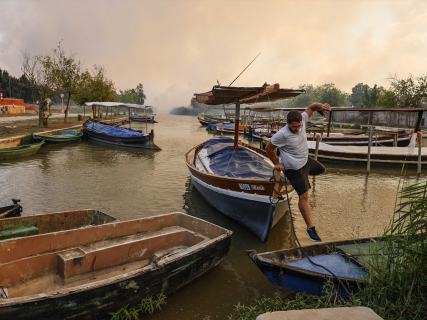
The authorities declare the fire in El Saler stabilized after burning 37 hectares.

The fire is not completely extinguished yet. However, its level of alert and danger has reduced to the level that allows Seprona to clarify the facts. For now, the authority rules out that it was initially a lightning strike and the machinery that caused the fire, so it considers a possible human cause.

4 minutes

EuropaPress 7734757 persona desalojada saler incendio forestal 27 agosto 2026 gola pujol saler

EuropaPress 7734757 persona desalojada saler incendio forestal 27 agosto 2026 gola pujol saler

Add DEMÓCRATA to Google

Ask FREN

Published

Last updated

4 minutes

Most read

The forest fire declared this Thursday in the Devesa de El Saler, in Valencia, has been stabilized at 3:55 PM this Friday, according to the Firefighters of the City Council and Emergencies of the Generalitat. The improvement will allow the controlled return of the people evacuated from the district, the two campsites, and a tower of apartments.
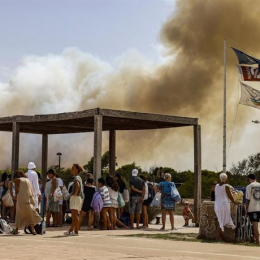
The fire has affected 37 hectares and an approximate perimeter of 5.42 kilometers and has forced the cutting of access to the city by road. After stabilizing the fire, access will remain restricted to the general public to facilitate firefighting efforts and prevent new reactivations.

The fire is still not completely extinguished

The authorities have declared the fire stabilized, which means that the flames are evolving within the established control lines in a controlled manner, but without virulence. The firefighting team will remain on the ground to cool the perimeter, eliminate hot spots, and prevent new outbreaks, as happened during the early morning of August 28, when two reactivations occurred due to changes in the wind. Both outbreaks were able to be extinguished before the fire spread again.

The westerly wind, with gusts of between 20 and 30 kilometers per hour, was one of the main obstacles during the night. The operation also activated 11 water cannons and portable Civil Protection teams to moisten the most sensitive areas of the Devesa.

More than 270 professionals mobilized in El Saler

In the firefighting efforts, more than 270 professionals, 40 ground units, and ten aerial units participated, personnel from the City Council of Valencia, the Provincial Consortium of Firefighters, the Generalitat, the Ministry for Ecological Transition, and the Military Emergency Unit (UME).

During the night, four units and three fire trucks from the Generalitat's forest firefighters worked, in addition to eight municipal crews. The UME focused mainly on the direct attack on the fire and the extinguishing of hot spots. The resources will remain deployed until the fire can be considered controlled, especially on the flank closest to the urban center of El Saler, a place of special vigilance.

The evacuees will be able to return in a controlled manner

The evolution of the flames forced the evacuation of the town of El Saler, the two campsites in the area, and Tower 1 of the apartments. A nearby beach and a parking lot were also evacuated due to the presence of smoke and the risk of the fire advancing.

A total of 161 people received assistance during the night at the Font de Sant Lluís pavilion, known as La Fonteta. The City Council estimates that about 130 people ultimately spent the night there, as several vulnerable evacuees were transferred to more suitable facilities.

After stabilization, the authorities have authorized a gradual and supervised return. Access will remain controlled and nearby roads will continue to be reserved for residents, emergency teams, and essential services while firefighting efforts continue.

The investigation points to a human cause

The Seprona and specialists from the Generalitat have begun to investigate the origin of the fire. According to the Government delegate in the Valencian Community, Pilar Bernabé, the initial inspections rule out a lightning strike and an accident related to machinery.

Investigators have observed at the point of origin a "flame impact" that could be compatible with a cigarette butt or with the direct application of fire using a "lighter." These indications point to a human cause and allow for the hypothesis that the fire was intentional.

However, the intentionality has not yet been established and no possible responsible party has been identified. Agents will review the cameras installed in the area and analyze the information provided by neighbors. For the moment, no arrests have been reported.

The fire started in the Gola de Pujol

The fire started around 1:00 PM on Thursday in the Gola de Pujol, within the Albufera Natural Park. The column of smoke could be seen from various points in Valencia and changes in the wind brought the flames closer to inhabited areas.

The evolution of the fire forced the activation of situation 2 of the Special Plan against the Risk of Forest Fires. This level is applied when the fire can severely affect the population or non-forest property and allows for the mobilization of extraordinary resources.

The Generalitat also sent an Es-Alert message to mobile phones in the area to order the evacuation. EMT buses transported residents who did not have their own means.

The recovery of the Devesa will take years

The Devesa of El Saler is part of the Natural Park of l'Albufera and constitutes one of the main natural spaces of the municipal term of Valencia. Its coastal forest, formed mainly by pines, scrub, and dune ecosystems, separates the lagoon from the Mediterranean Sea.

The forestry engineer and professor at the Universitat Politècnica de València Eduardo Rojas believes that the damage is not irreversible, although he estimates that the affected area could need about 20 years to recover a state similar to the previous one.

The final environmental assessment will begin when the fire is under control and it is possible to access the entire burned area safely.

More key points, information and questions with FREN

AI-GENERATED CONTENT

What is the activation and deactivation process of the Special Plan against the Risk of Forest Fires in the Valencian Community?

The Special Plan against the Risk of Forest Fires of the Valencian Community (PEIF) is an autonomous civil protection plan that defines how the institutional response to this type of emergency is organized. Although the consulted trace does not identify the specific decree that approves it, its activation and deactivation procedure follows the general framework of state and autonomous civil protection regulations.

1. Normal and pre-emergency situation

  • Normality: Outside the high-risk campaign or when no dangerous episodes are forecast, the plan remains technically in force but without active emergency phases. Prevention, planning, and ordinary surveillance tasks are carried out.
  • Pre-emergency or alert: When meteorological and forestry services detect conditions favorable to fires (high temperatures, wind, drought, elevated risk indices), the autonomous emergency coordination center (112 / emergency room) proposes placing the plan in an alert phase. This phase:
    • Involves reinforcing surveillance, firefighting resources, and preventive coordination with fire consortia, forestry brigades, and municipalities.
    • Usually does not yet entail the formal declaration of an “emergency” but prepares the device in case it becomes necessary.

2. Declaration of emergency and levels

When a fire or a very high-risk episode occurs, the phase of emergency is entered. The PEIF distinguishes several levels, defined according to the magnitude of the fire and whether it affects or may affect populations, critical infrastructures, or several municipalities.

  • Competent body to declare the emergency:
    • The declaration of emergency and its level corresponds to the plan director, who is usually the head of the department responsible for interior, emergencies, or civil protection.
    • In very localized fires, the decision may be based on the proposal of the firefighting chief and the autonomous coordination center.
  • Usual criteria for grading:
    • Capacity to control with ordinary autonomous resources or need for extraordinary resources.
    • Existence of population at risk, need for evacuations or confinements.
    • Affectation of critical infrastructures, protected areas, or several municipalities.
    • Possible need to request intervention from the General State Administration (Military Emergency Unit, Civil Guard, etc.).

3. Bodies activated at each phase

Upon declaration of the emergency, the PEIF foresees the phased activation of management and coordination structures:

  • Plan Management: assumed by the competent minister, the ultimate authority for the emergency at the autonomous level.
  • Integrated Operational Coordination Center (CECOPI) or equivalent:
    • Activated when the emergency requires close coordination between Generalitat, Government Delegation, and other state bodies.
    • At lower levels, an autonomous coordination center (e.g., CECOP / 112) may operate without formalizing a state-autonomous CECOPI.
  • Monitoring committees and action groups:
    • Firefighting group (firefighters, brigades, aerial means).
    • Security group (Security Forces and Corps).
    • Health and social support group.
    • Logistics and technical support group.
  • Local scope: affected municipalities activate their own municipal or local action plans, under PEIF coordination.

4. Coordination with the State

When the fire exceeds autonomous capacity or affects state interests, the Generalitat requests support from the General State Administration. At that moment:

  • The role of the CECOPI is reinforced, where Generalitat and Government Delegation are represented.
  • The Military Emergency Unit and other state resources are integrated into the device, maintaining civil protection management in coordination between both administrations according to the plan’s established level.

5. Deactivation and return to normality

The PEIF also establishes the deactivation procedure:

  • When the fire is considered controlled and subsequently extinguished, and significant risks to the population, infrastructures, or other assets cease to exist, the plan director gradually reduces the emergency level.
  • Intermediate phases of reinforced surveillance may be established until the absence of flare-ups is confirmed.
  • Once the emergency concludes, a return to normal situation is declared, maintaining damage assessment, aid, and recovery tasks.
  • The plan usually foresees the preparation of a final report on the emergency, with lessons learned to improve future planning.

In summary, the activation of the Special Plan against the Risk of Forest Fires in the Valencian Community follows an alert–emergency–deactivation sequence, with decisions centralized in the autonomous plan management, strong support from 112, and coordination with the State when the fire’s magnitude requires it.

Can you detail which specific Generalitat bodies are part of the management and advisory committee of the Valencian PEIF? How is the PEIF coordinated with municipal emergency plans for forest fires in the Valencian Community? What is the relationship between the Special Plan against the Risk of Forest Fires and the Forestry Law of the Valencian Community?

What competencies and functions does the Military Emergency Unit (UME) have in fighting forest fires?

The Military Emergency Unit (UME) is the joint force of the Armed Forces specialized in intervening in major emergencies, including forest fires. In this field, its role is extraordinary reinforcement and operational command in certain cases, not a replacement of the ordinary autonomous firefighting devices.

Legal framework and institutional position

The UME was created by agreement of the Council of Ministers in 2005 and was established as a permanent joint force through Royal Decree 416/2006. Its operating protocol is detailed in Royal Decree 1097/2011, which sets the situations in which it can be activated, specifically including forest fires as one of the emergency scenarios in which it may intervene, along with floods, snowfalls, earthquakes, technological and CBRN risks, among others, according to the note “UME: Military Emergency Unit” from Moncloa (note about the UME).

The Law 17/2015 of the National Civil Protection System strengthens this framework by recognizing the UME as a public service for intervention and assistance in emergencies within the National Civil Protection System and foreseeing that, in emergencies of national interest, it may be directly linked to the decisions of the Ministry of the Interior, while maintaining its organic dependence on the Ministry of Defense.

When and who can activate the UME

In forest fires, extinguishing generally corresponds to the autonomous communities, which have their own plans (Infoca, Infomur, etc.) and firefighting resources. The State, through the UME and other resources, acts as complementary support, especially when the fire exceeds autonomous capacity or exceptional circumstances occur.

According to the protocol described by Moncloa, the UME:

  • Is activated by order of the Government of Spain, practically through the National Civil Protection System, at the request of the affected autonomous community or Interior when a national interest emergency is declared.
  • Can intervene both in emergencies affecting a single community and in those of national interest, where the Ministry of the Interior assumes emergency management and the UME chief exercises operational command on the ground in large fires, as detailed in the official explanation of the national interest emergency based on Law 17/2015.

Specific functions of the UME in forest fires

Official documents summarize the UME’s general mission as intervention throughout the national territory “to safeguard the integrity of people and their property, the environment, natural spaces, and their resources” (institutional profile). Applied to forest fires, this is concretized in:

  • Direct attack on the fire: deployment of intervention battalions to create defense lines, water attacks, and perimeter consolidation work. Defense estimates, for example, around 1,400 military personnel for direct attack during the high-risk campaign (Defense note 2025).
  • Indirect attack and engineering work: opening firebreaks, widening tracks, removing vegetation fuel, and using heavy or remotely operated machinery (such as the “ground drone” described in the LCIF 2024 campaign) to create safety zones and support firefighting teams (LCIF 2024 campaign).
  • Protection of people, infrastructures, and assets: support in evacuations and confinements, protection of inhabited areas, critical infrastructures, health facilities, or residences, in coordination with Civil Protection and security forces.
  • Command and control in major emergencies: when a national interest emergency is declared, the UME chief assumes unified operational command over all deployed resources (state, autonomous, and local), integrated into advanced command posts and the CECOD/CECOPI.
  • Logistical and communications support: deployment of support modules (water, food, health, lodging, transport, transmissions) and reinforcement of tactical communications with satellite systems and Tetrapol networks for the entire device (LCIF 2024).
  • Training and joint exercises: participation in drills and exercises with autonomous prevention and firefighting services to improve coordination and interoperability, as highlighted by several autonomous government notes (Xunta de Galicia, Junta de Andalucía).

Means and capabilities in firefighting

In the firefighting campaign, the UME integrates:

  • Its five Emergency Intervention Battalions and units in the Canary Islands, providing ground attack sections, engineers, transmissions, and health support.
  • Aerial means coordinated with the Air Force’s 43rd Group and the Emergency Helicopter Battalion, although the latter depend organically on other commands and are operationally integrated with the UME in the LCIF campaign (Defense 2024).
  • Advanced technological capabilities: aerial and ground drones for reconnaissance and surveillance, command and control systems, and specialized units analyzing fire behavior.

These capabilities fit within the common coordination framework established by the royal decree of January 20, 2026, on forest fire fighting operations, which standardizes the classification of firefighting units, unifies radio call signs and map symbols, and sets safety standards for all personnel involved (coordination royal decree).

Scope and limits of its intervention

In summary, the UME:

  • Is a strategic state resource for rapid intervention in large forest fires.
  • Acts as a reinforcement of autonomous resources, not as an ordinary firefighting body.
  • Can assume operational command on the ground when the emergency is declared of national interest within the National Civil Protection System.
  • Combines functions of fire attack, civil protection, and logistical and command support, under a legal framework specifically designed for serious emergencies.

What legal requirements must be met to authorize the return of evacuated persons after a forest fire in a protected area?

The decision to allow the return of evacuated persons after a forest fire in a protected area is not only a technical matter of extinguishing but a legal-administrative act that must respect the civil protection, forestry, and nature conservation framework. In practice, it aims to simultaneously guarantee the safety of people and the protection of the affected natural area.

Competent authorities and decision promotion

Competence is usually shared and coordinated among several levels:

  • Civil protection authority (usually the autonomous community, and sometimes the Government Subdelegation or the autonomous Government Delegation): leads the emergency and declares the activation and deactivation of the civil protection plan. Generally, it decides the lifting of evacuation measures.
  • Protected area management body (autonomous environmental department or agency, boards, etc.): provides information on habitat status, residual environmental risks, and limitations to be maintained within the park or protected area.
  • Affected municipalities: issue decrees and resolutions on access to population centers, municipal roads, local facilities, and basic services. They usually implement access and schedule restrictions practically.
  • Other specialized services (forestry, hydrological, roads, electric company, etc.): issue technical reports on slope stability, risk of tree falls, electrical line safety, water quality, etc.

The final decision is usually formalized in a reasoned resolution by the civil protection authority, coordinated with municipal decrees or orders and the environmental body’s instructions.

Safety criteria for return

Minimum requirements from the civil protection perspective include:

  • That the fire is controlled or extinguished, with no active fronts that could compromise residential or transit areas.
  • Assessment of the risk of flare-ups and re-ignitions (weather conditions, remaining fuel, possible “hot spots”).
  • Verification of the structural safety of homes, buildings, and critical infrastructures (roads, bridges, reservoirs, electrical and gas networks).
  • Minimum restoration of essential services: drinking water, sanitation, electricity, and basic road access for emergencies.
  • Real possibility of maintaining alternative evacuation routes and presence of emergency resources in the area for a reasonable time.

All this must be documented, at least briefly, in internal technical reports that serve as the basis for the evacuation lifting resolution.

Specific environmental protection criteria

Since it is a protected area (national park, natural park, Natura 2000 network, etc.), the return must be compatible with the conservation objectives established in its regulations and management plan. This translates into:

  • Respect for temporary exclusion zones: highly sensitive areas (priority habitats, nesting zones, unstable slopes) may remain closed to the public, even if return to homes or urban centers is allowed.
  • Possible use restrictions: prohibition of walking outside designated paths, certain recreational activities, motorized circulation on some tracks, or immediate forestry uses.
  • Integration with the protected area management plan and post-fire restoration measures (erosion control, natural regeneration, reforestation, watercourse protection).
  • Consideration of protected species and the values for which the area was designated (landscape, geology, fauna, flora, ecological processes).

Common legal instruments and coordination with plans

The legal instruments usually employed are:

  • Resolutions from civil protection management or the competent autonomous body declaring the end of the emergency or reduction of alert level and lifting the evacuation order.
  • Municipal decrees and mayoral orders specifying schedules, permitted access, residents’ obligations (e.g., building inspections, debris cleaning), and maintaining certain areas closed.
  • Environmental orders or resolutions regulating partial reopening of trails, recreational areas, and activities inside the protected area, setting additional conditions and restrictions.

These decisions must align with:

  • The civil protection plan against forest fires (state, autonomous, or municipal scope), which sets emergency phases and general criteria for evacuation and return.
  • The master or use and management plans of the protected area, which establish use regimes and limitations that cannot be ignored in emergency management.

Reference legal framework

Generally, the return of evacuated persons is based on basic civil protection legislation, forestry and woodland regulations, and laws and regulations of protected natural areas, as well as autonomous development norms. Additionally, provisions on easements, administrative limitations on property, and administrative liability may apply if return is authorized without due guarantees.

In summary, authorizing the return requires a reasoned decision, coordinated among civil protection, local authorities, and the protected area management body, supported by technical reports that certify safety for people and compatibility with conserving the environmental values justifying the protection of the affected territory.

Play

Test your knowledge with FREN!

How much do you know about this topic? Answer the following 3 questions.

Approximately how many hectares has the El Saler fire affected?

Question 1 of 3

What measure did the authorities allow after stabilizing the fire?

Question 2 of 3

What cause do investigators point to as the possible origin of the fire?

Question 3 of 3

Hola, soy Fren. ¿Cómo te ayudo?