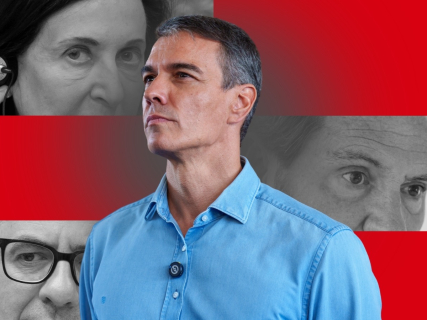


What has happened with Pedro Sánchez? The president regains prominence over Ceuta just when a month has passed since the massive entry, after weeks of silence and amid a succession of movements that have altered the political landscape of the Government
Something has changed in Pedro Sánchez. After almost a month of silence on the Ceuta crisis, the president has decided to return to the forefront just when a month has passed since the massive entry that put the autonomous city on the ropes. He has altered his vacation agenda, has positioned himself at the forefront of the Government's new response, and is preparing for a week in which he will have to talk about Ceuta first before the media and, just a few days later, before Congress. There is no official explanation for the change of pace. But the sequence of events leaves an open question: what has happened in Moncloa?
The Ceuta crisis
On July 31, the day after the massive entry, Sánchez was in Ceuta for barely a few hours. He visited the Tarajal border, met with the city authorities, and made an institutional statement. After that, he continued with his vacation. The crisis, however, did not end with that visit. During the following weeks, the situation continued to strain the autonomous city, and different ministers took on the prominence of the response.
Ceuta has not regained normality. Thousands of immigrants still remain in the city, and the pressure on reception resources has been maintained throughout the month. This has been compounded by protests, coexistence problems, and episodes of violence, while the Ceuta authorities have repeatedly demanded more resources and a coordinated response from the State.
During these weeks, different ministers have passed through Ceuta or have taken on parts of the management. Resources for reception, measures for unaccompanied minors, and mechanisms aimed at facilitating returns have been announced. But the response has continued to be distributed among different departments until this week.
The change came on August 24, when the Government decided to centralize the coordination of the crisis under a single command. One day later, after an extraordinary National Security Council, the Executive declared the situation of interest to National Security and placed the Minister of Territorial Policy, Ángel Víctor Torres, at the head of state coordination. The new structure brings together eleven ministries and the various agencies involved in the response.
The decision came 25 days after the massive entry and after weeks of requests for help from Ceuta. The Government has also announced its intention to adapt Spanish legislation to the new European tools regarding asylum and immigration.
And it is precisely in those days when several movements accumulate that directly affect the president.
Ten days without a message of his own
Sánchez's account on X has gone ten days without publishing a message of his own. The last original publication from the president was on August 18, on the occasion of the 90th anniversary of the execution of Federico García Lorca. Since then, the presidential account has only republished content from other accounts.
The fact draws attention not for the lack of activity from the president, but for the opposite. During these days Sánchez has continued to have matters on which to speak: gender violence, the death of guitarist Pepe Habichuela, Federico García Lorca or the fires that have affected various points in Spain have found space on his networks.
Ceuta, on the other hand, has not appeared again. Neither have the earthquakes recorded in Granada. His last direct reference to the autonomous city remains that of July 31, during his visit, just after the massive entry.
The digital silence coincides with a week in which the political activity of the Government has accelerated.
Featured story
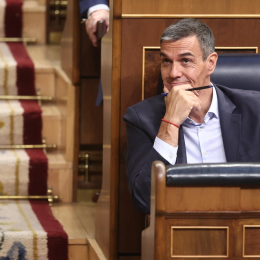
Sánchez reappears on SER this Monday a month later from the massive entry in Ceuta
4 minutes
The rift within the Government
At the same time that the response to the crisis was being reorganized, the Executive was caught in a discussion about an essential issue: what information the State had before the massive entry.
On August 25, Margarita Robles defended in Congress the work of the intelligence services and assured that the agents of the CNI in Ceuta had conveyed information about the planned call for July 30. That same day, Fernando Grande-Marlaska stated that the Interior had not received any report that would allow anticipating a massive entry.
Félix Bolaños has tried to fit both positions by distinguishing between the existence of information about migratory movements and the availability of prior and precise information about the magnitude that the entry would ultimately reach. The minister's position is that the Government did not have concrete data that would allow predicting the scope of what happened.
The discrepancy forces answers to several questions: what information did each agency receive, when did it arrive, and how was it assessed. And it turns an issue initially confined to border management into a political problem for the entire Executive.
The debate that no one wanted to open
And in the midst of the Ceuta crisis, another particularly sensitive issue for Sánchez emerged: his own succession.
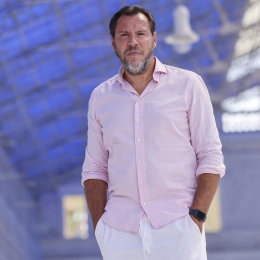
On August 23, Óscar Puente fully entered the debate. In a recorded interview days before, the Minister of Transport assured that, if one day he had the opportunity to lead the PSOE, he would not let it pass. Puente placed that eventual scenario after the next elections and stated that, presumably, Sánchez's next mandate would be the last for even personal reasons.
The minister ended up clarifying his words and claiming the president as the best leader for the PSOE at this moment. But the question had already been publicly raised: what will happen to the PSOE after Sánchez and who could be in a position to take over.
This Thursday, in addition, the debate has incorporated another name. Journalists close to Moncloa have again placed in the conversations about the future of the party the president of the Generalitat of Catalonia, Salvador Illa. It is not a candidacy nor is there a decision from the PSOE in that regard, but his reappearance adds a proper name to a debate that until recently had barely had public space.
All of this happens while different sectors of the opposition demand general elections before the municipal and regional elections of 2027. There is no decision from Sánchez to advance the elections nor a rupture within the PSOE that allows for talking about an open succession process. But the debate has ceased to be completely hypothetical.
The change of agenda
This accumulation of factors is joined by a personal movement from the president. Sánchez had planned to extend his vacation with a trip to Andorra this weekend, but he has ultimately given up, at least for the moment, on that getaway.
The modification of his agenda coincides with the return of Ceuta to the center of presidential activity. This Friday he will participate by videoconference in the meeting of the new single command and on Monday he will open the political course with an interview with Aimar Bretos.
It will be his first substantial public intervention on the crisis since July 31.
Then the Congress will come. The president's appearance, initially scheduled for a later date, has been brought forward to September 3. Sánchez will have to explain the actions of the Executive during the weeks that have passed since the massive entry.
An accumulation of signals
Separately, none of these elements can explain Sánchez's change of attitude by itself. Together, however, they outline a different scenario than the one that existed when the president left Ceuta on July 31.
The migration crisis has not closed. The Government has had to change its response structure and activate the National Security Law. Within the Executive, different versions have emerged regarding the information prior to the massive entry. A minister has publicly opened the debate about his eventual succession and new names are beginning to appear in conversations about the future of the PSOE. And, at the same time, Sánchez has maintained an extraordinarily low profile on his social networks for days.
There are no elements to affirm that all these movements are part of a coordinated strategy nor that there is a single cause behind the change. It cannot be determined who might have recommended to the president that he modify his position.
But it can be verified the sequence: Sánchez's silence coincides with weeks of growing political tension and his return to the forefront coincides with the moment when the Government modifies its response to Ceuta and the political debate begins to directly affect his leadership.
This Thursday, the Minister of the Presidency, Justice and Relations with the Cortes, Félix Bolaños, has defended that, "a day of work of the president this August is much more than his in many days”, Bolaños shot at the deputies who questioned Sánchez's absence during the Ceuta crisis.
What motivates the blackout?
The question that remains on the table is what explains Sánchez's communicative blackout. It does not seem to respond to a clear agenda nor to a moment of special political calm. On the contrary: in recent days, relevant decisions about Ceuta have accumulated, discrepancies among members of the Government, statements about the president's succession, and movements in the Moncloa agenda.
On one hand, ten days without a message from the president on X. On the other, a change in the management of the crisis, with the creation of a single command and the activation of the National Security Law. In parallel, ministers who open debates that directly affect the president and an Executive forced to offer different explanations about the information that the intelligence services had before the massive entry.
There are no elements to affirm that one thing is a consequence of the other. But the temporal coincidence is striking. The silence on social media and the turn in the management of Ceuta come precisely when political tension around Sánchez increases and when the new course forces him to regain prominence. It remains to be seen whether this is a new communication strategy, a reaction to the evolution of the crisis, or a succession of decisions made in response to a scenario that has become complicated.
What does seem clear is that Sánchez returns to the forefront with a single command on the table, a parliamentary appearance in sight, and a Government that needs to organize its narrative. For now, social media remains silent and the presidential agenda has changed.
And as one of her favorites, Rigoberta Bandini, would say, let's see what happens, because something is happening.