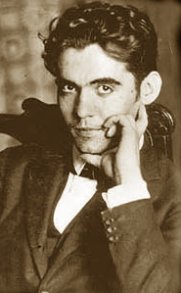
Lorca, 90 years later: what is known about his murder and why his remains have still not appeared

Federico García Lorca was arrested in Granada in August 1936 and murdered shortly after in the vicinity of Víznar and Alfacar. Nine decades later, his body remains missing and part of the official documentation about the crime is still not public.

6 minutes

Add DEMÓCRATA to Google

Ask FREN

Published

Last updated

6 minutes

Most read

Federico Garcia Lorca

Ninety years after the assassination of Federico García Lorca, it is still unknown where his remains are. The poet from Granada was arrested on August 16, 1936, subsequently transferred to Víznar, and executed in the early days of the repression unleashed after the military coup in Granada.

The searches carried out over decades have not managed to locate his body, and this August 18, 2026, the anniversary returns accompanied by a demand: to open the official documentation that still remains out of public reach.

The Last Days of Federico García Lorca

Federico García Lorca arrived at the summer of 1936 already transformed into one of the great names of Spanish literature. On June 19 he finished "The House of Bernarda Alba" and during the following weeks continued working on other projects, while political tension increased until it culminated in the military coup of July. In Granada, the uprising occurred on July 20.

Lorca was then in the Huerta de San Vicente, the family residence in Granada. There he began to directly witness the violence of the repression: his brother-in-law Manuel Fernández Montesinos, the socialist mayor of Granada, was arrested and subsequently executed. During the first days of August, searches also took place in the family home.

Faced with the growing threat, the poet left the Huerta de San Vicente and on August 11 took refuge in the home of the Rosales family, linked to Falange and among whose members was his friend, the poet Luis Rosales. The protection, however, did not manage to prevent his arrest a few days later.

Lorca was arrested on August 16, 1936

The arrest of Federico García Lorca took place on August 16, 1936 at the Rosales' home. On that same day, his brother-in-law Manuel Fernández Montesinos was murdered. Lorca was held in custody by the coup authorities without the efforts made to prevent his death managing to free him.

The documentation and historical investigations have allowed for the reconstruction of a good part of what happened afterward, although discrepancies about the exact time and date of his execution continue to exist. The poet's death is usually placed in the early morning between August 17 and 19, and different reconstructions use different dates. This lack of precision constitutes precisely one of the unknowns that nine decades later remain open.

What is known is the general crime scene. Lorca was transferred to the area between Víznar and Alfacar, in Granada, which became during those first months of the Civil War a place of execution for numerous people repressed by the rebels. The Granada City Council itself describes the road between both municipalities as a space where numerous victims were shot since July 1936.

What the police report says about the murder of Lorca

One of the fundamental documents to officially reconstruct the crime was not drafted immediately after the murder. It is a report from the Regional Brigade of Social Investigation of Granada dated July 9, 1965, almost three decades after the poet's death.

The document recounts the detention and subsequent transfer of Lorca to Víznar and notes that he was executed in the vicinity of Fuente Grande. The report constitutes one of the few publicly known police references about what happened to the writer and was disseminated decades after its preparation.

The Francoist file also included references to his ideology and his homosexuality to justify the persecution. The documentation thus reflected some of the political, social, and personal reasons used by those responsible for the repression to target the poet.

Why the remains of Federico García Lorca have never appeared

The mystery that remains open 90 years later is where Federico García Lorca is buried. Investigations place his murder in the area between Víznar, Alfacar, and Fuente Grande, but the exact point where his body was buried has never been determined with certainty.

Different actions and searches have been carried out in the area over the last few decades without finding his remains. The main difficulty is that there is no public documentation that precisely indicates the burial site, while much of the historical reconstruction depends on testimonies, later investigations, and accounts passed down over the years.

In addition, there are numerous victims of repression buried in this area. The Víznar and Alfacar area was used recurrently for executions after the military coup, which makes the terrain a much broader memorial space than the case of Lorca itself.

The searches for Lorca that ended without finding his body

The attempts to locate the remains of the poet have led to interventions at different points traditionally related to his murder. According to the reconstruction published this August 18 by Cadena SER, since the beginning of this century, several search attempts have been developed, including work carried out during the 2010s. None managed to identify Lorca's remains.

The excavations have served, however, to expand knowledge about the repression developed in the area. The problem is that the hypotheses about the exact location of the burial have been changing, and there is currently no definitive documentary evidence that allows pointing to a specific location.

The family's own attitude has also been different from that maintained by other relatives of victims. The García Lorca family has not promoted the individual recovery of the poet's remains and has historically defended the collective significance of the place where he was murdered along with other victims.

The documents about Lorca's murder that remain unknown

The 90th anniversary has also reopened the debate about the official documents related to the death of Federico García Lorca. The Association for the Recovery of Historical Memory has demanded this Tuesday that the State facilitate access to the documentation that remains unpublished, considering that it may help clarify the circumstances of the murder and eventually the fate of his remains.

The issue is linked to the Spanish system of classified information, still largely based on the legislation of official secrets approved during Franco's regime. The Government sent to Congress in 2025 a Draft Law on Classified Information intended to replace that regulatory framework, but the law is currently still in parliamentary processing. The official record of Congress shows that the deadline for amendments has been extended and is now set to September 2, 2026.

The president of the ARMH, Emilio Silva, has demanded coinciding with the anniversary that the documents related to these crimes be consulted in public archives. The organization argues that clarifying what happened does not only affect Lorca's figure but also the right to know the fate of thousands of people persecuted during the Civil War and the dictatorship.

Ninety years later, Lorca's death still holds unanswered questions

The murder of Federico García Lorca soon became one of the international symbols of the repression unleashed after the coup d'état of 1936. His status as a poet of international recognition meant that his disappearance had a repercussion that transcended Spanish borders from the very beginning.

Nine decades of investigations have allowed for the reconstruction of fundamental aspects of his last days: his stay at the Huerta de San Vicente, the refuge at the Rosales' house, his detention on August 16, and his subsequent transfer to Víznar. But definitive answers are still lacking about the exact moment of his murder, the precise place of execution, and, above all, where he was buried.

That is why the 90th anniversary of Lorca's death, which is remembered this August 2026, does not function solely as a cultural anniversary. It also brings back to the table a pending issue of Spanish democratic memory: to fully understand what happened to one of its most well-known victims when there are still unopened files and a body that, 90 years later, remains missing.

SEO URL: lorca-90-anos-asesinato-restos

Meta title: Lorca, 90 years later: murder, remains, and documents

Meta description: It has been 90 years since the murder of Federico García Lorca. What is known about his detention and death, why his remains have yet to appear, and what documents are still missing.

More key points, information and questions with FREN

AI-GENERATED CONTENT

What parliamentary phase is the Classified Information Bill currently in, and what are its next steps for possible approval?

The Classified Information Bill (Congress, exp. 121/000067) is currently in the Congress of Deputies, in the amendment phase, with the deadline for amendments successively extended by the Board until at least September 2, 2026. It has not yet moved to the committee stage nor to the Senate, so its processing is de facto blocked in the Lower House.

Current parliamentary situation

The available official and informative information shows the following course:

  • 07/22/2025: the Council of Ministers approves the Classified Information Bill and sends it to Congress for parliamentary processing. Moncloa reports it in the note "The Government sends the Classified Information Law to Congress" .
  • 07/23/2025: the initiative is registered in the Congress of Deputies.
  • 08/29/2025: the text is published in the Official Bulletin of the General Courts and the deadline for submitting amendments opens, initially until 09/17/2025.
  • From there, the Board of Congress agrees on successive extensions of the amendment deadline. The parliamentary registry reflects that the status of the file is “pending, after extension of the amendment deadline,” with the current deadline set at 09/02/2026.
  • Various press reports (for example, Demócrata, articles from April 5 and 8, 2026) agree that the bill remains stuck in Congress in the amendment phase since September 2025, accumulating extensions due to the lack of a sufficient majority and the announced veto by Junts.

Consequently, the processing has not yet moved to the committee stage, nor has a general debate been held nor has any text been sent to the Senate. The entire procedure is still concentrated in the first congressional phase, in the “drawer” of extended amendments.

Planned formal next steps

While the file remains in the amendment phase in Congress, the next move is not an isolated political act but a fairly defined procedural chain. The steps, if the government majority decided to unblock the law, would be the following:

  • Definitive closure of the amendment deadline.
    The Board of Congress would have to stop extending it and agree on a closing date. From then on, all registered amendments – including general ones, if any, and to the articles – would be frozen for processing.
  • Referral to the competent committee.
    The bill will likely be sent to the Constitutional Committee (or the one designated in the initial qualification), where a committee stage will be appointed, composed of deputies from the different groups.
  • Committee stage work and committee report.
    The committee stage will prepare a report incorporating, negotiating, or rejecting amendments. Then, the committee will debate and vote on a report. Unless full legislative competence has been granted (which would be unlikely for such a sensitive law), this report will be submitted to the Plenary.
  • Debate and vote in the Plenary of Congress.
    The Plenary will discuss the maintained amendments and the entire text. For the bill to proceed, the final vote must be approved; in case of defeat of a possible return amendment or the text as a whole, the initiative would fail.
  • Referral to the Senate.
    Approved by Congress, the bill goes to the Senate, where a new deadline for amendments opens, committee work, and Plenary debate. The Senate can approve the text without changes, introduce amendments, or approve a veto.
  • Second reading in Congress (if the Senate modifies or vetoes it).
    Congress may override a possible veto and accept or reject the Senate's amendments. The text resulting from this second reading will be definitive.
  • Sanction, promulgation, and publication in the Official State Gazette (BOE).
    Once approved by both Chambers, the law is sent to the King for sanction and published in the Official State Gazette. Only then will it cease to be a bill and become the Classified Information Law.

Political reading of this phase

That the bill remains in the phase of extended amendments for almost a year indicates that there is currently no clear majority to continue processing in Congress. According to various parliamentary chronicles, the Government has chosen to keep it “in the drawer” while trying to rebuild support with its partners and with the PNV, which defends its own initiative on official secrets.

In summary, the law is formally alive but politically frozen: its next procedural step would be very clear (closing amendments and sending to committee), but its realization depends entirely on the Executive and its allies managing to secure a sufficient majority to overcome the announced vetoes.

What are the competencies and functions of the Association for the Recovery of Historical Memory within the Spanish institutional system?

The Association for the Recovery of Historical Memory (ARMH) is a private non-profit entity, not a public body. Therefore, strictly speaking, it does not have its own institutional “competencies” within the Spanish political system, as ministries or administrative bodies do. Its role is articulated through its social functions and the influence it exerts on institutions through the association law, democratic memory policies, and participation and control mechanisms.

Legal nature and general framework

The ARMH emerged after the first scientific exhumation of a mass grave in Priaranza del Bierzo (León) in 2000. That intervention, which allowed the recovery of the remains of thirteen Republican civilians, “prompted the creation of the Association for the Recovery of Historical Memory (ARMH), which since then has worked on denouncing forced disappearances and promoting debates on human rights violations during the dictatorship” (Demócrata). It is thus configured as a statewide memorial association, within the ecosystem recognized and funded first by the Historical Memory Law and today by the Democratic Memory Law.

Substantive functions of the ARMH

  • Search and denunciation of forced disappearances: since its origin, the ARMH has been dedicated to locating mass graves, documenting cases, and accompanying families of people disappeared during the Civil War and the dictatorship. This work of identification and victim support is one of its central functions, although it does not constitute an “administrative competence.”
  • Exhumations and recovery of remains: various administrations and media document exhumations directed or promoted by the association. An example is the 2023 exhumation of the painter Francisco Miguel Fernández Díaz, murdered in 1936, whose remains were recovered by the ARMH in the Bértoa cemetery (Carballo) and later reburied with an institutional act in A Coruña (City Council of A Coruña).
  • Promotion of public and academic debates: as Demócrata recalls, the ARMH has contributed to “the promotion of debates on human rights violations during the dictatorship” (Demócrata). This includes disseminating testimonies, organizing memory events, and constant dialogue with the media.
  • Strategic litigation and institutional pressure: the association uses legal-administrative channels to influence public decisions. In a recent example, it sent the Government a letter demanding “that sanctions be imposed on the family of dictator Francisco Franco for ‘the improper appropriation of the Pazo de Meirás for decades’,” following the Supreme Court ruling declaring the property publicly owned (Demócrata). In another case, it asked the State Attorney General to investigate the actions of a musical band linked to a Vox event, for slogans evoking the violence of 1936 (Demócrata).
  • Collaboration in commemorative and recognition events: the ARMH co-organizes tributes and memorial site markings. The City Council of A Coruña describes, for example, a joint event to install “stolpersteine” in memory of the Tallón Charlón brothers, victims of Nazi camps, in a route organized “by the Association for the Recovery of Historical Memory (ARMH) with the collaboration of the City Council” (City Council of A Coruña).

Role in the institutional system

Although the ARMH is not formally part of the Administration, its work is inserted in the architecture of public policies on democratic memory. The Democratic Memory Law foresees that memorial associations participate in consultative bodies such as the Democratic Memory Council, whose functions include informing the Memory Plan, making regulatory proposals, issuing reports, and evaluating subsidies to memorial entities (Demócrata). The ARMH is part of that group of entities that:

  • Provide technical expertise in exhumations, archiving, and victim support.
  • Are potential beneficiaries of subsidies for democratic memory projects, like other associations included in regional and state calls.
  • Act as civic counterpower, monitoring compliance with the Democratic Memory Law and denouncing possible breaches or regressions.

In summary, the ARMH does not hold its own public competencies, but performs key functions of truth, symbolic justice, and moral reparation that the institutional system recognizes, funds, and partly integrates through consultative bodies, agreements, and official acts. Its influence is exercised through direct action (exhumations and family support), legal and media pressure, and participation in the governance of democratic memory policies alongside ministries, parliaments, and regional governments.

What legal requirements must be met for official documents classified during the Franco dictatorship to be made public today?

For official documents classified during the Franco dictatorship to be made public today, it is not enough that they are old: a series of legal requirements must be met that combine the official secrets regime, archival regulations, the transparency law, and the Democratic Memory Law. The core remains the declassification decision by the competent body, subject to limits such as national security and personal data protection.

1. Official secrets regime: who can declassify

  • Law 9/1968, on official secrets, amended by Law 48/1978, remains the basic regulation. It allows declaring “classified matters” (secret or reserved) when their knowledge by unauthorized persons could harm or endanger the security and defense of the State.
  • According to the 1968 text itself, the classification and cancellation of classification:
    • Correspond “exclusively, within their competence, to the Council of Ministers and the Board of Chiefs of Staff.”
    • The “cancellation” of classification must be agreed upon by the same body that made the declaration.
  • Decree 242/1969, which develops the Law, adds that the authority that classifies must:
    • Indicate, whenever possible, the duration period of the classification or the event that will mark its end.
    • Establish procedures to periodically review the advisability of reclassifying or declassifying the material.

In practice, as long as a document formally retains the classification of secret or reserved, it can only be fully made public if the competent body (usually the Council of Ministers) agrees to lift it.

2. Transparency and citizen requests

  • Law 19/2013, on transparency, recognizes a broad right of access to public information, exercisable by anyone without needing to justify the request.
  • However, this right is limited when certain protected interests concur. The Law itself establishes that access may be restricted, among other reasons, due to:
    • National security and defense.
    • Foreign relations.
    • Protection of personal data.
  • The law requires applying a “harm test” and a “public interest test”:
    • Assess whether disclosure would cause real and relevant harm to the protected interest.
    • Weigh whether, in the specific case, the public interest in knowing the information prevails.

In practice, a citizen or researcher can request access to a Franco-era document; the Administration must resolve applying Law 19/2013. But if the document is still formally classified under Law 9/1968, the classification acts as a limit: prior declassification by the Council of Ministers is usually required for full access, although partial access or data dissociation can be requested.

3. Archives and documentary heritage

  • Law 16/1985, on Spanish Historical Heritage, integrates the documentary and archival heritage into the Historical Heritage and obliges public authorities to protect it and facilitate its access.
  • The law foresees that documents in public archives are, in general, consultable, establishing deadlines and conditions, especially to protect:
    • State security.
    • The privacy and personal data of affected persons.

Consequently, documents from the dictatorship held in state or regional archives should be accessible once certain deadlines have passed, unless they remain classified as official secrets or contain especially sensitive data that require restrictions or anonymization.

4. Democratic Memory and documentation of Francoism

  • Law 20/2022, on Democratic Memory, strengthens the right to truth about the Spanish Civil War and the Franco dictatorship and declares the obligation of public authorities to preserve archives and documentary sources.
  • The law promotes the location, inventory, and opening of documentary collections related to Francoism for research, recognition, and reparation of victims.
  • All this is established “without prejudice” to other applicable regimes: official secrets, data protection, etc.; that is, it does not repeal Law 9/1968 by itself, but it does guide interpretation towards greater openness when no real risks to security or third-party rights remain.

5. Specific limits and protection of persons

Even when the document is old and there is no longer a real risk to security or defense, several limits still operate:

  • National security and defense: if the content maintains strategic relevance (for example, still current military capabilities), classification may be maintained or full access denied.
  • Foreign relations: documents that sensitively affect other States or international organizations may require special caution.
  • Protection of data of victims and third parties: transparency and data protection regulations require seriously weighing the disclosure of information about identifiable persons, possibly:
    • Granting access with anonymized data.
    • Limiting mass dissemination, although consultation in reading rooms is allowed.

6. Control channels and appeals

  • Decisions to deny access can be appealed before the Transparency and Good Governance Council and, ultimately, before the contentious-administrative jurisdiction, which controls:
    • The correct application of limits.
    • The proportionality of maintaining classification versus the public interest in historical truth and democratic memory.

In summary, the declassification of Franco-era documents requires an express decision by the competent body under the Official Secrets Law, but that decision is today framed and conditioned by a system that, through transparency, archives, and democratic memory, pressures in favor of access, unless real risks remain or fundamental rights of living persons are compromised.

Play

Test your knowledge with FREN!

How much do you know about this topic? Answer the following 3 questions.

On what date was Federico García Lorca arrested?

Question 1 of 3

What is the main reason why Federico García Lorca's remains have not been found?

Question 2 of 3

Which area of Granada was used as the execution site where Lorca is believed to have been killed?

Question 3 of 3

Hola, soy Fren. ¿Cómo te ayudo?