Draws for today Monday, August 31: schedules of La Primitiva, Bonoloto, EuroDreams, and ONCE Daily Coupon

This Monday, August 31, 2026, the draws of La Primitiva, Bonoloto, EuroDreams, and the Daily Coupon of the ONCE are held. Check what time each draw is, the prizes or jackpots at stake, and when the results will be available.

2 minutes

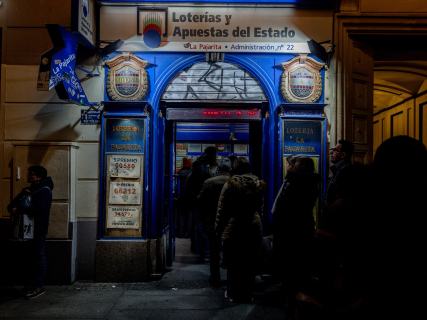
EuropaPress 7190188 gente comprando loteria sorteo extraordinario nino 29 diciembre 2029 madrid

EuropaPress 7190188 gente comprando loteria sorteo extraordinario nino 29 diciembre 2029 madrid

Add DEMÓCRATA to Google

Ask FREN

Published

Last updated

2 minutes

Most read

This Monday, August 31, 2026, four main draws are celebrated in Spain. During the afternoon and evening, La Primitiva, Bonoloto, EuroDreams, and the Daily Coupon of the ONCE will take place, four appointments for those who want to check if their ticket or coupon has been awarded.

The day does not include draws from the National Lottery, Euromillions, Eurojackpot, El Gordo de la Primitiva, Cuponazo, or Sueldazo Fin de Semana from the ONCE. The National Lottery will return on Thursday, September 3, while Euromillions and Eurojackpot will return on Tuesday, September 1.

The key to this Monday is knowing which draws take place today, at what time they are held, what prizes or jackpots are at stake, and when the winning numbers will be available.

What draws are there today, Monday, August 31

This Monday, four main draws are held:

La Primitiva and Joker.

Bonoloto.

EuroDreams.

Daily Coupon of the ONCE.

Additionally, during the day, the results of the draws held on Sunday, August 30, can be consulted, although they correspond to the previous day.

What time is La Primitiva today

La Primitiva celebrates one of its three weekly draws this Monday. Lotteries and State Bets announce a jackpot of 7.5 million euros for this day.

The draw is scheduled for 21:40 hours and also includes the Joker. The official results will be available after the celebration.

What time is EuroDreams today

EuroDreams celebrates one of its two weekly draws this Monday. The maximum prize of First Category consists of 20,000 euros per month for 30 years.

The EuroDreams day is scheduled for this Monday, August 31, and the result will be known during the night. 

What time is Bonoloto today

Bonoloto holds draws every day of the week. To check a bet, one must review the six numbers of the winning combination, in addition to the complementary and the refund.

The draw for this Monday is scheduled for 21:00 hours. The winning combination and the rest of the result data will be published after the celebration.

What time is the Daily Coupon ONCE today

This Monday, the Daily Coupon of the ONCE is celebrated, which is played from Monday to Thursday and offers a main prize of 500,000 euros for the coupon that matches the five digits and the winning series.

JuegosONCE sets the draw for this Monday, August 31, at 21:25 hours.

When will the results be available

The Bonoloto is scheduled for 21:00 hours, followed by La Primitiva and Joker at 21:40. The result of EuroDreams will be incorporated into the day's programming and the ONCE Daily Coupon is held at 21:25 hours.

The results may take a few minutes to appear after each draw. The final verification must always be done through the official channels of State Lotteries and Betting and JuegosONCE.

More key points, information and questions with FREN

AI-GENERATED CONTENT

What are the next steps in the processing of the legislation regulating lottery and betting draws in Spain?

In Spain, there is no specific procedure for laws on lottery and betting draws: the same general scheme as for any ordinary law applies. Therefore, the “next steps” in the processing depend on the stage of the specific initiative, but the standard process is quite stable and differs slightly depending on whether it is a government bill or a private member's bill from parliamentary groups or other legitimized subjects.

1. Presentation of the initiative

The starting point is that there is a reform or new regulation text:

  • Government bill: approved by the Council of Ministers and sent to the Congress. This route is used if it is a government initiative to modify the framework of gaming, lotteries, or betting.
  • Private member's bill: presented by one or more parliamentary groups, at least 15 deputies, the Senate, an autonomous assembly, or, in very limited cases, the citizens (popular legislative initiative).

Once it enters the Congress Registry, it goes to the Congress Board, which qualifies the initiative and admits it for processing if it meets the formal requirements.

2. Consideration (only for private member's bills)

If the regulation of lotteries and betting comes as a private member's bill, the next key step would be the consideration debate in the Plenary of the Congress:

  • The groups debate whether they want the proposal to continue its processing.
  • A vote is held; if approved, the bill is “taken into consideration” and continues like any other law.
  • If rejected, the text lapses and is not further processed.

In contrast, a government bill does not go through this procedure: it is understood as accepted for processing by the mere fact of its submission to Congress.

3. Assignment to committee and amendment phase

Once the initiative is admitted, the Board refers it to the competent committee (probably the one linked to Finance, Budgets, or Consumer Affairs, depending on the current distribution), and an amendment period opens:

  • Parliamentary groups can submit total amendments (return or alternative text) and/or partial amendments to specific articles.
  • In the field of lotteries and betting, it is common for amendments to address fiscal aspects, consumer protection, advertising, responsible gaming, etc.

If total amendments are submitted, they may lead to a specific debate in Plenary, where it is decided whether the text continues processing or is returned to the Government.

4. Work in committee and report

After this phase, the initiative is studied in the parliamentary committee:

  • In a technical subcommittee (a small group of deputies), transactions are negotiated and amendments grouped.
  • The committee debates and votes article by article, incorporating or rejecting amendments.
  • The result is a committee report, which contains the articulated text as it stands after this phase.

5. Debate and vote in the Plenary of the Congress

The report goes to the Congress Plenary, where the final debates take place:

  • The entire text is discussed and, if applicable, the amendments that have been maintained for the Plenary.
  • Pending amendments are voted on and, finally, the complete text is voted on.

If the lottery and betting law is approved, the text is sent to the Senate.

6. Processing in the Senate

In the Senate, the procedure is repeated in an abbreviated form:

  • Assignment to committee and opening of amendment period.
  • Debate in committee and, if appropriate, in the Senate Plenary.
  • The Senate can:
    • Approve the text as it arrived (the law would be ready for promulgation).
    • Introduce amendments, which are sent back to the Congress.
    • Agree on a veto (rejection of the whole), which also returns to the Congress.

7. Return to Congress, sanction, and publication

If the Senate has introduced changes, the Congress has the final say:

  • It can accept or reject the Senate's amendments by simple majority.
  • In case of veto, it can lift it by absolute majority in a first vote, or by simple majority after two months.

Once the text is definitively approved, it is sent to the King for sanction and promulgation and published in the Official State Gazette (BOE). The lottery and betting law will come into force on the date it establishes or, failing that, 20 days after publication.

What powers does the ONCE have in organizing draws and what other legal functions does it perform?

The National Organization of Spanish Blind People (ONCE) is much more than a lottery operator: the legal system configures it as a public law corporation of a social nature, with functions of general interest and a specific regime in gaming matters. Based on the rules cited in the BOE, its powers in organizing draws and its other legal functions can be clearly distinguished.

1. ONCE's powers in organizing draws and lotteries

The main legal bases of ONCE's gaming activity are:

  • Twentieth additional provision of Law 46/1985, on the General State Budgets for 1986, which paved the way for the reservation and authorizations in favor of ONCE in lottery matters.
  • Law 13/2011, regulating gaming, whose article 4 and first additional provision reserve state-level lotteries to two operators and expressly designate ONCE as one of them, enabling it to “market state-level lottery products.”
  • Third additional provision of Law 5/2011, on Social Economy, which declares ONCE a “singular social economy organization” and recognizes that, to finance its social purposes, it “enjoys a set of public authorizations in gaming matters.”
  • Royal Decree 358/1991, reorganizing ONCE, and its amendments, which specify that the entity “is mainly financed through resources obtained from the exploitation of the gaming modalities” reserved or authorized to it.
  • Royal Decree 1336/2005, authorizing ONCE to exploit the “instant or pre-drawn lottery” modality.
  • The successive General Agreements Government–ONCE (the current one for 2022-2031, approved by the Council of Ministers on 11/2/2021), which develop the limits, conditions, and commercial tools of those lotteries.

On this basis, ONCE's specific powers in draws and lotteries, as derived from recent resolutions of the State Secretariat for Social Rights (BOE-A-2025-23043, BOE-A-2024-12936, BOE-A-2024-12855), are, in summary:

  • To own and operate several state-level lottery modalities: the “ONCE Coupon,” the “ONCE Instant Ticket Lottery,” and the games of the “ONCE Active Game” (such as Triplex, Super Once, etc.), all covered by the lottery reservation of Law 13/2011.
  • To design and approve the regulations of each modality and its products (for example, the mechanics of instant tickets or the prize structure of extraordinary draws), through agreements of the ONCE General Council or Executive Commission.
  • To implement, modify, and discontinue specific lottery products (new “scratch cards,” price changes, modification of the “Cuponazo,” “Sueldazo,” etc.), within the general framework set by the State.
  • To communicate to the Protectorate Council all conditions of its lotteries and regulation modifications, to:
    • Verify that they comply with the terms of the state concession and general gaming regulations.
    • Publish them in the BOE as consumer guarantees.
  • To organize specific extraordinary draws (for example, the “ONCE 11/11 Draw” of 2024), whose rules are also published in the BOE along with coupon price, prize structure, etc.
  • To adapt its activity to the requirements of responsible gaming and public control established in gaming legislation and amending royal decrees (prevention of underage gaming, fight against fraud and money laundering, commercial limits, supervision by the Protectorate Council and the Council of Ministers).

All this configures ONCE as a public operator of state-level lotteries, subject to State authorization and control, but with a wide margin of internal self-organization in the design and management of its products.

2. Other legal functions of ONCE as a public law corporation

Royal Decree 358/1991 and, more recently, Royal Decree 394/2011, Royal Decree 1152/2015, and Royal Decree 1127/2021 (amendments), as well as the Consolidated Statutes of ONCE published by Order SCB/1240/2019, define its status and general functions:

  • ONCE is a public law corporation of a social nature, with its own legal personality and full capacity to act and self-organize.
  • It is composed of its members, people with blindness or severe visual impairment who meet statutory requirements.
  • Its social purposes are aimed at:
    • Personal autonomy and full social inclusion of blind or severely visually impaired people.
    • Provision of social services in areas such as educational inclusion, training and labor insertion, comprehensive rehabilitation, personal autonomy, universal accessibility and design for all, R&D&i in typhlotechnology, culture, and sports, among others (article 2 of RD 358/1991 after its reform).
  • It exercises delegated public functions of the administrations throughout Spain, under the State protectorate, especially in the field of social services for people with visual disabilities.
  • It collaborates complementarily with administrations in the implementation of disability, inclusion, and sheltered employment policies, often through the ONCE Foundation and the ONCE Social Group.
  • It is recognized as a social economy entity and part of the Third Sector of Social Action, collaborating with the General State Administration, reinforcing its role as an agent of general interest beyond gaming.

Overall, ONCE combines a unique position as a state lottery operator – with broad powers over the design, organization, and exploitation of its draws, but under strict public control – with a legal mandate to provide social services and promote rights of people with visual disabilities and, by extension, the entire disability community through its institutional group.

What have been the most recent electoral results of the political parties that are part of the ONCE governing council?

No information has been found in the consulted sources explicitly linking the composition of the ONCE General Council (or equivalent governing body) with formal quotas of political parties, nor lists of “members appointed by parties” to whom recent electoral results could be associated. There are also no references to seat distributions by parties in that body.

The official resolutions located in the Official State Gazette regulating ONCE's gaming products — for example, the Resolution of June 14, 2024 and the Resolution of June 14, 2024 on extraordinary draws of the Coupon — describe ONCE as:

  • A public law corporation of a social nature.
  • Regulated by its own specific regulations, plus the state gaming regulations and the Government–ONCE General Agreement for 2022-2031.
  • Subject to control by the ONCE Protectorate Council, a body in which the General State Administration participates, which supervises regulations and calendars of lottery products.

These rules detail the legal framework, control procedures, and the role of the Protectorate Council, but do not mention that the General Council or governing body of ONCE is divided among political parties, nor that members are appointed representing parliamentary parties.

Other institutional references found, such as the Basque Government note on ONCE in Euskadi (XXVII Cascabeles Race), describe the territorial structure of the organization (president of the ONCE Social Group, presidencies, and territorial councilors), but again do not link those positions to parties, but to the organization itself and its social group.

Based on this documentary foundation, what can be stated with certainty is:

  • ONCE is governed by internal bodies (General Council, territorial councils, etc.) that derive from its status as a public law corporation of social economy.
  • The State Administration exercises tutelage and supervision functions through the Protectorate Council, but this does not translate into a seat distribution by parties within ONCE's internal governing bodies.
  • There is no trace in the consulted sources of a “party representation” in the General Council comparable to that existing, for example, in the Court of Auditors, the CNMC Council, or some parliamentary committees, where the composition is distributed among political groups and it is possible to trace who proposes whom.

This has two direct consequences for your question:

  • It is not possible, based on accessible official information, to identify a list of political parties that “are part” of the ONCE General Council as such parties (i.e., with members acting institutionally on behalf of a party).
  • Consequently, it is not possible to construct a reliable chart of the “most recent electoral results” of parties formally linked to that Council, because that party–General Council organic relationship is not documented.

It is possible that some councilors or ONCE leaders have personal backgrounds connected with parties or previous political responsibilities, but that would be individual biographical data, not an institutional seat allocation by party quotas. In any case, the sources handled in this research do not detail that biographical information at the level necessary to link specific names with party acronyms in the governing body.

Therefore, with the available documentation, the most accurate answer is that:

There is no record in official registers and consulted news that the ONCE General Council has a composition formally divided among political parties; therefore, it is not possible to provide a list of parties “that are part” of that body nor, consequently, their most recent electoral results.

If what you need is an analysis of how ONCE politically relates to the party system (for example, through the General Agreement with the Government or its public positions on certain social policies), a different report could be prepared, focused on those interactions, but not on an organic party representation within its General Council.

Play

Test your knowledge with FREN!

How much do you know about this topic? Answer the following 3 questions.

What is the maximum prize offered by EuroDreams this Monday, August 31, 2026?

Question 1 of 3

How many main draws are held in Spain on Monday, August 31, 2026?

Question 2 of 3

Through which channels should the official draw results be checked?

Question 3 of 3

Hola, soy Fren. ¿Cómo te ayudo?