Price of electricity today, September 7: the most expensive hour will be from 21:00 to 22:00 and the cheapest from 14:00 to 15:00

The price of electricity will mark this Monday a wide difference between the cheapest period of the afternoon and the most expensive hours of the night, with the maximum at 0.3804 €/kWh

2 minutes

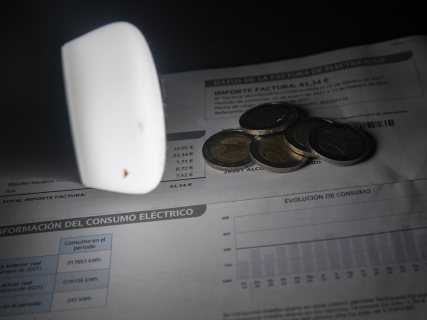
EuropaPress 4165629 lampara refleja importe factura dia precio luz marcado minimo primera vez

EuropaPress 4165629 lampara refleja importe factura dia precio luz marcado minimo primera vez

Add DEMÓCRATA to Google

Ask FREN

Published

Last updated

2 minutes

Most read

The price of electricity today, Monday, September 7, 2026, will have its cheapest hour between 14:00 and 15:00 hours, with a cost of 0.0854 €/kWh. At the opposite end, the maximum will be recorded between 21:00 and 22:00 hours, when it will reach 0.3804 €/kWh.

The day will start with prices close to 0.20 €/kWh and will experience an increase during the morning. The cost will reach 0.2906 €/kWh between 08:00 and 09:00, before starting a decline that will bring prices to their lowest levels during the first half of the afternoon.

What is the cheapest hour of electricity today?

The cheapest hour will be from 14:00 to 15:00, with a price of 0.0854 €/kWh.

The most economical period will be concentrated between 14:00 and 17:00 hours. After the minimum, the price will be 0.0957 €/kWh between 15:00 and 16:00 and 0.1034 €/kWh between 16:00 and 17:00. From then on, a progressive increase will begin.

What is the most expensive hour?

The daily maximum will be reached between 21:00 and 22:00 hours, with 0.3804 €/kWh.

The increase will be especially intense from 18:00 hours. The price will be 0.2802 €/kWh between 18:00 and 19:00, will rise to 0.3323 €/kWh between 19:00 and 20:00, and will reach 0.3703 €/kWh between 20:00 and 21:00, before reaching the maximum of the day.

The average price of electricity this Monday

The average of the 24 hourly prices of the day is approximately 0.2212 €/kWh.

The difference between the minimum and maximum price will be 0.2950 €/kWh. The central afternoon period will concentrate the lowest prices, while the nighttime period will be the most expensive.

Hour Price
00-01h 0.2071 €/kWh
01-02h 0.2072 €/kWh
02-03h 0.2003 €/kWh
03-04h 0.2022 €/kWh
04-05h 0.1986 €/kWh
05-06h 0.2016 €/kWh
06-07h 0.2271 €/kWh
07-08h 0.2806 €/kWh
08-09h 0.2906 €/kWh
09-10h 0.2153 €/kWh
10-11h 0.2394 €/kWh
11-12h 0.1839 €/kWh
12-13h 0.1718 €/kWh
13-14h 0.1526 €/kWh
14-15h 0.0854 €/kWh
15-16h 0.0957 €/kWh
16-17h 0.1034 €/kWh
17-18h 0.1541 €/kWh
18-19h 0.2802 €/kWh
19-20h 0.3323 €/kWh
20-21h 0.3703 €/kWh
21-22h 0.3804 €/kWh
22-23h 0.2705 €/kWh
23-24h 0.258 €/kWh

When is it advisable to use appliances?

The most favorable hours to concentrate the consumption of high-power appliances will be between 14:00 and 17:00 hours, especially between 14:00 and 15:00, when the daily minimum will be recorded.

On the contrary, it will be advisable to avoid as much as possible the most expensive hours of the evening-night, especially between 8:00 PM and 10:00 PM, when the cost will reach its maximum values of the day. In particular, between 9:00 PM and 10:00 PM the maximum of the price of electricity today will be recorded.

More key points, information and questions with FREN

AI-GENERATED CONTENT

What regulations govern the setting of hourly prices in the Spanish electricity market?

The setting of hourly prices in the Spanish electricity market does not depend on a single regulation but on a European and national regulatory framework that defines the design of the wholesale market (daily and intraday pool managed by OMIE), system operation, and how these prices are passed on to the consumer, especially the PVPC.

1. European internal market framework

Within the EU, the basic pieces that condition how hourly prices are formed are:

  • Regulation (EU) 2019/943 on the internal electricity market (cited, for example, in the Resolution of 7 July 2025). It sets the principles of the marginalist model, energy remuneration, capacity mechanisms, and requirements on trading time intervals (15 minutes, proximity to real time, etc.).
  • Regulation (EU) 2015/1222 (CACM), on capacity allocation and congestion management, cited in the Resolution of 9 May 2018. It is the basis for the single daily and intraday European coupling and conditions the design of OMIE auctions and offer matching rules.

2. Basic regulations of the Spanish electricity sector

  • Law 24/2013, of 26 December, on the Electricity Sector (BOE-A-2013-13645). It defines the general framework of the electricity system, distinguishes regulated and competitive activities, and assigns the State the competence to:
    • regulate the economic management of the system and approve market rules;
    • establish tariffs and charges financed via billing;
    • regulate supply at regulated tariff (PVPC) and the social bonus.
  • Royal Decree 2019/1997, of 26 December, on the organization and regulation of the production market (cited in Res. 9‑5‑2018). It recognizes OMIE as the market operator and establishes the daily and intraday market scheme on which the marginalist matching is built.
  • Circular 3/2019, of 20 November, of the CNMC (BOE-A-2019-17287), which establishes the methodologies regulating the operation of the wholesale electricity market and system operation management. It is the reference regulation that enables and frames both market rules and system operation procedures (balancing services, balancing, etc.).

3. Rules of the daily and intraday market (OMIE / CNMC)

On this legal basis, the specific negotiation and hourly matching rules (and, from 2025, quarter-hourly) are approved:

  • Resolution of 9 May 2018 of the Secretary of State for Energy, approving the Operating rules of the daily and intraday electricity production markets (BOE-A-2018-6295). It develops Law 24/2013 and RD 2019/1997, setting the offer structure, auction process, and marginalist matching.
  • Its successive adaptations, all published in the BOE, updating the hourly design:
    • Resolution of 6 May 2021 of the CNMC (and its correction) on adapting offer limits to European matching limits (BOE-A-2021-8362).
    • Resolution of 23 February 2023 of the CNMC, modifying rules to adapt them to the economic regime of renewables (BOE-A-2023-5582).
    • Resolution of 23 May 2024 of the CNMC, adapting rules to European intraday auctions (BOE-A-2024-11958).
    • Resolution of 28 February 2025 of the CNMC, publishing daily and intraday market rules for the transition to quarter-hourly trading and new offer typologies (BOE-A-2025-4908), complemented by resolutions on quarter-hourly operation procedures.
    These rules specify how supply and demand curves are constructed and how the hourly (or quarter-hourly) marginal price is set.

4. Passing on to the consumer: PVPC, tariffs, and charges

For the regulated consumer and the regulated price components, the key regulations are:

  • Royal Decree 216/2014, of 28 March, establishing the methodology for calculating voluntary prices for small consumers (PVPC) and its legal regime (BOE-A-2014-3376), modified by Royal Decree 469/2016. It regulates in detail:
    • that the production cost is obtained from the hourly price of the daily and intraday market and other market components;
    • the structure of the PVPC energy term and the billing method based on hourly consumption;
    • the conditions of reference retailers.
  • Royal Decree 148/2021, of 9 March, establishing the methodology for calculating electricity system charges (BOE-A-2021-4239).
  • Circular 3/2020, of 15 January, of the CNMC, on electricity transport and distribution tariffs (BOE-A-2020-1066), and its modifications.
  • Annual charge orders, such as Order TED/113/2024 for 2024 (BOE-A-2024-2774) and those for 2025‑2026, which set specific values for charges and other regulated costs.
  • Royal Decree-law 10/2022, of 13 May, which temporarily establishes the production cost adjustment mechanism to reduce the wholesale market price (BOE-A-2022-7843), the so-called “Iberian exception,” which has directly influenced hourly pool prices during its validity.
  • Resolution of 30 June 2023, approving operation procedure 14.12 on estimation of the cost of PVPC components (BOE-A-2023-15276), refining the hourly calculation of the regulated price.

Overall, these European and Spanish regulations define the hourly marginalist mechanism in the OMIE market and how that base price is combined with tariffs, charges, balancing services, and taxes to produce the hourly price paid by consumers under PVPC and other indexed contracts.

What are the competencies of the National Commission on Markets and Competition (CNMC) in supervising the electricity market?

The National Commission on Markets and Competition (CNMC) is the independent regulator and supervisor of energy markets in Spain, including the electricity market. Its competencies are mainly based on Law 3/2013, establishing the CNMC, Law 24/2013 on the Electricity Sector, and European regulations on the internal electricity market (particularly Regulation (EU) 2019/943 and the REMIT Regulation on integrity and transparency of wholesale energy markets).

1. General framework of supervision and control

According to the Moncloa note of 11/03/2026, the CNMC exercises functions of supervision and control of energy markets – electricity, gas, and fuels – in accordance with Law 3/2013. This law assigns it, in article 7, specific functions in the electricity and gas sectors aimed at ensuring transparency, effective competition, and proper market functioning.

In application of REMIT (Regulation (EU) 1227/2011), the CNMC supervises the integrity and transparency of wholesale electricity markets, monitoring possible market manipulation, abusive operations, or misuse of insider information.

2. Regulation and design of the wholesale electricity market

The CNMC not only supervises but also develops detailed regulation through circulars and resolutions:

  • Resolution of 12/06/2025 (BOE-A-2025-13076) is issued under article 7 of Law 3/2013 and develops methodologies related to balancing services and non-frequency services of the electricity system, such as voltage control. The CNMC determines market rules, provision conditions, and remuneration regime for these services.
  • This same resolution explains that the CNMC approves and modifies system operation procedures (PO) (e.g., PO 3.1, 7.4, 9.1, 14.4), which regulate scheduling, information exchange, and settlement of balancing services.
  • Another 2025 resolution on the intraday market and voltage control adapts market operation to European regulations and quarter-hourly operation, aligning Spain with Regulation (EU) 2019/943 and ACER decisions.

In summary, the CNMC defines much of the “rules of the game” for the daily and intraday markets, as well as balancing services, aiming for efficient system operation and maintaining competition among agents.

3. Access and connection to transmission and distribution networks

Law 24/2013 on the Electricity Sector specifies several key CNMC functions:

  • Article 33 of Law 24/2013 establishes a competence division between the Government and the CNMC regarding access and connection to networks. The CNMC is competent to set the methodology and conditions for access and connection, including capacity evaluation criteria, application and contract content, and publicity and transparency obligations.
  • Resolution of 30/04/2025 (BOE-A-2025-9913) develops these competencies by setting homogeneous formats for publishing access capacities by distribution network managers, facilitating information for developers and consumers.
  • The CNMC note of 05/07/2024 details that, again under article 33 of Law 24/2013, the CNMC approves detailed specifications for calculating access capacity to networks, with special attention to new renewable installations, storage, and demand.

All this positions the CNMC as a technical-regulatory arbitrator of how network capacity is allocated and under what criteria new installations connect, a central aspect for the energy transition.

4. Remuneration and control of the system operator

Resolution of 03/11/2025 (BOE-A-2025-23047) explains that, according to article 7.1.i) of Law 3/2013, the CNMC has the function of establishing the remuneration methodology for the electricity system operator (REE). Through circulars and subsequent resolutions, the CNMC:

  • Defines how the base remuneration and incentives of the system operator are calculated based on services effectively provided.
  • Controls the regulatory account associated with new regulatory obligations or European projects, verifying that costs are prudent and efficient.

This competence directly impacts the regulated costs of the electricity system and, therefore, the tariffs paid by consumers.

5. Consumer protection and monitoring of retailers

CNMC notes from 2024 and 2025 emphasize its role in:

  • Issuing reports on contracts and electricity supply, proposing improvements to strengthen consumer protection.
  • Monitoring commercial practices of electricity and gas retailers (sales forces, telephone or digital contracting, information on indexed offers), with the ability to open proceedings and investigations when irregularities are detected.

Additionally, under the general scope of Law 3/2013 and Competition Law, the CNMC has the power to sanction anti-competitive conduct (e.g., abuse of dominant position or practices distorting prices in the electricity market).

6. Integration into the European internal market framework

Various cited resolutions expressly refer to Regulation (EU) 2019/943 on the internal electricity market and other European rules on balancing services and system operation. The CNMC:

  • Adapts operation procedures and market rules to these European requirements (e.g., 15-minute products and proximity to real time in the intraday market).
  • Coordinates its decisions with the European regulator and other national authorities, acting as the national regulatory authority under EU law.

Overall, the CNMC combines functions of supervision, technical regulation, economic methodology setting, market integrity control, and consumer protection, positioning itself as a central piece in the governance of the Spanish electricity system within the European internal electricity market.

What have been the main reforms in the electricity price system in recent years in Spain?

In recent years, the electricity price system in Spain has changed mainly due to the energy crisis of 2021‑2022. The reforms have acted simultaneously on the wholesale market, the regulated PVPC tariff, taxes, and consumer protection mechanisms, with a direct impact on the bills of households and SMEs.

1. Starting point: marginalist market and PVPC

Spain maintains a marginalist wholesale market: all technologies receive the price set by the last plant needed to cover demand, usually combined cycle gas plants. This price is passed on, with added regulated costs, to the consumer, especially those on the regulated PVPC tariff (Voluntary Price for Small Consumers), as explained by Demócrata in its guide on the electricity price system (explanatory article).

2. Emergency measures 2021‑2023: taxes and “energy shield”

Faced with the price surge after the invasion of Ukraine, the Government approved several emergency packages. According to Moncloa itself, many of these measures have been extended (note “Measures against the energy crisis in Spain”):

  • Tax reductions on electricity: reduction of VAT on electricity from 21 % to 10 % (at times even 5 %), and temporary reduction of the Special Electricity Tax. The most recent extensions of these reductions are planned at least until the end of 2024.
  • Strengthening the social bonus: extraordinary increase of the discount up to 65 % for vulnerable consumers and 80 % for severely vulnerable, with a gradual return path to permanent discounts of 35 % and 50 % from 2025, higher than pre-crisis levels (same Moncloa note).
  • Ban on disconnections: extension until 31‑12‑2024 of the ban on interrupting electricity, gas, and water supplies to vulnerable, severely vulnerable, or socially excluded consumers.

The Ministry for Ecological Transition has emphasized that, thanks to the combination of these aids and the social bonus, vulnerable consumers will pay a lower electricity bill in 2025 than in 2019 (MITECO, January 2025).

3. “Iberian exception” (gas cap) 2022‑2023

The most notable reform was the so-called Iberian mechanism or gas cap, agreed with the EU and applied between June 2022 and December 2023. According to Demócrata's coverage, a maximum price was set for gas used for electricity generation, starting at 40 €/MWh and progressively increasing, with an average around 48.8 €/MWh, which reduced the electricity bill of consumers under the system by approximately 15 % (analysis on the gas cap).

The Bank of Spain and other analyses cited by Demócrata highlight that, since 2022, the sensitivity of electricity prices to gas has moderated, partly due to this mechanism and later due to the greater weight of renewables.

4. Tariffs, charges, and hourly price signals

Although the major reform of domestic tariffs was consolidated in previous years, its effects have been felt recently. The CNMC notes that in 2023 almost half of domestic consumers already had tariffs with prices varying by time of day, with potential savings of 8‑11 % if they adapt their consumption patterns (2023 retail market report).

In parallel, the CNMC has opened a specific working group on tariff design and launched a consultation on wholesale market design to encourage demand participation (CNMC and blog “A 2024 full of actions in the energy sector”), reinforcing hourly signals that influence the final cost for households and SMEs.

5. PVPC reform: less volatility, more weight of forward markets

Since 2024, the PVPC calculation method has been deeply reformed. According to Demócrata, it now combines the hourly price of the daily market with references from futures markets to reduce volatility: the weighting of futures is 25 % in 2024, 40 % in 2025, and will reach 55 % in 2026 (explanation on PVPC and article on the quarter-hourly auction).

This change has limited extreme peaks but has also meant that, in some periods of 2024 and 2025, PVPC is not always the cheapest option compared to many offers in the free market, as noted by an ABC analysis based on CNMC comparator data (“Electricity at zero euros…”).

6. Market operational changes and demand response

In 2025, the quarter-hourly auction was introduced in the daily market, increasing from 24 to 96 prices per day. This refines signals for large consumers and industry, although for households billing continues to be done by full hour, so the impact is indirect (Demócrata).

The CNMC has also updated operation procedures for the active demand response service and voltage control, facilitating flexible consumption participation in system balancing and, in the medium term, potentially reducing regulated costs, as reflected in various resolutions published in the BOE.

7. Commercial competition and user protection

Finally, changes have been introduced to facilitate consumers benefiting from better prices: MITECO has limited “spam” commercial practices and better regulated penalties for contract changes, allowing households and SMEs to terminate contracts practically without cost in many cases, and without penalty when a vulnerable consumer switches to PVPC (February 2026 note).

Overall, these reforms have substantially reduced the impact of extreme price episodes: the average daily wholesale price has dropped from 167.52 €/MWh in 2022 to 63.04 €/MWh in 2024 (CNMC), while maintaining a framework of aids and discounts that cushion the bills of the most exposed groups.

Can you specify exactly how the PVPC formula has changed and provide a simplified numerical example of its calculation before and after the reform? What role has the CNMC played in defining the new tariffs and electricity charges and how do they affect different domestic and SME consumption profiles? Could you prepare a concise year-by-year chronology from 2020 with the main regulations and decisions that have affected the electricity price?

Play

Test your knowledge with FREN!

How much do you know about this topic? Answer the following 3 questions.

At what time will the lowest electricity price be recorded on September 7, 2026?

Question 1 of 3

What will be the highest electricity price during the day according to the news?

Question 2 of 3

During which time slot is it recommended to use high-consumption appliances?

Question 3 of 3

Hola, soy Fren. ¿Cómo te ayudo?