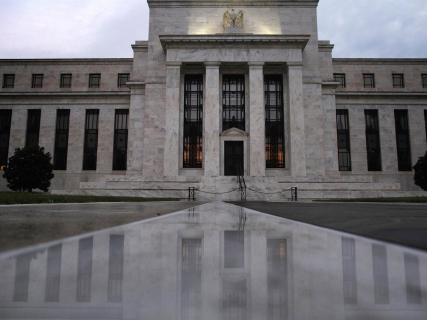

The Federal Reserve of the United States faces the decisive months of 2026 with a question that again dominates market expectations: whether it will be necessary to tighten monetary policy again to contain price pressures that have still not returned to the central bank's target.
The latest data published by the Bureau of Economic Analysis of the United States (BEA) placed the personal consumption expenditures (PCE) price index at 3.7% year-on-year in July. The core rate, which excludes food and energy, stood at 3.3%, while both references advanced by 0.2% compared to the previous month.
Attention now shifts to Jackson Hole. The economic symposium organized by the Federal Reserve Bank of Kansas City takes place from August 27 to 29, and Kevin Warsh has a speech scheduled for this Friday that investors will analyze for signals regarding his economic diagnosis and the criteria that will condition the Fed's next moves.
The Fed reaches the final stretch of the year with voices calling for rate hikes
The last meeting of the Federal Open Market Committee (FOMC), held on July 28 and 29, ended with a decision to keep the target range for federal funds at 3.50%-3.75%.
The vote revealed, however, a significant division within the body. The decision passed by nine votes to three, with Beth Hammack, Neel Kashkari, and Lorie Logan advocating for a 25 basis point increase.
This disagreement introduces an important variable for the coming months. The possibility of a new monetary tightening does not only stem from investors' expectations: there are already voting members within the FOMC itself who consider it appropriate to raise the official cost of money.
Inflation again conditions the margin for action
The PCE occupies a central position in the Federal Reserve's analysis because it is the reference used to assess the evolution of prices concerning its 2% inflation target. The distance that still separates the latest reading from that goal makes it difficult to anticipate a clear direction for the coming months.
The persistence of core inflation is also relevant for the central bank, as it excludes two particularly volatile components like food and energy. Its behavior allows for observing price pressures that may last longer.
The markets have reacted by incorporating a greater possibility that the Fed will tighten its policy again before the end of 2026. These probabilities change continuously with the quotes and represent investors' expectations, not a decision or an official forecast from the Federal Reserve.
September will be the first of the three decisions remaining in 2026
After Jackson Hole, the next formal decision will come on September 15 and 16. Subsequently, the FOMC will meet again on October 27 and 28 and will close its annual calendar on December 8 and 9.
The September meeting will also include a new publication of the economic projections from the FOMC participants. These estimates will allow understanding how their view on variables such as growth, unemployment, inflation, and the trajectory considered appropriate for rates has evolved.
December will offer another update of those projections. Between the two meetings, there will be numerous indicators of prices, employment, and activity capable of modifying the diagnosis, so neither a rate hike nor the maintenance of rates throughout the remaining period can currently be taken for granted.
Jackson Hole may provide clues, but rates are not decided there
The Jackson Hole Economic Policy Symposium is not a meeting of the FOMC. The Wyoming meeting serves as a forum for economic and monetary discussion, but it does not have among its functions to approve a hike or a cut in the federal funds rate.
The importance of Warsh's intervention lies precisely in another element: it can provide information on how the Fed chair interprets the economic situation and what risks he considers priorities before the meetings where decisions will indeed have to be made.
The official theme of Jackson Hole 2026 is "Financial Innovation: Implications for Payments and Policy," focused on the implications of financial innovation for payment systems and economic policy. Warsh's possible references to inflation or rates should therefore be assessed based on what he actually presents in his speech.
What the Fed should consider before raising rates again
The FOMC does not make its decisions based on a single indicator. Its mandate includes both price stability and maximum employment, which requires jointly assessing the behavior of inflation, the labor market, and economic activity.
A greater persistence of inflationary pressures would reinforce the arguments of those who consider a more restrictive policy necessary. On the contrary, a significant deterioration of other economic variables could alter the balance of risks faced by monetary authorities.
This dependence on data explains why positions can change from one meeting to another. The three votes in favor of raising rates in July show the existing debate in the FOMC, but do not automatically anticipate what the outcome of the September vote will be.
Why the Federal Reserve's decisions affect the rest of the world
The influence of the Fed transcends the United States because movements in federal funds can transmit to other interest rates, debt markets, currencies, and general financing conditions. The international dimension of the dollar further amplifies the attention that U.S. monetary decisions receive.
Changes in expectations can cause movements in the markets even before an official decision is made. Bonds, stocks, and currencies continuously react to economic information and the signals provided by monetary policymakers.
In Europe, however, there is a fundamental difference: the Federal Reserve does not set the rates of the European Central Bank nor determine the Euribor. Its decisions may have international repercussions, but the monetary environment of the eurozone directly depends on the decisions made by the ECB.
The definitive response will come meeting by meeting
The trajectory of U.S. rates until December remains open. The Federal Reserve will have to decide whether economic conditions justify maintaining its current policy or if inflationary pressures require a new tightening.
Jackson Hole may provide a first indication of Warsh's position, but effective decisions will come later in Washington. The first will be in September, and there will still be two additional opportunities to modify monetary policy before the end of the year.