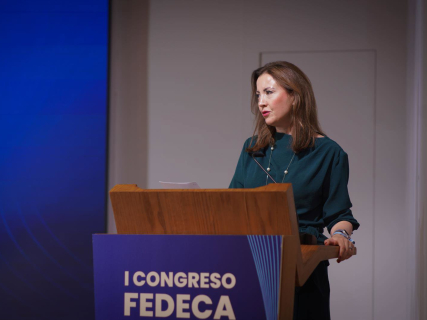

The Spanish Federation of Associations of the Higher Bodies of the Civil Administration of the State (Fedeca), which groups 46 associations, has demanded this Friday the creation of a specific statute for senior civil servants, in order to address the needs of the final stages of the professional career and make the most of the accumulated experience in the service of the citizenry.
This initiative is part of the proposals presented at its I Congress, held in Madrid until this Friday under the slogan "The management of the public" and coinciding with the 45th anniversary of the federation.
The organization has argued that an administrative career can extend for nearly four decades, so personnel policies must accompany that journey through a specific regulatory framework that takes into account the experience and the demands of the functions performed.
In this line, Fedeca's proposal aims to preserve knowledge within institutions, strengthen the training of other public employees, promote intergenerational transmission, and adjust tasks with greater physical demands in the final phase of working life.
On the inaugural day, held yesterday, Fedeca highlighted the contribution of the higher bodies to the design of public policies and emphasized the difference between the political responsibility of setting priorities and the role of the professional Administration, called to act with objectivity and subject to legality.
During the congress, issues such as the balance between political positions and civil servants, public-private collaboration, or the examination system were also discussed, demanding that any reform of the public function involve its professionals and be based on the principles of equality, merit, and capacity, as well as on protection against pressures and the promotion of scholarships for candidates.
The meeting has also served to present "Fedeca Joven," an initiative aimed at creating a specific community for the younger civil servants of subgroup A1.
During the presentation of "Fedeca Joven," the president of the organization, Ana Ercoreca, highlighted the role of the new civil servants. "Since you join, you contribute knowledge and professional judgment. Your voice must also count in the Federation," she emphasized.
The president of Fedeca has explained that this project aims to facilitate the participation of young people and connect colleagues from different bodies and destinations, and she defined it as "a place to approach with a proposal and to turn to when guidance is needed."
"The presentation of the youth project and the claim for specific attention to senior officials reflect the Federation's willingness to support its professionals at the different stages of their careers," the organization has pointed out.
Remuneration proposals and compensations
Within the framework of the I Congress of Fedeca, the federation has also proposed that the remuneration of officials include a supplement linked to the cost of living in the destination city.
In this regard, Fedeca argues that the lack of financial resources to undertake a relocation should not hinder professional careers nor prevent the Administration from having the profiles it needs.
The organization emphasizes that the high rental prices in cities like Madrid or Barcelona, along with family burdens or the maintenance of a home in the place of origin, make it difficult for qualified professionals to accept certain destinations.
Therefore, it proposes that the differences in the cost of living be reflected in the remuneration supplements through instruments adapted to the particularities of each position.
Fedeca believes that promotion and advancement cannot become an economic penalty for the official, which is why it links this demand to the need to establish a truly attractive professional career, both horizontally and vertically.
Additionally, the federation has called for the updating of service-related compensations and allowances, so that work-related travel or attendance at training activities do not force public employees to incur expenses that should be covered.
The group has also requested that salary evolution take into account real inflation, after criticizing that the agreed increases are insufficient to maintain purchasing power, and includes among its main demands the full recovery of the amounts cut from extraordinary payments.