

"When a door closes, a window always opens," sang the group La Pegatina. "You have to take it with enthusiasm," he continued. Once the president of the European Central Bank (ECB), Christine Lagarde, has made public her resignation to leave the institution seven months before her term ends, the one eager to play the game is the Spanish Government. The announcement by the Frenchwoman marks the starting gun for the race for her succession, and there is one name among the favorites: Pablo Hernández de Cos.
It was the Prime Minister himself, Pedro Sánchez, who announced during his trip to New York, on the occasion of the United Nations General Assembly, the Spanish candidacy. "He has the capabilities, the knowledge and the necessary leadership. It would be very positive not only for Spain, but also for the whole of Europe to have someone like him at the head of the Central Bank," said the Socialist. In this way, Hernández de Cos was directly entering the contest for the presidency of the monetary institution.
In addition, he does so with the support of the Partido Popular, which on this occasion coincides with the strategy followed by Moncloa. Not least, its president, Alberto Núñez Feijóo, celebrated the candidacy in statements to the press in Brussels. "I propose a president who is capable of guaranteeing the solvency and viability of the euro. And, in my opinion, Pablo Hernández de Cos is the right person," assured the Galician.
A man of consensus between PSOE and PP
The latest statements reflect something that has been common around the figure of Pablo Hernández de Cos: his ability to arouse consensus between the two main Spanish parties. In fact, he was already elected governor of the Banco de España after an agreement between the conservatives and the socialists. The announcement of his appointment in the Economic Commission of the Congress of Deputies, by the then Minister of Economy, Román Escolano, took place only three days before the vote on the motion of censure that brought down Mariano Rajoy's Government.
Those who know him highlight from his years at the head of the institution his calm demeanor, as well as his didactic manner. A profile that initially contrasted with his youth. From the beginning, he focused his management on macroeconomic policy, leaving in the background issues related to the financial sphere, in line with the orientation he gave to the institution.
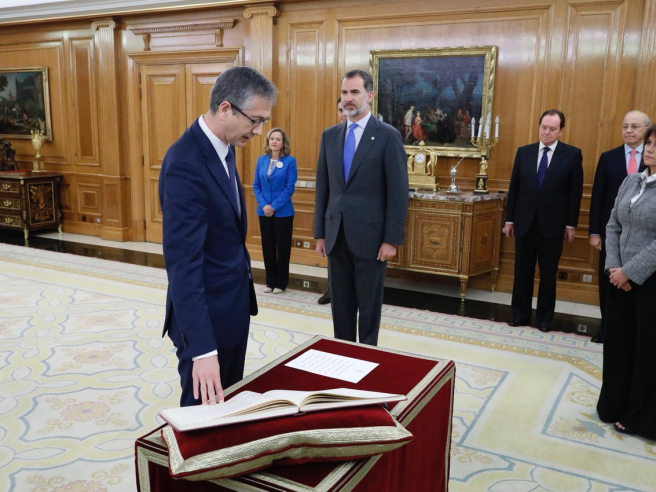
Almost at the same time as Lagarde, he took on the leadership of the bank in moments of special economic turbulence, such as the COVID-19 pandemic or the energy shock derived from the Russian invasion of Ukraine. Throughout this period, one of his maxims was the need to reach major agreements between PP and PSOE to tackle the country's main economic challenges. Among them, he defended the preparation of an adjustment plan for public accounts, as a sign of his concern about debt levels and the sustainability of public finances.
Another of the tasks that remained pending after his departure was the creation of a severance compensation system inspired by the so-called Austrian backpack. Among his proposals during the term of office also were an income pact and the decoupling of salaries and pensions from the CPI during the inflation crisis of 2022.

De Cos also has the backing of major financial institutions such as BBVA. During the press conference presenting its results, its CEO, Onur Genç, celebrated the Spanish candidacy. "The ECB is a very important institution in Europe. It deserves very credible presidents like Pablo," he said.
A negotiation that advances ahead of the French electoral calendar
The President of the European Council has already ordered the institutional machinery to be activated for the appointment of Lagarde's successor. The early departure of the French leader facilitates the negotiation, which will be developed mainly between heads of State or Government, taking place before the French presidential elections.
What is the message behind this move? It will be President Emmanuel Macron who takes part in these conversations and not his possible successor, in an electoral scenario in which the French far right figures among the main contenders to take the Élysée. All this, moreover, before addressing the continuity of António Costa at the head of the European Council and of Roberta Metsola in the presidency of the European Parliament, whose current terms end in 2027.
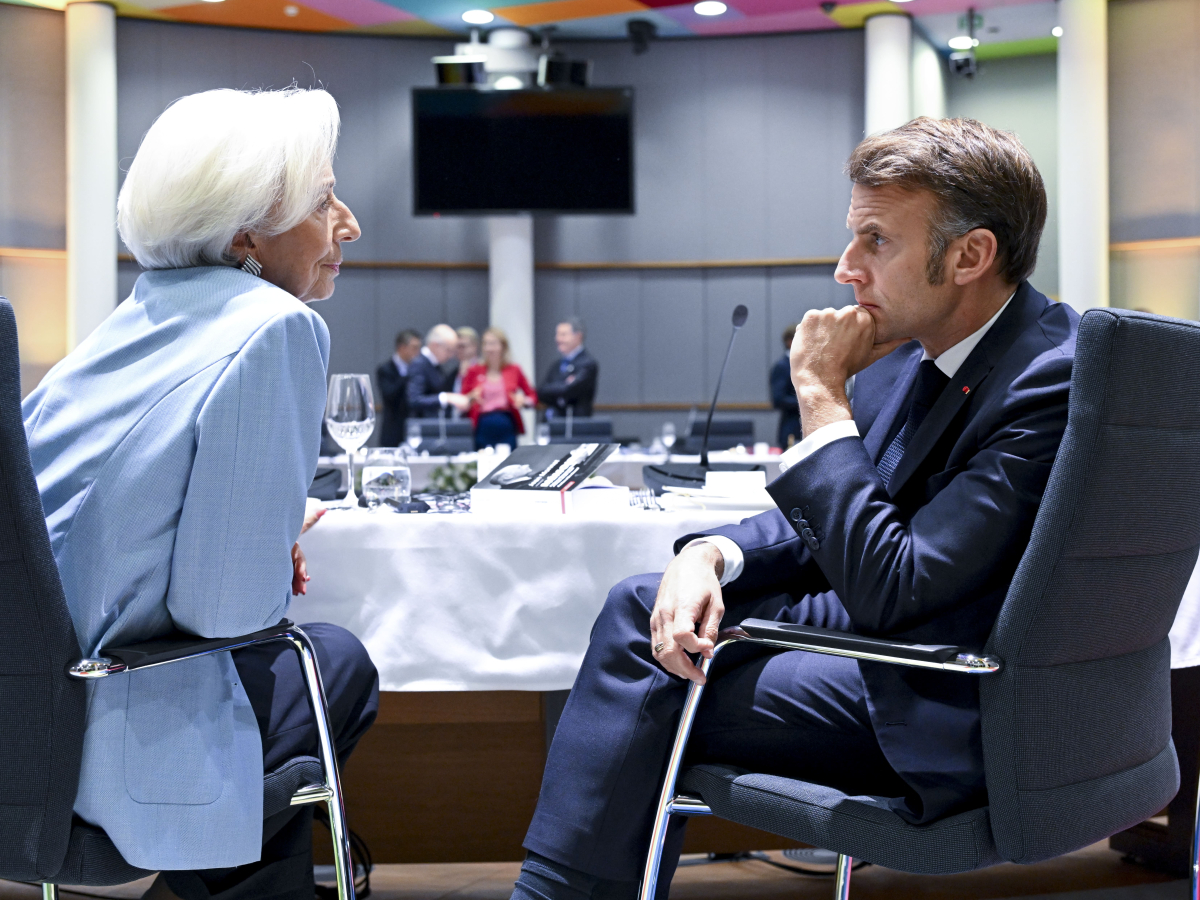
In this way, everything points to the fact that it will be during the December European Council summit when European leaders will try to reach a political agreement on the designated candidate to succeed Lagarde. Before that, once the various candidacies have been presented, the Eurogroup will examine the profiles and will try to agree on a position regarding the aspirant who must assume the presidency of the monetary institution.
The appointment procedure also provides for consultation with the European Parliament and the Governing Council of the ECB, made up of the six members of the Executive Board and the governors of the national central banks of the eurozone countries. Both institutions examine the candidacy and issue their respective opinions, although neither of them is binding. The final decision corresponds to the European Council, which must adopt it by a reinforced qualified majority among the member states whose currency is the euro.
Klaas Knot, the Dutch rival of Hernández de Cos
To begin with, Hernández de Cos is not alone in his aspirations. The Prime Minister of the Netherlands, Rob Jetten, promoted the former governor of the Dutch central bank a month ago as a candidate. An announcement that came just one day after Sánchez did the same with the Spanish aspirant.
Jetten described Klaas Knot as a "very pragmatic" figure and "capable of working with everyone", also underlining that he understands "the balance between the north and the south of the eurozone". Knot led the central bank of the Netherlands for fourteen years, between 2011 and 2025, a trajectory that made him one of the longest-serving members on the ECB Governing Council.
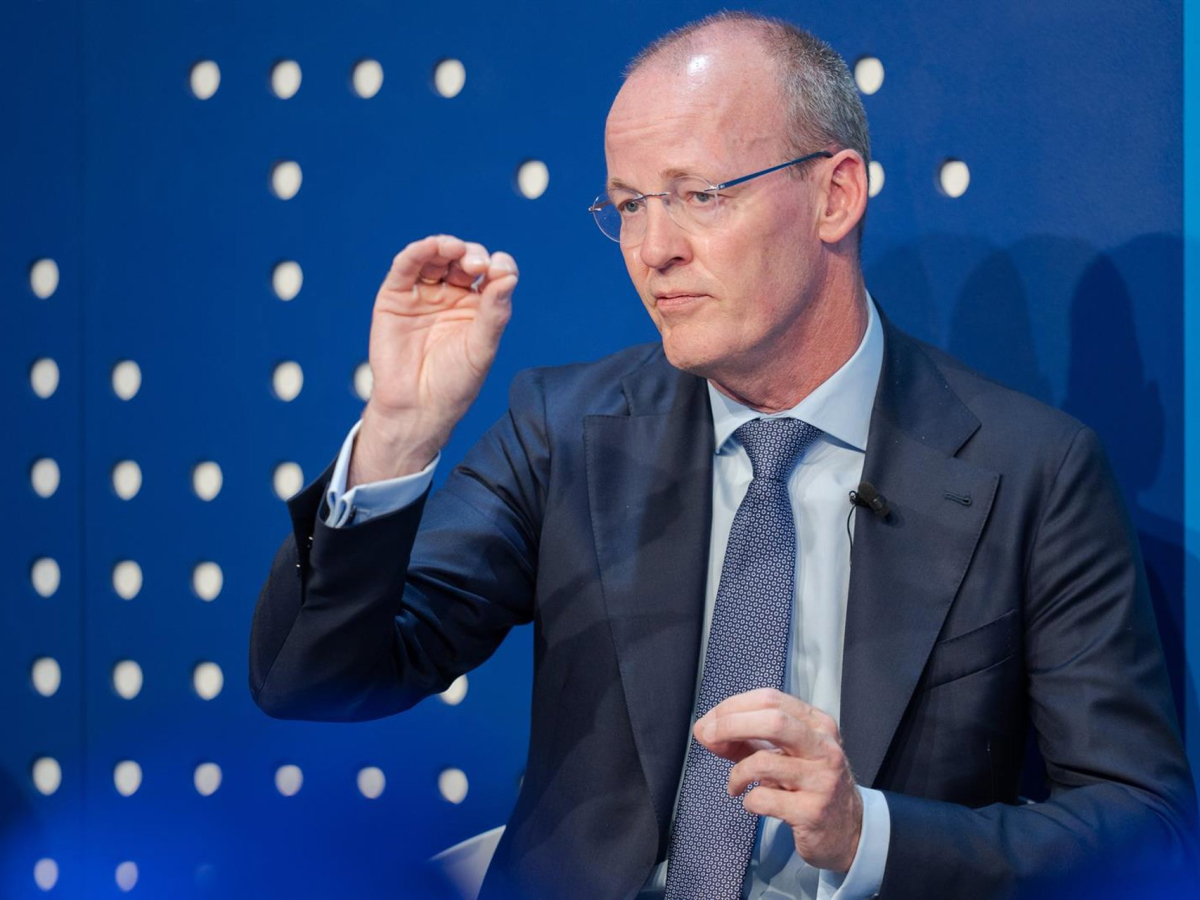
During that time he also formed part of the European Systemic Risk Board, the International Monetary Fund (IMF) and the Bank for International Settlements (BIS). In addition, between 2021 and 2025 he chaired the Financial Stability Board (FSB, by its initials in English) of the G20, the body responsible for overseeing and promoting the stability of the international financial system.
Their candidacy pits face to face two former governors with extensive experience in monetary policy, but from different economic traditions within the eurozone. The balance between the countries of the north and the south will once again become part of the negotiations for the allocation of one of the main positions of responsibility in the European institutional architecture.
Lagarde claims her freedom of expression to justify her departure
Regarding her early departure, Lagarde herself has explained that it responds to her "desire to have freedom of speech and expression" on issues "that are not monetary policy," in a context marked by the upcoming presidential elections in France.
Without directly mentioning the elections, the still-president of the ECB has expressed her opinion on the impossibility of remaining neutral in the face of certain issues. "My voice and my actions can help defend principles that I consider fundamental," she hinted when asked by the press in Frankfurt.

Her decision thus opens a new game on the European institutional board, with Spain willing to take advantage of an opportunity that, exceptionally, has the backing of the two main national political forces.
La Pegatina kept singing that "for the one whom luck reaches, all hope of life." The candidates, now at the starting square, will have to deal with the possibility that "their rice will go past them," like "anyone someday." On this occasion, however, luck will depend on the political balances they are able to weave among the European capitals.