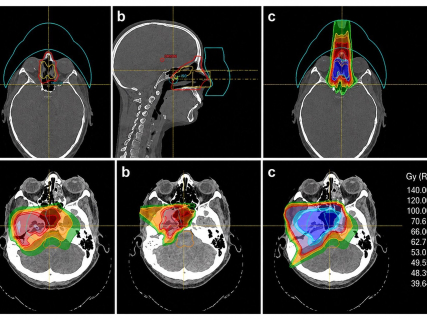

A recent study from the Cancer Center Clínica Universidad de Navarra (CCUN) has highlighted that reirradiation with proton therapy achieves an overall survival of 67 percent at one year in patients with recurrent head and neck cancer who had previously received radiotherapy.
The work, published in the journal "Cancers" and conducted in a cohort of 65 patients, is considered one of the largest series published in Europe specifically focused on intensity-modulated proton therapy using the "Pencil Beam Scanning" (PBS) technique. Its conclusions reinforce the role of this advanced modality to expand the range of therapeutic options in selected patients.
As emphasized by the CUN, reirradiation is one of the most complex challenges in radiation oncology. When the tumor reappears in a previously irradiated region with full doses, healthy tissues are very close to their tolerance threshold, and any new dose must be administered with extreme precision to control the disease without significantly increasing the risk of toxicity.
In this research, a median overall survival of 17.2 months was observed, a progression-free survival of 10.1 months, and a treatment completion rate of 92 percent. Furthermore, only 7.7 percent of patients developed severe acute oral mucositis, and no grade 4 or 5 acute toxicities were detected.
"Reirradiation constitutes one of the most complex scenarios in our specialty because the tissues have already received a very high dose of radiation, and every Gray administered counts. Proton therapy allows us to better concentrate the dose on the tumor and reduce the irradiation of previously treated tissues, thus expanding the therapeutic window for these patients," explained the specialist from the Department of Radiation Oncology at CCUN and first author of the study, Enrique Amaya.
In addition to confirming the safety and efficacy profile of this strategy, the work incorporates a finding that may help refine the selection of candidates for reirradiation. In an initial analysis, tumors located at the base of the skull or in central areas close to this region appeared to be associated with worse clinical outcomes.
Nevertheless, the detailed study evidenced that this difference was explained, above all, because these patients presented a greater burden of locally advanced disease. In fact, stage T3-T4 was the only independent prognostic factor related to a lower progression-free survival.
"This finding indicates that the location of the tumor, by itself, should not exclude a patient from possible reirradiation. What is truly decisive is to carefully assess the extent of the disease and adequately select the candidates who may benefit from this treatment," says Amaya.
Widening the therapeutic window
The CUN emphasizes that, in patients with recurrent head and neck cancer who are not candidates for surgery, reirradiation becomes, in numerous cases, the only alternative with curative intent. However, proposing a second cycle of radiotherapy requires extreme protection of critical structures such as the spinal cord, the brainstem, the optic pathways, the carotid vessels, or the jaw.
Thanks to the physical characteristics of the proton beam, this technique allows concentrating most of the dose directly on the tumor and reducing unnecessary irradiation of adjacent healthy tissues and those located beyond the lesion. This dosimetric precision widens the therapeutic window, which translates into greater chances of tumor control while maintaining an acceptable toxicity profile.