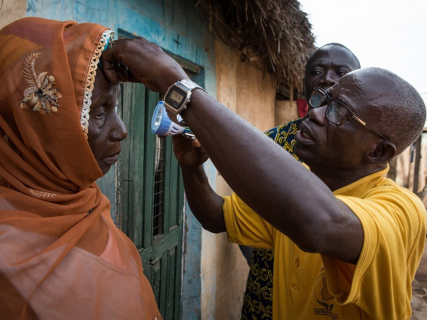

The World Health Organization (WHO) has ratified that East Timor has managed to eliminate trachoma as a public health problem. With this recognition, the country becomes the last in the Southeast Asian region where there was suspicion that this disease, considered the leading infectious cause of blindness worldwide, could remain endemic.
The Director-General of the WHO, Tedros Adhanom Ghebreyesus, has congratulated East Timor for this "important achievement" and emphasized that it represents a "significant step" towards the global goal of eradicating trachoma worldwide by 2030.
The international health organization has emphasized that this validation is supported by evidence collected over several years, during which the capacity of the national health system to detect, investigate, and manage cases that may arise in the future has also been verified.
Between 2015 and 2017, various investigations were carried out in the country. Children from the island of Atauro were examined, patients treated in ophthalmological clinics throughout the territory were assessed, and active searches were conducted in households. None of these studies identified cases of trachoma.
In the following years, East Timor reinforced this information through new fieldwork. In particular, a study conducted in 2025 on children aged one to five found no evidence of transmission at a level that would require a specific public health response to trachoma.
Impact on public health and next steps
"East Timor has once again demonstrated that strong national leadership, high-quality evidence, and integrated health services can generate lasting benefits for public health," highlighted the head of the WHO Regional Office for Southeast Asia, Nilesh Buddha.
The Minister of Health of East Timor, Élia A. dos Reis Amaral, has emphasized the "national pride" that the elimination of trachoma as a public health problem represents and has pointed out that the WHO recognition reinforces the country's commitment to advancing towards universal health coverage and consolidating an equitable and resilient health system.
"We call on the global health community to deepen cooperation and solidarity, so that all countries and all communities can overcome preventable diseases and ensure a healthier future for generations to come," she stated.
Like other nations that have received validation from the WHO, East Timor will continue to ensure the detection and care of individual cases of trichiasis and other eye pathologies through its network of ophthalmological services. The country has specialized care, including trichiasis surgery, at the National Eye Center of the Guido Valadares National Hospital in Dili, in addition to community outreach programs in the various municipalities.
National programs continue to work to expand access to drinking water, sanitation, and hygiene. Likewise, trachoma surveillance will be integrated into the already existing platforms for disease surveillance and neglected tropical diseases at the national level.