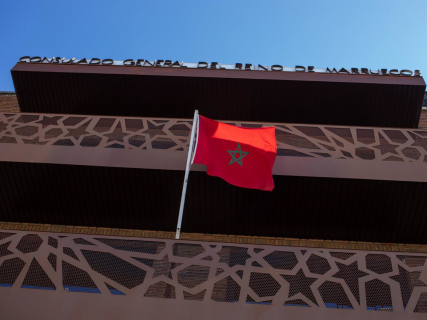

The Minister of Justice of Morocco, Abdellatif Ouahbi, reiterated this Friday the "historical and geographical rights" that Rabat claims over the autonomous cities of Ceuta and Melilla, and proposed the creation of a "dialogue space" with the Spanish authorities to address this issue.
"We will defend our historical and geographical rights, and avenues of dialogue on this issue," he stated in an interview granted to the public channel 2M, in which he also called for "finding a definitive solution" to the current status of Ceuta and Melilla.
The Justice official insisted on the need to open a "dialogue space" with the Spanish Government to address the "issue" of both cities, arguing that "it is not possible to remain silent about it, neither for the sake of the future nor for the sake of the present."
These statements come three weeks after the migratory crisis triggered by the irregular entry of 72,000 people into Ceuta through the border with Morocco. Most have already been returned, while the central Government is now focusing on the care of unaccompanied minors who managed to access the city.
In relation to this matter, Ouahbi has again demanded from the Spanish Government the delivery of "all" Moroccan minors who still remain in the autonomous city.
The response from the Spanish Government has been to reaffirm its rejection of Moroccan claims over Ceuta and Melilla, emphasizing that "they are two Spanish cities" that are part of "the territorial integrity" and "sovereignty" of Spain.
"We reject and will categorically reject any different proposal regarding Ceuta and Melilla," sources from the Ministry of Foreign Affairs, headed by José Manuel Albares, have indicated.
Through diplomatic channels, the Government has conveyed this message of opposition to the words of the Moroccan Minister of Justice, although Foreign Affairs has not specified whether Albares has had a direct conversation with his counterpart.
The Ministry has also reminded Rabat that Ceuta and Melilla constitute the border of Spain and the European Union (EU) and that its sovereignty is "internationally recognized." "They are also an integral part of the territory of the EU," the same sources have emphasized.