
The UN Security Council has decided to extend for two more months the arms embargo that weighs on the Sudanese region of Darfur, one of the areas most affected by the war that has ravaged Sudan for three years, in a context of strong tensions between Russia and the United States over the possibility of extending this measure to the entire national territory.
Moscow has resorted to its veto right to block the U.S. initiative to apply the embargo to all of Sudan, as proposed this summer by American advisor Massad Boulos, with the aim of increasing pressure on the Sudanese Armed Forces and the paramilitaries of the Rapid Support Forces (RSF).
In contrast to this stance, countries like China and Russia itself prefer to keep the restriction confined only to Darfur, arguing that this preserves a margin for political discussions and also responding to the protests of the Sudanese government, which perceives the expansion of the embargo as a possible hindrance to its military aspirations in the conflict.
Given the certainty that Russia would veto the proposal, the United States ultimately chose to withdraw it, and the Council ended up approving "unanimously" a resolution that extends the arms embargo in Darfur until December 11 of this year.
Desertions in the Rapid Support Forces
In parallel, on the military front, a significant desertion has occurred within the ranks of the RSF. This Thursday, a high paramilitary commander, Lieutenant Colonel Mohamed Azraq al-Fanjri, head of the RSF Special Intervention Unit, announced his change of side.
In a video broadcast by the Al Arabiya network, the officer announces that he is joining the Army along with 300 officers and soldiers and 30 combat vehicles.
In his statement, Al Finjari describes the war in Sudan as pointless, apologizes to civilians for the damages caused, rejects the violations of the RSF, and urges his fellow fighters to integrate into the Sudanese Armed Forces.
The breakdown of dialogue between the RSF and the Army for the integration of the paramilitaries into the regular forces was precisely the trigger for the war that began on April 15, 2023, the latest chapter in a chain of violence that has struck the country since the overthrow of dictator Omar al Bashir in 2019.
Extreme humanitarian crisis in Darfur
Since then, the deterioration has been extreme, especially in Darfur, which extends across almost the entire western border of Sudan and where the conflict has revived old tensions between communities.
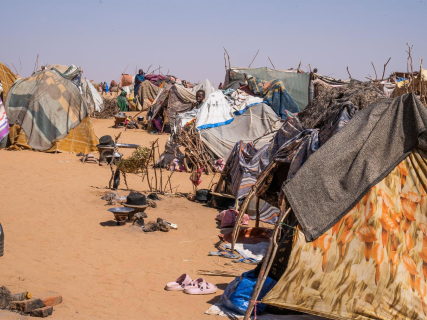
For months, Darfur has become the main stage of the war, particularly around its historic capital, El Fasher, and the number of displaced people is counted in hundreds of thousands. The WHO called this Wednesday for an urgent reinforcement of resources to meet the growing humanitarian health needs across the region, as well as safe, continued, and unhindered humanitarian access that allows health actors to expand their response.
The medical and humanitarian aid demands in Darfur far exceed the available means, with particular severity in Tawila, where more than 700,000 displaced people face severe shortages in health services, nutrition, food, water, sanitation, and protection.
The emergency in Tawila illustrates the widespread pressure across the region, marked by persistent insecurity, massive displacements, very limited basic services, and recurrent outbreaks of diseases that endanger millions of people. According to the International Organization for Migration (IOM), Darfur concentrates 65% of the 8.6 million internally displaced persons in Sudan.